
Highlights
- Marco Rubio is calling for geographically diverse, allied critical-mineral supply chains as U.S. strategy shifts beyond domestic mining alone.
- The DFC's $1.8B Orion Critical Mineral Consortium targets international rare-earth and critical-mineral projects spanning mining through processing and refining.
- ReElement Technologies is exploring chromatography-based separation deployments in Africa and Southeast Asia, though commercial scale remains unproven.
- REEx's Great Powers Era 2.0 thesis holds that competing industrial networks—not national self-sufficiency—will determine who wins the critical-minerals contest.
- The West's strategic opportunity is to network allies faster than China can reinforce its existing chokepoints across the rare-earth supply chain.
America cannot mine its way out of China’s critical-minerals dominance alone, as Rare Earth Exchanges® (REEx) has argued since our launch at the start of 2025. Now Secretary of State Marco Rubio is calling for reliable, geographically diverse supply chains, while the U.S. International Development Finance Corporation is deploying capital into allied-country mining, processing and infrastructure. For REEx, this validates a central Great Powers Era 2.0™ thesis: the contest is shifting from national self-sufficiency toward competing industrial networks. For REEx community members, this will sound familiar.
REEx Insight | Build the Network, Not an Island
Rubio’s framing is strategically important. The United States does not possess every economically attractive ore body—or enough domestic supply of critical elements such as dysprosium, terbium, samarium and yttrium—to recreate China’s system entirely within its borders.
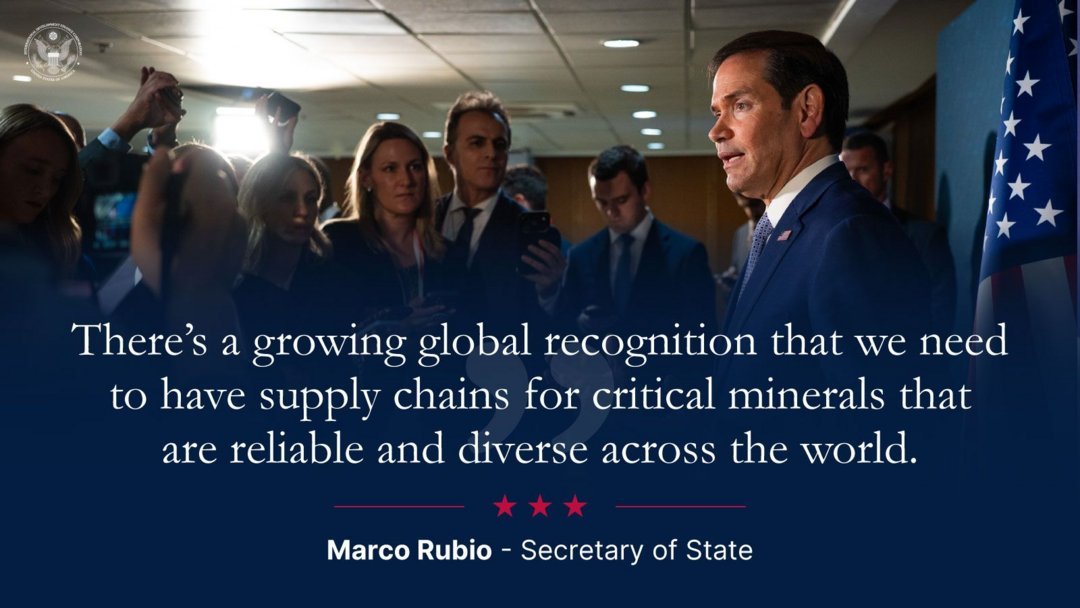
The better strategy is allied mine-to-magnet architecture: secure feedstock abroad, build competitive separation and metallization capacity, connect trusted infrastructure and qualify material with Western customers. That is Great Powers Era 2.0: economic diplomacy becomes industrial policy, and supply chains become instruments of national power.
Washington Takes the Strategy Overseas
DFC is already moving in this direction. Its $1.8 billion Orion Critical Mineral Consortium targets projects in eligible international markets, while separate initiatives include rare-earth development in Brazil and Malawi and antimony in North Macedonia. DFC says its strategy spans mining through processing and refining.
ReElement Technologies CEO Mark Jensen pushes the concept further, arguing online via LinkedIn for processing near foreign feedstock sources. He says ReElement is preparing potential deployments in Africa and Southeast Asia using its chromatography-based separation technology.
That is intriguing—but investors should separate strategy from qualified commercial scale. Locations, economics, feedstock commitments and production volumes remain to be demonstrated. China built an advanced ecosystem over the past few decades that, make no mistake, remains networked. The West’s opportunity is not merely to copy it, but to network its allies faster than China can reinforce its chokepoints.


3 Comments
3 replies
Loading new replies...
New member
Member
Administrator
Join the full discussion at the Rare Earth Exchanges Forum →