
Highlights
- Myanmar is the world's leading source of heavy rare earth feedstock, including dysprosium and terbium critical for EVs, defense, and advanced technology.
- Chinese companies finance and control much of Myanmar's mining ecosystem, with nearly all production crossing into China for processing and supply chain integration.
- Decades of ethnic armed conflict, China's dual-track diplomacy, and Russian military support for the junta create compounding supply chain risks investors must assess.
- India, Japan, and Western policymakers are reassessing Myanmar engagement as critical mineral strategy increasingly overrides isolation policies.
- Environmental devastation and hazardous labor conditions from ionic clay mining add humanitarian and reputational risk layers to an already complex investment landscape.
A recent investigation (opens in a new tab) is among the strongest mainstream examinations of Myanmar's heavy rare earth mining industry published in recent years. It documents, with considerable reporting depth, the environmental devastation, hazardous labor conditions, China's dominant commercial role, and Myanmar's strategic importance in supplying dysprosium and terbium to global markets. Yet it also leaves important geopolitical context largely unexplored, as does much of the media. Investors should understand not only what is happening in Myanmar, but why it matters. Missing are deeper explanations of Myanmar's decades-long ethnic conflict, China's dual-track strategy of maintaining relationships with both the military junta and multiple ethnic armed organizations, Russia's continuing military support for the junta, and the emerging diplomatic reality that India, Japan, and, increasingly, some Western policymakers are reassessing engagement with Myanmar because of its strategic location and critical mineral resources in this emerging Great Powers Era 2.0. These omissions do not invalidate the reporting, but they narrow readers' understanding of one of the world's most consequential mineral conflicts.
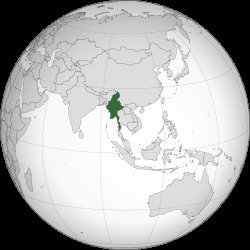
The article succeeds where many media reports fall short: it reminds readers that heavy rare earths are not simply another commodity. Myanmar has emerged as the world's leading source of heavy rare earth feedstock—including dysprosium and terbium—minerals essential for high-performance permanent magnets used in electric vehicles, advanced robotics, aerospace systems, and modern defense technologies. In fact, the fact that Rare Earth Exchanges listed the Myanmar Rebels as #1 on the REEx Insights Heavy Rare Earth Element Rankings has certainly raised awareness about the unfolding situation.
That strategic reality alone makes developments inside Myanmar essential reading for investors.
Where the Reporting Hits the Mark
Authors Emily Fishbein and Jauman Naw, writing for Grist in partnership with the Pulitzer Center's Rainforest Investigations Network and republished by Rest of World (opens in a new tab), deserve credit. The investigation accurately documents several realities that Rare Earth Exchanges has highlighted repeatedly:
- Myanmar has become the world's largest source of heavy rare earth feedstock.
- Chinese companies, often smaller operators feeding a bigger Chinese supply chain, finance, operate, or heavily influence much of the mining ecosystem.
- Nearly all production ultimately crosses into China for separation, refining, and incorporation into downstream supply chains.
- Ionic clay mining has caused severe environmental degradation and significant human health concerns.
- Once concentrates enter China's processing system, tracing the origin of individual atoms becomes extraordinarily difficult.
These conclusions are well supported by customs data, satellite imagery, academic research, and years of industry supply-chain analysis.
The Story Between the Lines
Where the article becomes less complete is in its geopolitical framing. It correctly notes that the Kachin struggle dates back to Burma's independence in 1948. However, it gives relatively little attention to why the conflict has persisted for nearly eight decades. Many ethnic minorities—including the predominantly Christian Kachin—have sought greater autonomy or a genuine federal system since independence, resisting successive governments dominated by the Burman majority and, for most of modern history, military rule. The conflict is rooted primarily in competing visions of political autonomy, ethnic identity, and control of territory and natural resources, with religious differences adding another layer to an already complex struggle.
Likewise, while the article notes that Russia and China support Myanmar's military government, it stops short of examining the broader strategic picture. China has long pursued a dual-track policy, maintaining relationships with both the junta and numerous ethnic armed organizations along its border. This approach allows Beijing to protect its commercial interests and preserve leverage regardless of which actors control territory, including rare earth mining districts.
The Strategic Chessboard Investors Should Watch
Another omission matters for investors. The report mentions India's growing engagement with Myanmar's military leadership but gives less attention to the broader diplomatic trend. India, Japan, ASEAN member states, and some Western policymakers increasingly recognize that completely isolating Myanmar risks pushing even more strategic mineral production under China's exclusive sphere of influence. While political and logistical obstacles remain substantial, critical minerals are becoming an increasingly important factor in regional diplomacy and strategic planning.
Rare Earth Exchanges Assessment
This is thoughtful investigative journalism that accurately captures the humanitarian and environmental costs of Myanmar's heavy rare earth industry. Investors, however, should recognize what remains outside the frame.
Myanmar is not merely an environmental tragedy. It is arguably the world's most strategically important upstream source of heavy rare earth feedstock, sitting at the intersection of great-power competition involving China, Russia, India, Japan, Western governments, ethnic armed organizations, horrific violence, and the military junta.
Understanding those overlapping political, military, and commercial dynamics—not simply the mining itself—is essential for evaluating future supply risks, export controls, pricing, and investment opportunities.
That broader strategic context is where the rare earth story truly begins.


0 Comments
No replies yet
Loading new replies...
Moderator
Join the full discussion at the Rare Earth Exchanges Forum →