
Highlights
- Norway possesses significant deposits of rare earth elements, graphite, titanium, nickel, cobalt, and copper, positioning it as a potential European critical minerals powerhouse.
- The IEA warns that lengthy permitting, fragmented governance, and lack of a national critical minerals strategy are undermining Norway's competitive advantages.
- The report recommends advancing seabed exploration under strict environmental safeguards while delaying production decisions until scientific and political confidence is established.
- Success requires building complete mine-to-market supply chains encompassing financing, processing, refining, recycling, and workforce development—not just mining.
- The review gives limited attention to risks such as price volatility, technological substitution, and China's dominance in rare earth refining and magnet manufacturing.
Norway may be far closer to becoming Europe's next critical minerals powerhouse than many investors realize—but only if it can overcome its own bureaucracy. In the International Energy Agency's (IEA) Critical Minerals Review of Norway 2026 (opens in a new tab), lead authors Julio Pajares Rivas (Spain), Tommi Tyrväinen (Finland), plus IEA Secretariat representatives Miłosz Karpiński and Eléonore Carré, working with Erica Robin and peer reviewers from Finland and Spain, conclude that Norway possesses world-class geological potential, advanced industrial capabilities, abundant renewable energy, and strong environmental governance that could make it one of Europe's most important suppliers of graphite, rare earth elements, titanium, copper, nickel, cobalt, and other strategic minerals. Yet the report delivers a clear warning: unless Norway accelerates permitting, expands investment, strengthens policy coordination, and commits to a long-term industrial strategy, it risks allowing one of Europe's greatest strategic mineral opportunities to remain buried underground. Critical Minerals Review of Norway 2026, International Energy Agency (IEA).
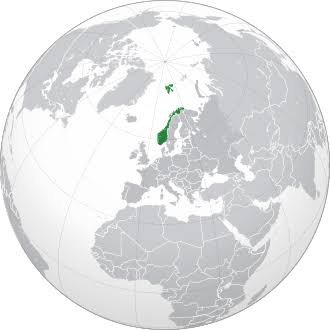
Unlike an academic study, this report is an extensive strategic policy review. IEA experts conducted on-site consultations with Norwegian government agencies, mining companies, researchers, financial institutions, and other stakeholders before evaluating the country's entire critical minerals ecosystem—from exploration and permitting to mining, refining, recycling, financing, workforce development, ESG governance, and international partnerships. The objective was to determine whether Norway is prepared to become a reliable long-term supplier of critical minerals for Europe and allied economies.
European Potential
The review identifies numerous strengths. Norway already produces graphite, titanium minerals, silicon, and advanced metal products while possessing significant undeveloped deposits of rare earth elements, copper, nickel, cobalt, phosphates, vanadium, and other critical minerals. The IEA highlights Norway's abundant low-cost renewable electricity, sophisticated metallurgical industry, strong ESG framework, expanding battery recycling capacity, and close alignment with European Union and NATO strategic priorities. Yet it also concludes that these competitive advantages are being undermined by lengthy permitting processes, fragmented governance, insufficient commercialization funding, incomplete geological mapping, and the absence of a dedicated national critical minerals strategy with measurable economic objectives.
For Rare Earth Exchanges®, perhaps the report's most important message extends well beyond Norway. It reinforces a lesson increasingly emerging across Western economies: rebuilding resilient critical mineral supply chains requires far more than discovering new deposits. Success depends on simultaneously developing financing, permitting, processing, refining, recycling, workforce training, and industrial policy. Mining alone does not create supply chain security.
The review also addresses one of the sector's most controversial topics—deep-sea mining. The IEA recommends Norway continue advancing seabed exploration under rigorous environmental safeguards while postponing any production decisions until sufficient scientific, technological, and political confidence exists. This balanced approach reflects the ongoing debate surrounding seabed resource development and acknowledges that important environmental uncertainties remain.
Study Limitations
As a policy assessment rather than original scientific research, the report does not model future mineral prices, quantify project economics, or evaluate the commercial viability of individual deposits. It also assumes continued growth in demand for critical minerals while giving relatively limited attention to market risks such as price volatility, financing constraints, technological substitution, or China's continuing dominance in rare earth separation, refining, and permanent magnet manufacturing.
The bottom line: The IEA sees Norway as one of Europe's most promising strategic mineral opportunities. Whether that promise becomes reality will depend less on geology than on execution. For policymakers and investors alike, the race has shifted from discovering resources to building complete mine-to-market supply chains—and Norway now faces that challenge head-on.


0 Comments
No replies yet
Loading new replies...
Moderator
Join the full discussion at the Rare Earth Exchanges Forum →