
Highlights
- Advances Europe's largest rare earth deposit, but resource access alone doesn't equal supply chain independence without midstream processing.
- Norway's decision to develop the 15.9 million metric ton deposit could supply 5% of future EU demand for neodymium and praseodymium by 2031.
- Critical gap remains: Europe lacks scaled capacity in separation, refining, and magnet manufacturing, while upstream chemical dependencies stay concentrated in China.
- The project improves feedstock availability but without parallel investment in processing infrastructure, Europe risks replicating the same dependency under a different label.
Norway’s decision to advance development of the Fens rare earth deposit marks an important step toward strengthening Europe’s strategic mineral base. Positioned as the largest documented rare earth resource in Europe, the project could enhance regional access to neodymium and praseodymium—critical inputs for permanent magnets used in electric vehicles, wind turbines, and defense systems.
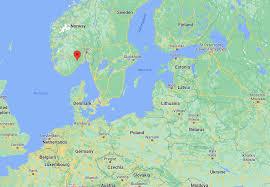
Source: Rare Earth Norway
However, the announcement reflects a familiar and incomplete narrative: resource access is being equated with supply chain security.
What remains largely unaddressed is the structural reality that mining alone does not translate into independence. Europe continues to lack meaningful, scaled capacity in rare earth separation, refining, and magnet manufacturing—the segments where China maintains overwhelming control. Even more critically, upstream chemical dependencies—including ammonium sulfate and related leaching agents—remain concentrated in Chinese supply chains, exposing projects like Fens to hidden vulnerabilities.
The Fens project may improve feedstock availability, but without parallel investment in midstream processing and chemical inputs, Europe risks replicating the same dependency under a different geographic label.
In short, this is progress—but not yet strategy.
Profile
The Fen rare-earth deposit in Nome, Telemark, Norway, is the largest known REE resource in Europe, containing an estimated 15.9 million metric tons of total rare-earth oxides as of 2026. Formed within a 580-million-year-old carbonatite complex, the site is particularly rich in neodymium and praseodymium—key materials for high-performance magnets used in electric vehicles and clean energy systems—and could ultimately supply around 5% of future EU demand.
Developed by Rare Earths Norway (opens in a new tab) (part of the Hustadlitt Group) with strong government backing, the project is strategically positioned to reduce Europe’s reliance on Chinese imports, with potential production targeted for around 2031. However, significant hurdles remain, including environmental concerns, local opposition, the need for substantial infrastructure investment, and the technical challenge of extracting minerals deep underground in a geologically complex formation.
Source: “Norway to develop Europe’s largest rare earth deposit,” UNN, April 22, 2026


0 Comments
No replies yet
Loading new replies...
Moderator
Join the full discussion at the Rare Earth Exchanges Forum →