
Highlights
- Baogang Steel won a contract to supply rare earth-enhanced bridge steel for a major Tibet infrastructure project, designed for extreme altitude, permafrost, and cold conditions where conventional steel fails.
- China is moving beyond rare earth extraction to downstream R&D-driven applications, embedding materials into design standards and engineering ecosystems to lock in long-term demand.
- Strategic shift from supplier to solutions provider positions Chinese firms to shape future industrial materials standards across critical infrastructure globally.
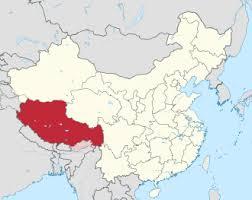
Baogang Steel has secured a contract to supply rare–earth–enhanced bridge steel for a major international land port and transportation hub project in Tibet, one of the most demanding engineering environments on earth. The win signals growing adoption of rare earth materials in infrastructure designed for high altitude, permafrost, and extreme cold, where conventional steel can fail.
Tibet Autonomous Region
Engineering for the Harshest Environments
According to Baogang, its rare-earth microalloying technology significantly improves low-temperature toughness, corrosion resistance, and structural stability, helping steel withstand freeze-thaw cycles and atmospheric corrosion. The company worked upstream with design institutes, embedding its materials into project specifications early—shifting from a traditional supplier role to a materials solutions provider.
This is not just metallurgy—it’s strategic positioning. By influencing design standards at the outset, Baogang increases the likelihood that its materials become embedded across entire project lifecycles.
From Materials to Systems—China’s Playbook
This project highlights a broader pattern: China is not simply producing rare earths—it is engineering their application across industries. From railways on the Tibetan Plateau to hydropower megaprojects, Baogang reports its rare earth steel has already been deployed in multiple high-profile infrastructure builds.
The implication for Western audiences is clear. China’s competitive edge is no longer limited to extraction or processing. It is increasingly rooted in R&D-driven materials science, where rare earths are integrated into advanced applications—from infrastructure to energy systems.
Relevance
There is no single “breakthrough” announced here. But the signal is important:
- Rare earth innovation is moving downstream into real-world applications –China is far ahead of the USA and Europe in terms of patenting and R&D advancements in the rare earth element field
- Chinese firms are embedding materials into design and engineering ecosystems
- R&D is being used as a tool to lock in long-term demand and standards, bolstering industries and eventual monetization
The Bigger Picture
Projects like this illustrate how China is quietly shaping the future of industrial materials—not just by controlling supply, but by owning how those materials are used. Rare earths are no longer just commodities. They are becoming performance enhancers across critical infrastructure.
And China is moving early—and aggressively—to define that future.
Disclaimer: This report is based on an announcement published by Baogang Daily, the media outlet of Baogang Steel Group, a Chinese state-owned enterprise. The information should be independently verified.


0 Comments
No replies yet
Loading new replies...
Moderator
Join the full discussion at the Rare Earth Exchanges Forum →