
Highlights
- Standout drill hole RC-TGA-0010 returned 22 meters at 2,298 ppm TREO+Sc from 5 meters depth, with one meter hitting 6,096 ppm including 53.6% heavy rare earth oxides.
- Homer-A has no Mineral Resource Estimate, no metallurgical recovery data, and has not been confirmed as an ionic adsorption clay deposit—key value gates remain uncrossed.
- REA raised $63.3 million at $19 per share in its May 2026 IPO but shares trade roughly 42% below that level, reflecting early-stage exploration risk.
- The project's high dysprosium and terbium content is strategically significant given China's dominance of Dy/Tb supply, but economic recoverability is unproven.
- REA has completed over 6,500 meters of a planned 15,000-meter drill program and targets a maiden resource estimate in 2027.
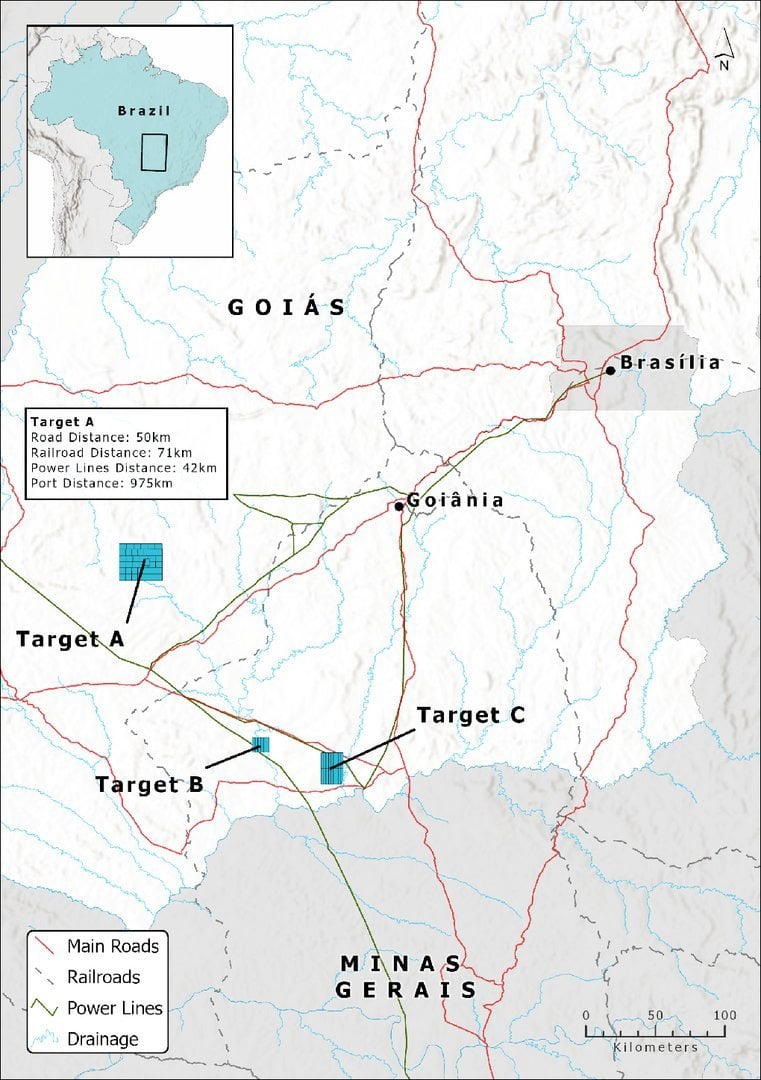
Rare Earths Americas, Inc. (NYSE American: REA) has reported its first drill assays from the 100%-owned Homer-A Project in Goiás, Brazil (opens in a new tab)—and the early geology deserves attention. Eleven reported holes encountered near-surface rare earth mineralization across a 2.15-square-kilometer tested footprint, with several intervals enriched in the magnet rare earths neodymium-praseodymium (NdPr), dysprosium (Dy), and terbium (Tb). But investors should separate encouraging exploration results from an economic deposit: Homer-A has no Mineral Resource Estimate (MRE), no metallurgical recovery data yet, and has not been established as an ionic adsorption clay (IAC) deposit.
REEx Insight — The Basket Is Interesting. Metallurgy Holds the Keys.
The standout hole, RC-TGA-0010, returned 22 meters at 2,298 parts per million (ppm) total rare earth oxides plus scandium (TREO+Sc) from five meters depth, including seven meters at 3,424 ppm. A one-meter interval reached 6,096 ppm TREO+Sc, with 53.6% heavy rare earth oxides (HREO), including 5.7% combined DyTb.
That elemental distribution is strategically important during Great Powers Era 2.0™, given China's extraordinary concentration of Dy/Tb supply. But the critical investor question is not simply what is in the ground—it is what can be economically recovered from it.
REA acknowledges that metallurgical testing has not yet established whether the mineralization is ionically adsorbed, readily leachable, or economically recoverable. That is Homer-A's next major value gate.
From IPO Story to Geological Test
The company has completed more than 6,500 meters of its planned 15,000-meter program, but this initial release reports assays representing only about 1,250 meters, or 8% of the planned campaign. Additional assays remain pending, and REA targets a maiden MRE in 2027.
REA raised approximately $63.3 million at $19 per share in its May 2026 initial public offering (IPO). With shares recently around $11, the stock remains roughly 42% below its IPO price. Homer adds potentially significant exploration optionality, but the stock has yet to recover its IPO valuation. The value-creation gates are now clear: prove continuity, prove recoverability, define the resource, then test the economics.
Until those gates are crossed, Homer-A is best understood as a promising early-stage exploration project—not a proven Western heavy-rare-earth supply source.


0 Comments
No replies yet
Loading new replies...
Moderator
Join the full discussion at the Rare Earth Exchanges Forum →