
Highlights
- A lawsuit challenging the reopening of the Colosseum Mine in Mojave National Preserve exposes the conflict between aggressive domestic rare earth development and environmental protection, with potential to redefine legacy mining rights on protected lands.
- The case introduces regulatory risk and timeline uncertainty for critical mineral projects, as federal agencies face scrutiny for relying on outdated permits that predate modern environmental review requirements.
- Beyond one mine, this dispute signals that execution risk in building ex-China supply chains is increasingly political and legal—not just technical—requiring navigation of public opposition, environmental laws, and social license to operate.
Is a collision coming between industrial policy and protection of the environment? A newly filed lawsuit targeting the reopening of the Colosseum Mine inside Mojave National Preserve highlights a deeper structural tension emerging in the U.S. rare earth strategy: how far policymakers are willing to push domestic resource development in pursuit of supply chain independence.
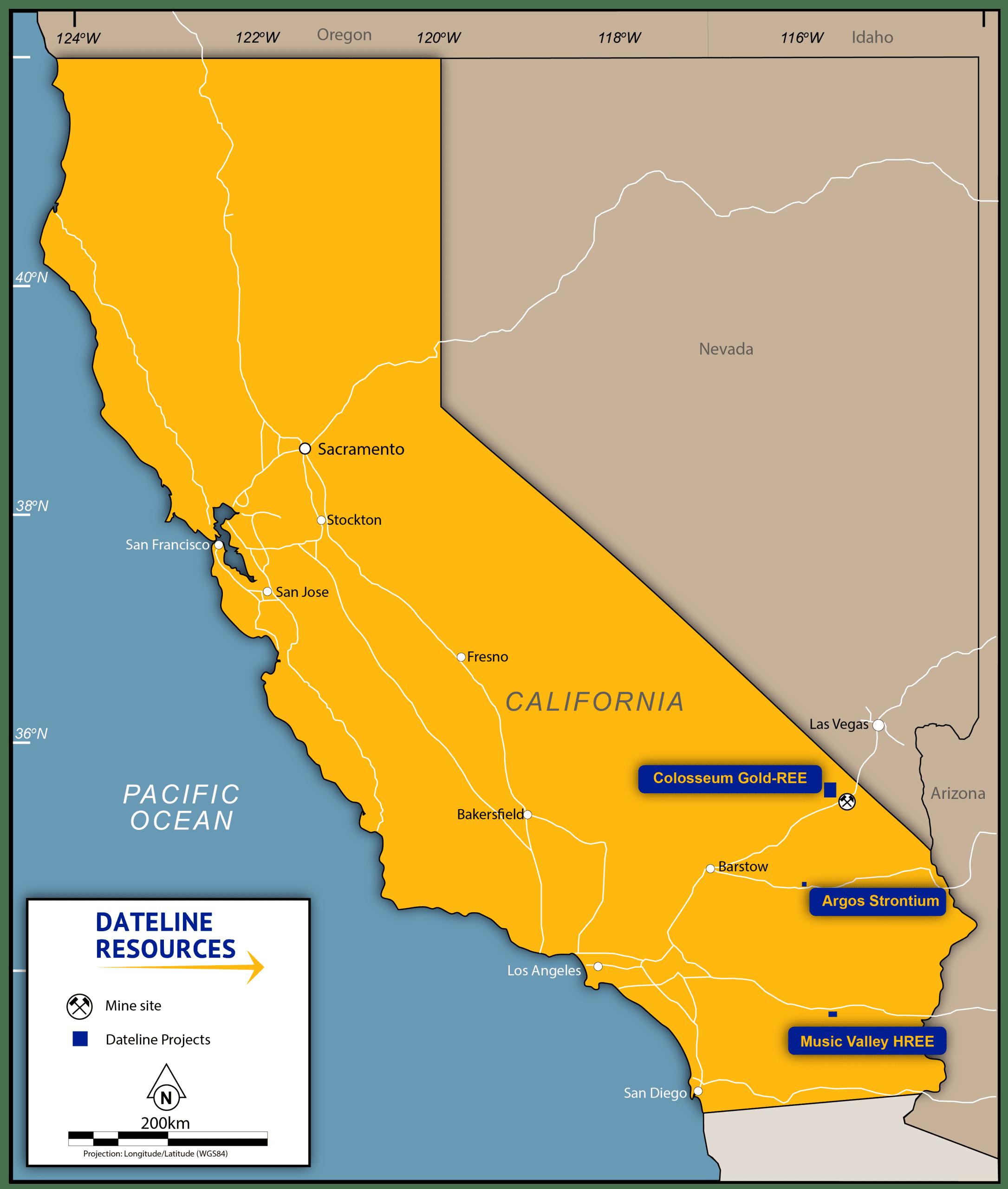
The case (opens in a new tab), brought by the National Parks Conservation Association (opens in a new tab) and represented by Earthjustice (opens in a new tab), challenges the U.S. Department of the Interior’s decision to allow renewed mining activity by Dateline Resources Ltd (opens in a new tab).. At issue is whether federal authorities improperly relied on decades-old approvals—predating the preserve’s designation—to permit industrial activity in a protected landscape.
This is not an isolated dispute. It reflects a broader reality: the U.S. and its allies are increasingly forced to reconcile competing priorities—environmental stewardship, legal process, and the urgent need to secure critical mineral supply chains outside China.
What’s at Stake: Precedent, Process, and Policy Direction
The plaintiffs argue that federal agencies bypassed modern environmental review requirements and ignored prior enforcement actions, effectively allowing mining to proceed under outdated regulatory frameworks. If upheld, the case could redefine how legacy mining rights are interpreted within protected lands, particularly in regions now considered strategically important for energy transition and defense supply chains.
For investors and policymakers, the implications are significant:
- Regulatory Risk: Projects once assumed viable under historical permits may face renewed legal scrutiny
- Timeline Uncertainty: Litigation introduces delays in already slow project development cycles
- Policy Signaling: A shift toward expedited approvals could accelerate supply—but at the cost of legal and public backlash
This tension is amplified by growing political momentum behind domestic mining. As rare earths move from niche commodities to national security priorities, the threshold for permitting—and the tolerance for environmental compromise—is being tested.
The Strategic Context: Why This Matters Now
The lawsuit arrives at a pivotal moment. The U.S. is actively attempting to build a mine-to-magnet supply chain, yet progress remains uneven. Upstream projects are advancing, but midstream processing and downstream magnet production still lag—creating pressure to unlock additional domestic resources wherever possible.
In this context, public lands become both an opportunity and a constraint. The Mojave case illustrates the friction:
- The U.S. needs more domestic supply
- Many potential resources sit on or near protected lands
- Regulatory frameworks were not designed for today’s geopolitical urgency
At the same time, public opposition remains real. Polling cited in the complaint suggests bipartisan concern about mining activity near national parks, underscoring that social license may become as critical as permitting itself.
REEx Bottom Line
This case is not about one mine—it is about how the United States will execute its rare earth strategy under real-world constraints.
The path forward is increasingly clear but difficult:
- Accelerate domestic supply chains
- Maintain legal and environmental integrity
- Avoid policy shortcuts that trigger litigation and delay
The Mojave dispute signals that execution risk in the ex-China supply chain is not just technical or financial—it is political, legal, and societal.
For investors, this reinforces a core REEx thesis: The challenge is no longer identifying resources—it is successfully navigating the system required to develop them.


0 Comments
No replies yet
Loading new replies...
Moderator
Join the full discussion at the Rare Earth Exchanges Forum →