
- Saudi Arabia and Critical Metals Corp signed a nonbinding term sheet for a 50:50 JV to build a $1.5B rare earth processing facility, targeting the chemistry-heavy separation bottleneck that most non-China players lack.
- The project would process Tanbreez concentrate from Greenland into separated oxides and magnet materials, but critical details—site, timeline, permits, technology partner, and proven flowsheet—remain undisclosed.
- Saudi's push to become a non-China refining hub leverages low-cost energy and Vision 2030 ambitions, yet faces execution risks including water intensity, challenging Greenland feedstock viability, and China's price dominance.
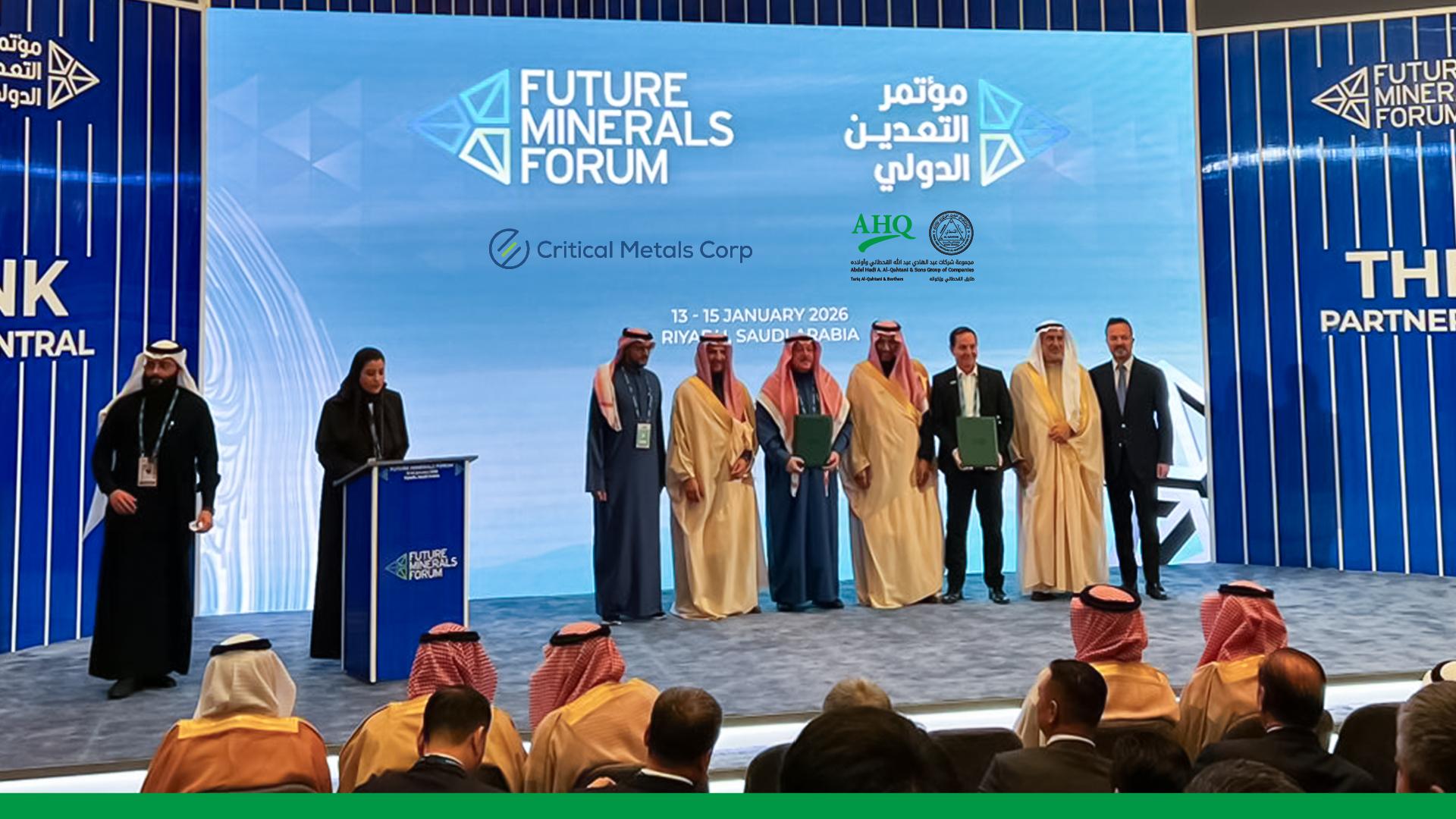
Saudi Arabia mastered refining oil. Now it is bidding for a rare earth refinery—the chemistry-heavy middle of the supply chain that most non-China players still lack. At the start of 2026, a nonbinding term sheet would form a 50:50 JV between (opens in a new tab) Critical Metals Corp and Saudi conglomerate Al‑Qahtani & Brothers (opens in a new tab) to build a Saudi rare earth processing facility. The pitch is mine-to-midstream: Tanbreez concentrates from Greenland into Saudi separation, producing separated oxides, metals, and magnet‑grade material. The capex headline is “up to” US$1.5B.
Coming Together in Jan at Future Minerals Forum
The Receipts vs. the Rhetoric
Confirmed: it is a term sheet, not a final investment decision; 25% of Tanbreez concentrate is allocated to the Kingdom under a long‑term, market‑based offtake; and the company says it keeps a carried 50% interest without issuing equity or taking plant construction debt.
Unproven: no site, timeline, permits, technology partner, or qualified processing flowsheet is disclosed. The language leans hard on “defense” and “allied markets”—useful framing, but it can blur basic execution risk and commercial reality.
And a special note on Greenland
Greenland, at first glance, reads like a geologist’s dream—vast, cold, and rich with promise. Yet between discovery and delivery lies a far harsher terrain: logistics, politics, metallurgy, and market reality. Abundance alone does not build a supply chain. It must be coaxed, processed, financed, and—most critically—accepted.
From Singapore, metals trader Rare Earth Observer casts a colder, more forensic eye (opens in a new tab). In its telling, Kvanefjeld is less a breakthrough than a cautionary tale dressed in ambition. Yes, the deposit is large—impressively so—but scale does not equal viability. Beneath the surface lies stubborn complexity: difficult mineralogy in eudialyte and steenstrupine, uneven recovery rates, and feasibility assumptions that strain credulity. Or so this skeptical-leaning point of view amplifies. One is left to wonder whether the economics are engineered more from optimism than from process reality.
And then there is the shadow that cannot be ignored—radioactivity. Tens of thousands of tons of thorium-bearing waste, potentially nearing 90,000 tons over the life of mine, linger as an unresolved question in a society deeply resistant to uranium-linked extraction. This is not a footnote; it is the story.
The conclusion, delivered without flourish, is stark: Kvanefjeld may be rich in elements, but poor in answers. For all its geopolitical allure, it remains suspended between theory and execution—a project that captivates on paper, yet struggles to find footing in the real world.
Saudi Arabia as a Rare Earth Refining Hub: Perks and Pitfalls
Strengths: low-cost energy (assuming Iran does not further spiral out of control), industrial infrastructure, and Vision 2030’s stated push into mining and value‑added processing.
Weaknesses: water and waste. Separation is chemical, water‑intensive, and ESG‑sensitive; desalination helps but raises operating cost. Challenging feedstock source?
Opportunity: Saudi is stacking midstream bets (including MP Materials/Ma’aden) to become a non‑China processing option.
Threat: China’s price leverage and the solvent‑extraction learning curve to name two notable ones.
REEx take: This matters because it targets the real bottleneck—separation. But many questions to be addressed. Treat it as optionality until the JV is definitive, the flowsheet is proven, and a build schedule is public. Not to mention a secured and commercially viable feedstock.


0 Comments
No replies yet
Loading new replies...
Moderator
Join the full discussion at the Rare Earth Exchanges Forum →