
Highlights
- Southeast Asia holds critical heavy rare earth deposits for dysprosium and terbium, but China still controls most downstream refining, separation, and magnet manufacturing capacity despite rocks lying outside its borders.
- Myanmar's Kachin State contains the world's most strategic heavy rare earth deposits, yet supply runs through militia territory and Chinese-backed operators, making it highly consequential but least investable.
- Malaysia offers the most actionable ex-China platform with actual midstream infrastructure through Lynas and emerging projects, though Western supply security requires building separation chemistry and refining systems beyond just mining geography.
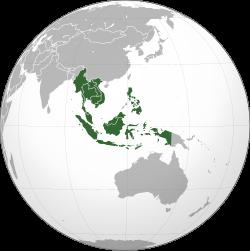
What if the real battle is not over ore, but over control? If you want to understand the future of heavy rare earth supply chains, stop looking only at mines. Start looking at control systems. Southeast Asia is rapidly emerging as one of the most strategically important heavy rare earth regions on Earth, particularly for dysprosium, terbium, and yttrium—the critical elements that help permanent magnets survive extreme heat inside EV drivetrains, missiles, drones, robotics, wind turbines, and advanced defense systems. But this is less a mining map than a geopolitical control map.
According to repeated Rare Earth Exchanges™ (REEx) analysis, the region’s most valuable heavy rare earth deposits sit inside ionic clay belts stretching across Southern China, Myanmar, Vietnam, Laos, and Malaysia. Yet despite growing geological diversification, China still dominates most downstream heavy rare earth refining, separation chemistry, metallization, alloying, and magnet manufacturing capacity. The rocks may lie outside China. The industrial leverage largely does not.
Myanmar: The World’s Richest—and Most Dangerous—Heavy Rare Earth Prize
The center of gravity remains Kachin State in northern Myanmar. REEx Insights rankings place Myanmar’s ionic clay systems among the world’s most strategically important heavy rare earth deposits. Public research from think tanks, mainstream media and frequent reports from REEx all point to the same reality: Myanmar has become a critical source of dysprosium and terbium feedstock flowing into China’s magnet supply chain. The Myanmar rebel holdings are ranked as the number one heavy rare earth assets in the world.
But the supply chain runs through militia territory, civil war, Chinese-backed operators, acid-leach mining systems, and unstable border logistics—not through transparent industrial jurisdictions.
The result is a brutal contradiction. Myanmar may be the world’s most consequential heavy rare earth source outside China itself, yet it is also among the least investable. Environmental destruction across Kachin and Shan states has become severe, with poisoned waterways, stripped mountainsides, toxic runoff, and escalating conflict between ethnic armed groups and the military junta. Chinese operators continue to dominate extraction and border trade flows into southern China’s refining ecosystem.
Vietnam and Laos: Strategic Potential, Uneven Execution
Vietnam represents the opposite profile: enormous geological promise paired with slow industrial execution. Deposits such as Dong Pao (opens in a new tab), Nam Xe (opens in a new tab), and Yen Phu (opens in a new tab) have long attracted international attention, and Hanoi increasingly views rare earths as a strategic industrial asset rather than a simple export commodity. Yet refining capacity remains limited, project development has lagged for years, and much of the downstream ecosystem remains immature.
Laos may be the region’s most closely watched emerging frontier. Geological studies suggest that northern Lao ionic clay systems share similarities with southern China’s heavy rare-earth belts, particularly around Xieng Khouang and Houaphanh provinces. And as REEx has reported, Chinese mining interests are heavily engaged.d But caution is warranted. While the geology is promising, commercial scale remains far less proven than Myanmar’s established production zones. Meanwhile, concerns are mounting over environmental damage, chemical leakage, weak governance, and expanding Chinese influence in mining operations near the Mekong basin.
Malaysia: The Most Practical Ex-China Platform?
Among Southeast Asian nations, Malaysia may currently offer the most actionable near-term strategic platform outside China.
The country combines ionic clay potential with actual midstream infrastructure through Lynas Rare Earths and emerging upstream projects linked to Southern Alliance Mining (SAM) and MCRE Resources in Perak. REEx has repeatedly highlighted Malaysia (and SAM) as one of the few places where upstream rare earth development is beginning to intersect with real refining capability.
Yet even Malaysia remains deeply entangled with China’s industrial orbit. Much of the technology, processing expertise, and downstream market structure still flows through Chinese systems.
Thailand, Cambodia, and Indonesia: Important—but Not Yet Decisive
Thailand, Cambodia, and Indonesia all matter—but differently.
Thailand’s rare-earth story is primarily tied to monazite and xenotime systems associated with tin mineralization. Cambodia remains an early-stage exploration territory with no globally meaningful HREE production yet established. Indonesia possesses broader optionality through monazite-bearing mineral sands and byproduct opportunities linked to nickel and tin systems, but it still lacks the industrial depth needed to become a dominant dysprosium-terbium supplier.
The Western Illusion
The West’s problem is not a lack of heavy rare earth geology. It is the illusion that deposits alone equal supply security. The real power still sits in separation chemistry, refining infrastructure, metallization, magnet manufacturing, logistics, environmental tolerance, and industrial-scale execution. Southeast Asia’s heavy rare earth belt may diversify mining geography, but unless ex-China midstream and downstream systems scale materially, much of the region’s value will continue to feed China’s industrial machine rather than support Western strategic independence.


0 Comments
No replies yet
Loading new replies...
Moderator
Join the full discussion at the Rare Earth Exchanges Forum →