
Highlights
- Strider Technologies, which has raised $110M, will protect Ionic MT's technology, personnel, investors, and suppliers from nation-state threats.
- Ionic MT's Silicon Ridge project boasts a $12.1B after-tax NPV and 69% IRR, though ~75% of modeled production relies on unproven Inferred Resources.
- U.S. Trade Representative Jamieson Greer toured Ionic's Provo facility, signaling federal strategic interest without guaranteeing funding or procurement.
- Ionic MT's product suite includes rare earth oxides, gallium, germanium, rubidium, and cesium—materials increasingly subject to Chinese export controls.
- The partnership signals that the mine-to-market chain now requires counterintelligence alongside geology, processing, capital, and logistics.
Strider Technologies (opens in a new tab) will become Ionic Mineral Technologies’ (opens in a new tab) strategic intelligence partner, helping protect its technology, personnel, investors, and suppliers from nation-state threats. Rare Earth Exchanges sees this as more than a cybersecurity agreement. It marks the emergence of an industrial-security architecture around U.S. critical minerals. REEx has visited Ionic MT’s operations, reviewed its preliminary economics, and tracked growing federal attention. The opportunity is serious—but still early, technical, and execution-dependent.
The Mine Is No Longer the Only Target
In the new critical-minerals race, a promising deposit attracts more than investors. It can attract foreign intelligence, technology-transfer efforts, targeted recruitment, supply-chain manipulation, and partner risk.
Salt Lake City-based Strider Technologies, launched in 2019, uses AI, public data, and proprietary methods to identify state-sponsored threats to intellectual property, talent, and supply networks. The privately held company has raised $110 million, including a $55 million Series C led by Pelion Venture Partners.
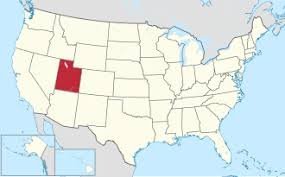
Its new partner, Ionic MT, is developing Utah’s Silicon Ridge polymetallic project and operating a demonstration-scale processing facility in Provo.
REEx Has Seen the Operation
Rare Earth Exchanges has followed Ionic beyond the press-release cycle. During a prior site visit, REEx observed a substantive technical operation under CEO Andre Zeitoun (banker and miner)—not merely a promotional mining concept. The company’s SGS-prepared preliminary economic assessment reports a $12.1 billion after-tax NPV, 69% IRR, and more than $92 billion in projected revenue over 44 years. Yet roughly three-quarters of the modeled production relies on Inferred Resources, meaning those figures remain preliminary and may never be realized.
Federal interest has also intensified. U.S. Trade Representative Jamieson Greer toured Ionic’s Provo facility in July, signaling strategic attention without guaranteeing funding, procurement, or project success.
Rare Earth Exchanges’ View
The partnership is logical. Ionic’s claimed product suite—including rare earth oxides, gallium, germanium, rubidium, cesium, alumina, and advanced silicon materials—touches technologies increasingly exposed to Chinese controls. But intelligence protection cannot substitute for metallurgy, permitting, financing, customer qualification, and commercial scale-up.
In Great Powers Era 2.0™, however, it joins that list. The future mine-to-market chain now includes geology, processing, capital, logistics—and counterintelligence.


0 Comments
No replies yet
Loading new replies...
Moderator
Join the full discussion at the Rare Earth Exchanges Forum →