
Highlights
- Niron Magnetics' iron nitride gives motor designers a fifth magnetic material, enabling new motor architectures beyond rare earth solutions.
- Defense customers are compressing qualification timelines from 10–15 years to roughly 24 months due to geopolitical urgency and China's export controls.
- Niron's goal is a multi-chemistry magnet market that reduces Western dependence on Chinese rare earth supply chains, not the elimination of rare earth magnets.
- Iron nitride represents the first commercially scalable new permanent magnet chemistry in decades, attracting growing interest from both markets and governments.
For decades, engineers have searched for a credible alternative to rare earth permanent magnets. Most efforts never escaped the laboratory. Niron Magnetics now believes it has one of the first commercially scalable challengers: iron nitride. In the latest Rare Earth Exchanges® Podcast (opens in a new tab), Commercial Vice President Tom Grainger (opens in a new tab) delivered one of the clearest and most technically compelling explanations yet of why the technology matters. An engaging, entertaining, and authoritative communicator, Grainger distilled a complex subject into a simple idea: the goal is not to replace rare earth magnets, but to diversify one of the world's most strategically vulnerable supply chains.
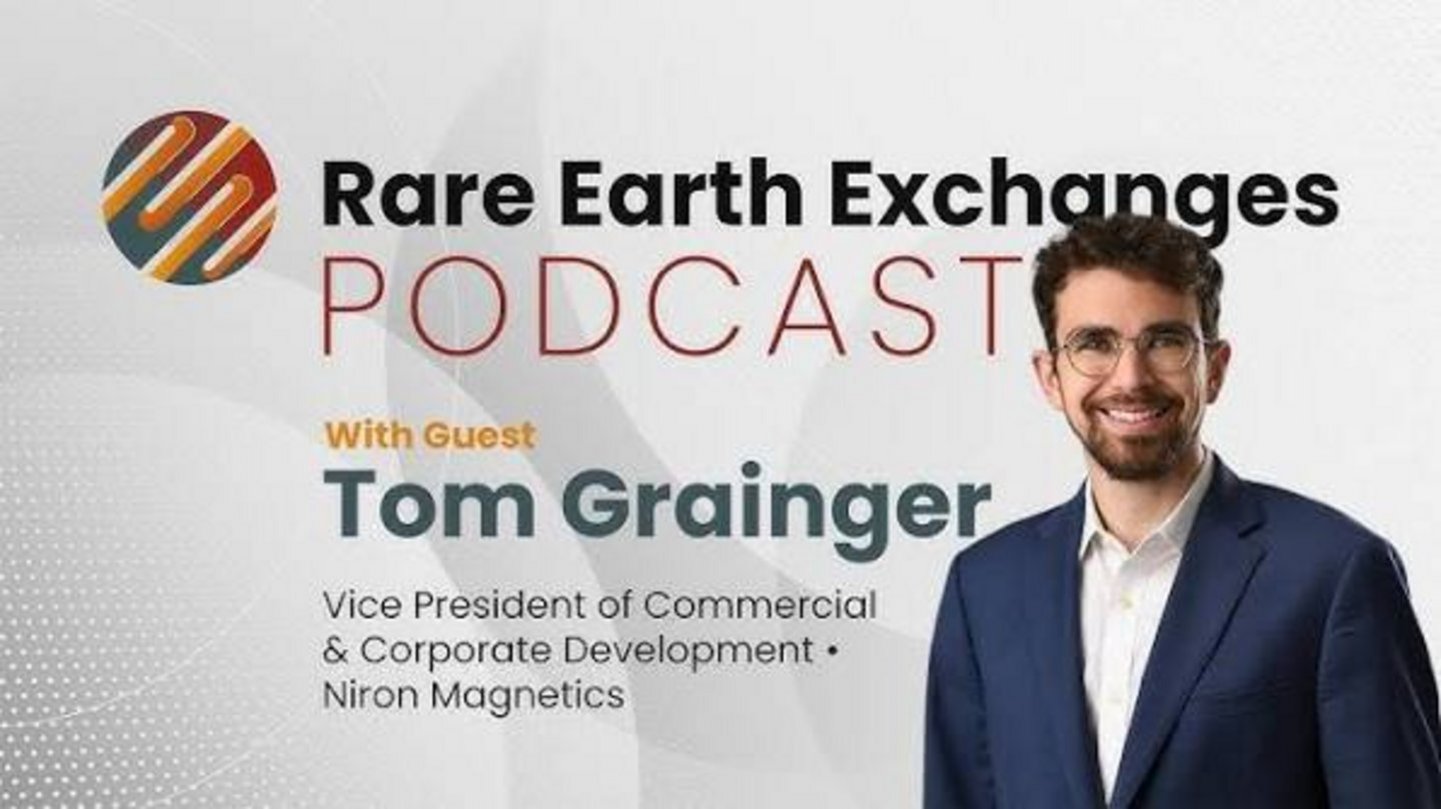
A Fifth Ingredient for Motor Designers
Drawing on his background as an electric machine designer, Grainger compared motor engineers to chefs who've been cooking with only four ingredients for decades. Iron nitride, he argued, gives them a fifth ingredient—one that enables entirely new motor designs rather than simply replicating today's rare earth solutions. Niron's objective is a multi-chemistry magnet market, allowing engineers to optimize for performance, thermal stability, cost, and supply-chain resilience rather than relying on a single magnetic material.
The Surprise: Defense Has Hit Fast Forward
Perhaps the biggest revelation wasn't the material—it was the market. Grainger said customers in the defense sector are now indicating that qualification timelines once measured in 10 to 15 years could compress to roughly 24 months for certain applications, driven by geopolitical urgency and China's tightening export controls. REEx cannot independently verify those timelines, but they reflect the growing pressure to field non-Chinese magnetic technologies more rapidly.
REEx Perspective
Investors should resist viewing Niron as "the company that kills rare earths." That was not Grainger's vision. His thesis is diversification, not replacement. And this is an important nuance. If Niron successfully scales production, iron nitride will not eliminate rare earth magnets. It could, however, reduce one of the West's most dangerous supply-chain chokepoints while giving manufacturers their first meaningful new permanent magnet chemistry in decades. In Great Powers Era 2.0, that is exactly the kind of innovation markets—and governments—are increasingly willing to support.
Watch the REEx Podcast (opens in a new tab).
Register today: REEx Marketplace™ (opens in a new tab)


1 Comment
1 reply
Loading new replies...
New member
Join the full discussion at the Rare Earth Exchanges Forum →