
Highlights
- The Kazakhstan tungsten deal involves a $1.1B project to develop major deposits, backed by non-binding U.S. government Letters of Interest totaling $1.6B—signaling policy support, not committed funding.
- Trump family exposure exists indirectly through layered financial structures, but widely cited claims of a 20% personal stake and $1.6B payout lack supporting evidence in public filings.
- The project reflects strategic necessity: the U.S. has had no domestic tungsten mining since 2015, while China controls about 80% of global supply critical to defense and industrial applications.
Rare Earth Exchanges™ reports on a real asset, A real policy shift, and a narrative running ahead of the facts. The Kazakhstan tungsten deal is not speculation. It is a real, strategically significant transaction emerging at the center of America’s push to rebuild critical mineral supply chains. But the public narrative—particularly online—has moved faster than the underlying evidence. The most accurate reading is the one that is more measured and more important. This is not a simple corruption story. It is something deeper: a convergence of industrial policy, geopolitical urgency, and concentrated capital access.
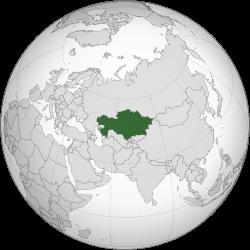
The Core Transaction: Scale, Structure, and Strategic Intent
At the center is Cove Kaz Capital Group LLC, which secured a 70% stake in two major tungsten deposits in Kazakhstan through a joint venture with Tau-Ken Samruk.
Key facts:
- Estimated development cost: ~$1.1 billion
- Resource scale: among the largest undeveloped tungsten deposits globally
- Potential output: ~12,000 metric tons annually (company estimate)
U.S. government agencies have signaled support:
- Up to $900 million from EXIM
- Up to $700 million from the U.S. International Development Finance Corporation
But critically:
These are Letters of Interest (LOIs)—non-binding, preliminary, and conditional.
They signal intent. They do not constitute funding.
The Corporate Layer: Skyline to Kaz Resources
In April 2026, Skyline Builders Group Holding Ltd agreed to merge with Cove Kaz, forming Kaz Resources Inc.(KAZR).
Key clarification:
- KAZR is not yet public
- Closing is expected late 2026 or early 2027
- The structure remains subject to approvals and execution risk
This is a proposed platform, not a completed company.
Ownership Reality: Indirect, Layered, and Incomplete
The involvement of Donald Trump Jr. and Eric Trump is real—but often overstated.
What is supported:
- Investment exposure appears to run through:
- American Ventures LLC
- Managed via entities tied to Dominari Holdings
What is not established in filings:
- No disclosed direct 20% personal stake in Kaz Resources
- No confirmed executive or board roles
The widely cited “20%” refers to Skyline’s stake in a minerals vehicle, not clearly to the Trump sons’ personal ownership.
Bottom line: Exposure exists—but through layered financial structures, not transparent direct control.
Why Tungsten—and Why Now
Strip away personalities, and the strategic logic becomes clear.
- The U.S. has had no meaningful domestic tungsten mining since 2015
- China controls ~80% of the global supply and processing
- Defense rules increasingly restrict Chinese-origin tungsten inputs
- Military demand is accelerating (missiles, armor, precision systems)
This is not an optional policy.
It is a supply chain triage under geopolitical pressure.
Kazakhstan offers:
- Scale
- Existing mining infrastructure
- Relative geopolitical flexibility
This is why the project exists—with or without any specific investor.
Government Support: Signal, Not Subsidy
The $1.6 billion headline is misleading.
Reality:
- EXIM + DFC = non-binding LOIs
- No finalized debt, equity, or guarantees
- No deployed taxpayer capital (yet)
However:
- LOIs materially de-risk projects
- Improve access to capital markets
- Signal policy alignment to investors and allies
This is how modern industrial policy operates:
de-risk first, deploy later—if execution holds.
Geopolitics: Not a Deal—A System
The tungsten project is one node in a broader system:
- November 2025 C5+1 summit prioritized critical minerals
- Parallel U.S.–Kazakhstan agreements (e.g., Wabtec rail deal) reinforced alignment
- Strategic objective: reduce dependence on China’s supply chain dominance
This is not a one-off.
It is industrial policy in motion.
The Real Tension: Optics vs Structure
Two realities coexist:
The Concern
- Investment exposure aligns closely with policy timing
- Ownership pathways are complex and opaque
- Political proximity creates legitimate appearance risks
The Counterweight
- No public evidence of illegality or directive influence
- Investors described as passive
- Funding remains preliminary
- Strategic rationale exists independent of participants
REEx Bottom Line: Track the System, Not the Noise
This is not a proven corruption case as online chatter suggests.
It is not a trivial story either.
It is a structural signal:
In strategic sectors, policy, capital, and access are converging into the same network.
What the facts support
- A legitimate, strategically necessary tungsten project
- Early-stage government backing (not committed funding)
- Indirect Trump-family exposure via financial intermediaries
- A partially opaque ownership chain
What the facts do not support
- A completed $1.6 billion payout
- A confirmed 20% personal stake
- Proven misconduct
Final Read
Strategic necessity explains the deal. Proximity explains the scrutiny.
Both canbe true at the same time.


0 Comments
No replies yet
Loading new replies...
Moderator
Join the full discussion at the Rare Earth Exchanges Forum →