
Highlights
- Modern aerospace is becoming deeply dependent on critical mineral supply chains, with rare earth magnets essential for electric motors, navigation systems, radar arrays, and next-generation aircraft—creating a strategic vulnerability as China dominates global production.
- The aerospace and defense materials market, projected to grow over 5% annually through 2030, relies on critical minerals including titanium, tungsten, scandium, niobium, and specialty alloys for lightweight structures, turbine performance, and advanced manufacturing.
- The real battle in critical minerals extends beyond mining to industrial systems—refining, metallurgy, processing, and manufacturing know-how—making the push by the U.S., Europe, Japan, and allies to build ex-China supply chains crucial for aviation's future.
The future of aviation will not be shaped by aluminum and steel alone. Increasingly, it will depend on a hidden network of rare earth elements and critical minerals powering everything from radar systems and avionics to electric actuators, precision-guided weapons, sensors, satellites, and next-generation aircraft manufacturing itself.
Rare Earth Exchanges™ believes most investors still underestimate a profound shift underway: modern aerospace is becoming deeply dependent on critical mineral supply chains. The global aerospace and defense materials market was estimated at roughly $18.7 billion in 2022 and is projected to grow at more than 5% annually through 2030. But beneath that growth story lies a strategic vulnerability few outside industrial and defense circles fully appreciate.
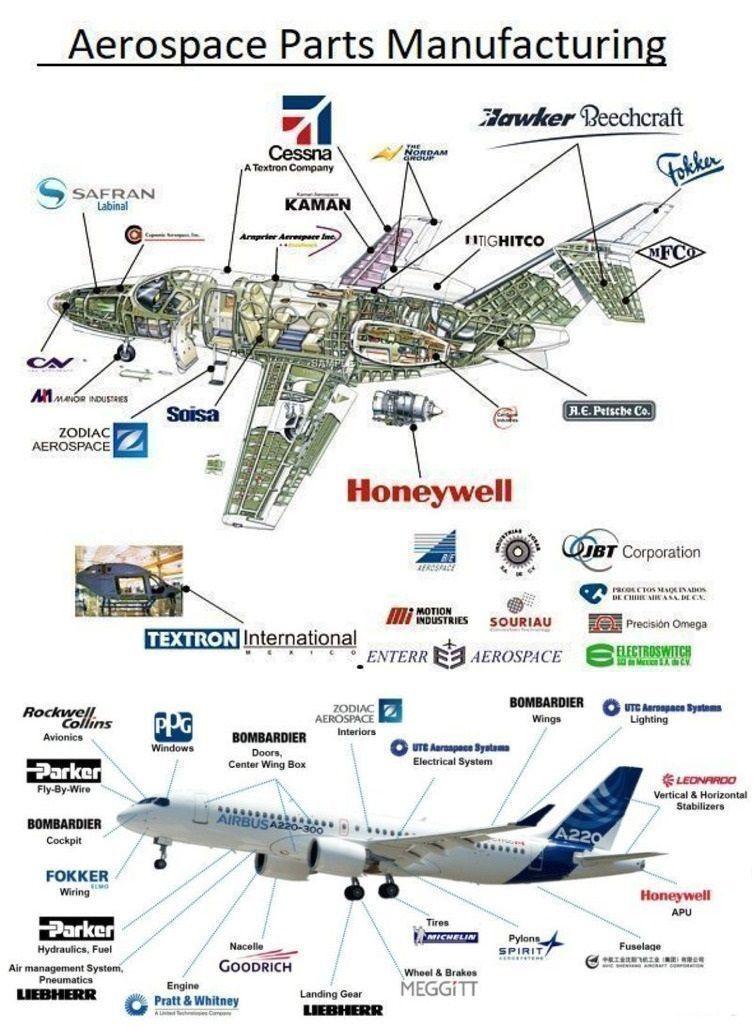
Source: Tejaswini Dhannayak IndustryARC™
Rare earth magnets built from neodymium, praseodymium, dysprosium, and terbium are increasingly essential for:
- electric motors,
- navigation systems,
- radar arrays,
- targeting systems,
- communications equipment,
- and emerging “more electric aircraft” architectures.
Modern fighter jets, drones, missiles, helicopters, satellites, and advanced commercial aircraft increasingly rely on high-performance permanent magnets capable of operating under extreme heat, vibration, and stress.
That means aerospace is becoming intertwined with the same supply chains already critical to EVs, robotics, semiconductors, wind turbines, and AI infrastructure.
And therein lies the geopolitical problem. China still dominates much of the global rare-earth ecosystem, including separation, heavy rare-earth refining, metallization, alloying, and magnet manufacturing. In practical terms, many Western aerospace and defense systems remain structurally dependent on industrial ecosystems that Beijing spent decades building.
The issue extends far beyond magnets. Critical minerals, including titanium, tungsten, scandium, niobium, gallium, graphite, cobalt, and specialty alloys, increasingly shape:
- lightweight aerospace structures,
- turbine performance,
- thermal resistance,
- advanced coatings,
- additive manufacturing,
- and next-generation propulsion systems.
Even aerospace 3D printing depends heavily on advanced powders and mineral-intensive materials processing.
_Rare Earth Exchanges_™ has repeatedly argued that the real battle in critical minerals is not simply about mining. It is about industrial systems: refining, metallurgy, processing, manufacturing, and engineering know-how accumulated over decades.
Aerospace demonstrates this perfectly.
An aircraft is not merely assembled. It is the final integration point for thousands of upstream material dependencies that require precision chemistry, advanced metallurgy, industrial processing, and highly specialized manufacturing ecosystems. That is why the growing push across the United States, Europe, Japan, Australia, and allied nations to build ex-China rare-earth and critical-mineral supply chains matters so profoundly.
Because the future of aviation may increasingly depend not simply on who designs the aircraft—
—but on who controls the materials that make advanced flight possible.


0 Comments
No replies yet
Loading new replies...
Moderator
Join the full discussion at the Rare Earth Exchanges Forum →