
Highlights
- China has launched a state-backed AI exploration initiative targeting ion-adsorption heavy rare earth deposits in Guangxi, one of its most strategically vital rare earth provinces.
- The project combines geological data, geochemical records, and field observations into AI-driven predictive models to improve prospecting accuracy and drilling target prioritization.
- Ion-adsorption deposits are the primary commercial source of critical heavy rare earths like dysprosium and terbium, essential for defense systems, EVs, and wind turbines.
- While no new discovery or production expansion was announced, the initiative signals Beijing's intent to make its resource base smarter and harder for Western nations to compete with.
- As the US, Europe, and Japan race to build alternative supply chains, China is investing in AI tools to deepen its long-term competitive advantage in heavy rare earth supply.
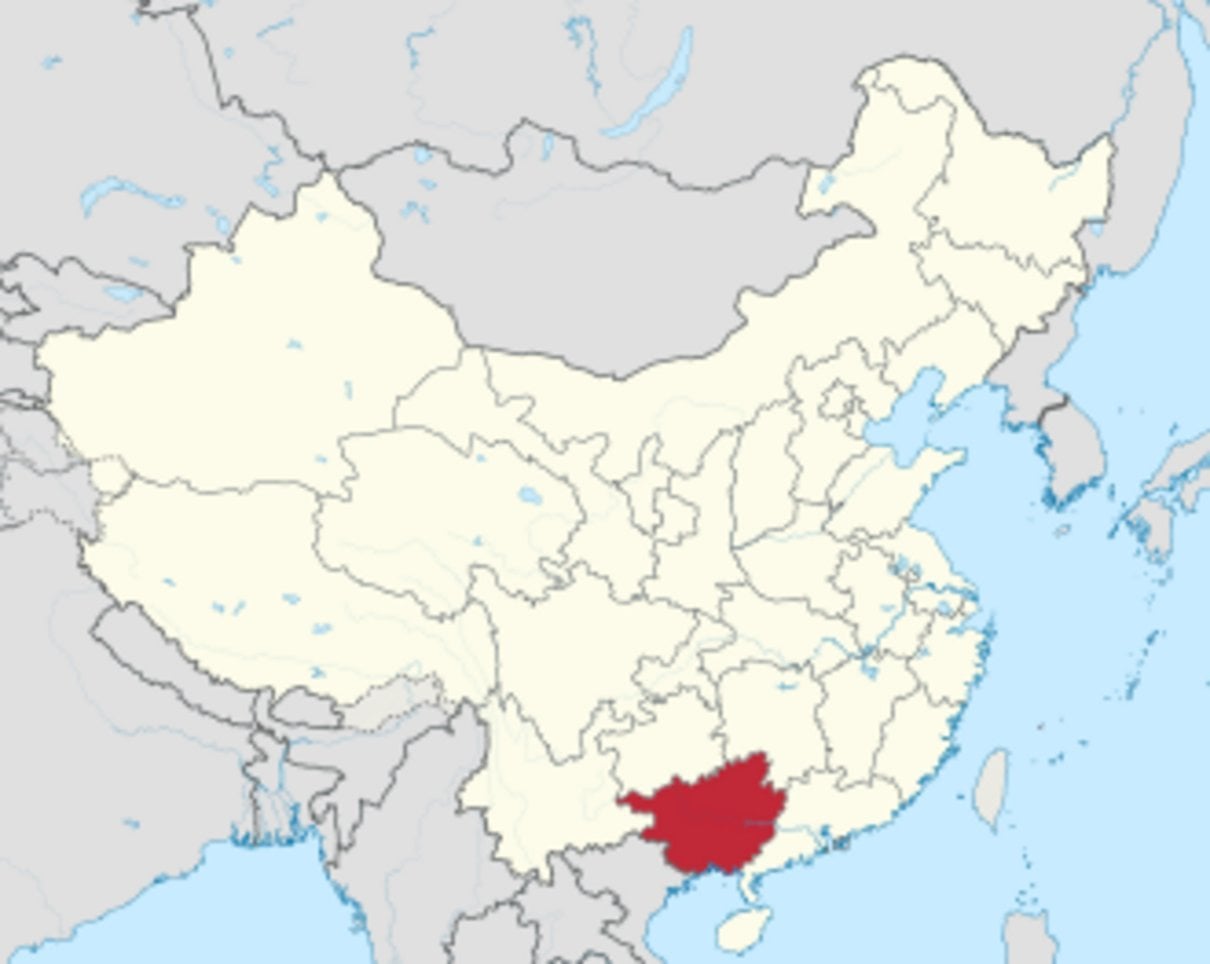
China has launched a major artificial intelligence initiative to improve exploration for ion-adsorption heavy rare earth deposits in Guangxi, one of the country's most strategically important rare earth provinces. While the project does not announce a new discovery or expanded production, it demonstrates Beijing's growing use of AI to strengthen geological intelligence, improve exploration efficiency, and reinforce its long-term dominance over heavy rare earth supply chains.
AI Becomes a Strategic Exploration Tool
A key Guangxi regional R&D project titled "AI-Based Integrated Information Prospecting Prediction and Exploration Demonstration for Ion-Adsorption Heavy Rare Earth Deposits in Guangxi" has officially entered implementation.
The initiative is led by the Guangxi No. 274 Geological Team in partnership with the Institute of Mineral Resources at the Chinese Academy of Geological Sciences. Following approval of the implementation plan in Nanning, project teams immediately began joint field investigations at representative ion-adsorption heavy rare earth deposits.
Why Guangxi Matters
Ion-adsorption deposits are among the world's most valuable rare earth resources because they are the primary commercial source of many heavy rare earth elements, including dysprosium and terbium—materials essential for high-performance permanent magnets, advanced defense systems, electric vehicles, wind turbines, and numerous aerospace applications.
Guangxi is one of southern China's principal ion-adsorption rare earth regions, with abundant known deposits and significant exploration potential.
According to the report, previous exploration methods often lacked the precision needed to accurately predict heavy rare earth mineralization or quantitatively evaluate resources. The new project is intended to address those limitations.
Building Smarter Geological Intelligence
Rather than relying solely on traditional field mapping, researchers will combine decades of geological data, exploration records, field observations, geochemical information, and other datasets into AI-driven, multi-source predictive models.
The objective is not simply to automate exploration, but to improve prospecting accuracy, prioritize drilling targets, enhance resource evaluation, and support more efficient management of China's strategically important heavy rare earth resources.
Experts reviewing the implementation plan concluded that the project is technically feasible while recommending further improvements in data integration, AI mineralization prediction models, and exploration validation.
Why the West Should Pay Attention
This announcement is less about artificial intelligence than strategic resource management.
China is applying AI to improve how it identifies, evaluates, and develops the world's most strategically important heavy rare earth deposits. Even modest improvements in exploration efficiency could reinforce Beijing's already dominant position across the heavy rare earth supply chain.
For the United States, Europe, Japan, and other countries seeking to diversify supply: while Western governments work to build new mines, separation facilities, and magnet plants, China is investing in making its own resource base smarter, more efficient, and more difficult to challenge.
No new deposit, reserve increase, or production expansion was announced. The significance lies in the launch of a state-backed AI exploration platform aimed at strengthening China's long-term competitive advantage in one of the world's most strategically important mineral sectors.
Disclaimer: This report is based on information published by Guangxi Daily, a Chinese state-affiliated media outlet. The project status, technical claims, and strategic implications reflect official reporting and should be independently verified through technical publications and other independent sources.


0 Comments
No replies yet
Loading new replies...
Moderator
Join the full discussion at the Rare Earth Exchanges Forum →