
Highlights
- India emerges as a proving ground for non-rare earth motors in EVs, driven by cost-sensitive markets and supply chain concerns over China's near-total control of rare earth refining.
- Alternative motor technologies, such as reluctance and ferrite-based designs, offer hedging strategies rather than a revolutionary replacement, with performance trade-offs limiting universal adoption.
- The EV industry faces segmentation: high-performance vehicles will continue using neodymium magnets while lower-cost mobility gradually shifts to alternatives in a long-term adaptation.
The electric-vehicle industry, long tethered to rare earth magnets, is testing the limits of its dependence. This is especially so in India. Supply shocks—and China’s near-total command of refining—have prompted carmakers and other vehicle makers to explore motors that do not require these materials at all. India, with its cost-sensitive market and sprawling two-wheeler economy, is emerging as a proving ground. Not for radical invention, but for pragmatic substitution—maybe.
Rare Earth Exchanges™ chronicled substantial advancements being made in America and Europe recently in “Non-Rare Earth Motors: A Transition in Motion, Not yet a Revolution.”
The logic is straightforward. Rare earth magnets are expensive, often accounting for a large share of motor costs. Alternatives—such as reluctance motors or ferrite-based designs—already exist. Yet the narrative of imminent escape from rare earths is overstated.
China’s dominance, particularly in refining, remains the system’s fulcrum. Mining matters less than processing, and here the grip is firm. Carmakers, therefore, are not abandoning rare earths so much as hedging against them.
No Revolution
The appeal of “rare-earth-free” is seductive, but incomplete. As covered by Rare Earth Exchanges™ frequently, and yesterday Channel News Asia (opens in a new tab), cheaper designs are not universally cheaper once performance is considered. Efficiency losses, greater bulk, and thermal constraints introduce engineering compromises that are tolerable in some segments, but not all. Automakers optimize systems, not slogans.
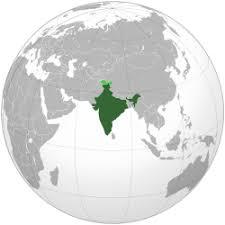
Did you know India is now the world’s most populous nation? India emerges as the fourth-largest economy, surpassing Japan in nominal GDP, not to mention the world’s largest democracy. India is also the second most populous English-speaking nation worldwide.
India’s role reflects this reality. Its advantage lies not in frontier technology, but in scale and constraint. Two- and three-wheelers dominate; consumers are price-sensitive; localization is policy. In such conditions, lower-performance alternatives can thrive.
The result is not disruption, but segmentation. High-performance vehicles will continue to rely on neodymium-iron-boron magnets. Lower-cost mobility may gradually shift away.
Rare earth demand, then, is unlikely to collapse. It may, however, soften at the margins. The real story is not rebellion, but adaptation—quiet, uneven, and shaped by economics more than ambition. And as Rare Earth Exchanges describes, it’s the first innings in a long, nine-inning game.


0 Comments
No replies yet
Loading new replies...
Moderator
Join the full discussion at the Rare Earth Exchanges Forum →