
Highlights
- Kachin State, Myanmar has emerged as the world’s #1 strategic heavy rare earth asset outside China, with the Kachin Independence Army seizing control in October 2024 and immediately driving terbium prices from $1,200 to $1,950 per kilogram through supply restrictions.
- The region functions as a “sacrifice zone” for the global energy transition, supplying critical dysprosium and terbium for EVs, wind turbines, and military systems while suffering severe environmental contamination from unregulated in-situ leaching operations.
- China’s dominance stems not from deposits but from controlling 98% of heavy rare earth processing capacity, with Kachin feeding this industrial ecosystem—highlighting that the rare earth war is fundamentally about industrial systems, not just mines.
Rare earths are no longer merely obscure industrial commodities. They have become instruments of geopolitical leverage, defense capability, and national industrial survival. And increasingly, one of the most strategically important upstream heavy rare earth regions on Earth sits not in China—but in the conflict-ridden mountains of Kachin State, northern Myanmar.
A newly released research paper (opens in a new tab) by Kachin scholar and environmentalist Zung Ting argues that Kachin has become a “sacrifice zone” for the global energy transition, supplying dysprosium and terbium essential for electric vehicles, wind turbines, drones, missile systems, and advanced military technologies.
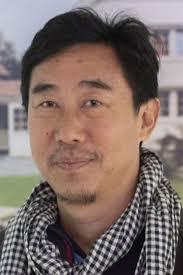
Zung Ting, Kachin Environmentalist
Source: Meta
For Rare Earth Exchanges™, the findings reinforce a thesis we have advanced repeatedly: Kachin’s ion-adsorption clay deposits likely represent the single most strategically important upstream heavy rare earth asset base outside China itself. REEx ranks the Kachin rare earth corridor—including Chipwi and Pangwa—as the world’s #1 upstream heavy rare earth strategic asset due to its concentration of dysprosium and terbium, proximity to Chinese midstream infrastructure, and direct integration into Beijing’s industrial ecosystem.
The report details how the Kachin Independence Army (KIA) seized control of the region’s rare earth mining hubs in October 2024 from junta-aligned militias, transforming the rebel movement into a de facto gatekeeper of globally critical mineral supply chains.
That shift immediately reverberated across global markets. According to the paper, KIA-imposed restrictions, taxation increases, and supply disruptions contributed to terbium prices surging from approximately $1,200 per kilogram to more than $1,950 per kilogram within weeks, exposing the extraordinary fragility of global heavy rare earth supply chains.
But the report also exposes a deeper contradiction at the heart of the so-called green transition.
While Western governments aggressively pursue electrification and decarbonization, much of the upstream extraction underpinning that transition occurs in environmentally devastated conflict zones operating under weak governance structures. The paper documents severe contamination associated with in-situ leaching operations, including arsenic, cadmium, radioactive elements, acidic wastewater, and ecosystem degradation affecting the Irrawaddy watershed and broader Mekong-linked river systems.
Yet the broader strategic lesson may be even more important. China dominates approximately 98% of global heavy rare earth processing capacity not simply because it possesses deposits, but because Beijing spent decades mastering solvent extraction separation, metallization, alloying, and magnet manufacturing at an industrial scale. Kachin feeds that machine. Without Chinese midstream processing infrastructure, these upstream deposits possess far less strategic utility.
This is why REEx continues to argue that the rare earth war is not fundamentally about mines. It is about industrial ecosystems. And today, one of the world’s most consequential industrial battlegrounds runs directly through the mountains of Kachin State.
From Sacrifice Zone to Sovereign Future: Can Kachin Build a Different Rare Earth Destiny?
Looking ahead, the long-term solution for Kachin State cannot simply be more extraction under a different flag. A sustainable future would require environmental remediation, transparent governance, and genuine economic empowerment for the region’s largely Christian ethnic communities, who have borne the costs of decades of war, displacement, and resource exploitation. If responsibly developed, Kachin’s extraordinary heavy rare earth endowment could become the foundation for a different trajectory—one tied not merely to raw material extraction, but also to regional value creation, technical education, and, eventually, even localized midstream processing and heavy rare earth separation capacity.
Such a vision would be extraordinarily difficult given the geopolitical realities and capital intensity involved, but it would move Kachin away from functioning solely as an upstream sacrifice zone feeding foreign industrial powers in this emerging Great Powers Era 2.0. In theory, a future anchored in self-determination, environmental stewardship, and participation in higher-value segments of the rare-earth supply chain could offer one of the few viable paths toward durable economic development and greater strategic autonomy for the region.


0 Comments
No replies yet
Loading new replies...
Moderator
Join the full discussion at the Rare Earth Exchanges Forum →