
Highlights
- Trinity Metals has grown tungsten production from 29 to over 100 tonnes per month and targets 300 tonnes, with existing supply relationships in the US and Austria.
- The company was formed in 2022 through a merger of three Rwandan mining operations and is majority owned by TechMet, backed in part by the US International Development Finance Corporation.
- Production targets and expansion plans remain management objectives dependent on capital investment, permitting, and successful processing upgrades rather than verified outcomes.
- Rwanda is strengthening its upstream mining position, but the greater strategic leverage in critical minerals lies downstream in refining, processing, and advanced manufacturing.
- An international stock exchange listing is planned within 12 to 18 months, making independent verification of operational claims increasingly important for investors.
Rwanda's Trinity Metals (opens in a new tab) is positioning itself as a significant supplier of tungsten, tin, and tantalum ("3Ts") by expanding production through mechanization, improved mineral recovery, and underground mine development. The company's growth story is supported by measurable production increases, investments in modern mining methods, and established export relationships with international customers. However, investors should distinguish between operational gains already achieved and ambitious expansion targets that remain dependent on capital investment, successful processing upgrades, permitting, and execution. Most importantly, while the interview presents Rwanda as an alternative source of critical minerals outside China, the real strategic bottleneck extends well beyond mining into refining, processing, and advanced manufacturing.
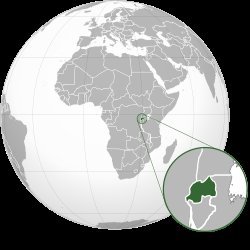
Rwanda Seeks a Larger Role in Critical Minerals
The race for critical minerals is no longer about discovering ore—it is about building resilient supply chains.
In an interview with Mining Review Africa, Trinity Metals CEO Peter Geleta outlined plans to triple tungsten production at the Nyakabingo mine while significantly expanding tin production through mechanization, improved mineral recovery, underground development, and new processing facilities. The company also intends to pursue an international stock exchange listing within the next 12 to 18 months.
Where the Evidence Is Strong
Unlike many junior mining stories built primarily on exploration results, Trinity points to measurable operational improvements. Tungsten production reportedly increased from 29 to more than 100 tonnes per month, while tin production has grown substantially at both the Rutongo and Musha operations. Existing commercial relationships with Global Tungsten & Powders (opens in a new tab) in the United States and Wolfram Bergbau und Hütten in Austria demonstrate that Trinity already supplies established participants in Western industrial supply chains.
The Questions That Still Matter
The interview is naturally promotional. Production targets of 300 tonnes per month of tungsten and substantially higher tin output remain management objectives rather than independently verified outcomes. More importantly, the article from Mining Review (opens in a new tab) largely stops at the mine gate. Mining concentrates is only the first step. Where will future tin concentrates be refined? Where will tantalum be converted into high-purity powders for electronics? How much downstream value will Rwanda ultimately capture rather than export?
These questions matter because the greatest strategic leverage in critical minerals increasingly resides downstream—not upstream.
REEx Assessment
Trinity appears to be executing a credible operational transformation while helping modernize Rwanda's mining sector. If management delivers on mechanization, improved recoveries, and underground expansion, the company could become an increasingly important supplier of the 3Ts.
Yet in the Great Powers Era 2.0™, investors should remember a fundamental principle: strategic mineral security is measured not simply by tonnes mined, but by who controls refining, processing, advanced materials, and ultimately manufacturing. Rwanda is strengthening its upstream position. Whether it can capture more downstream value remains the larger investment story.
Trinity Metals: Company Profile
Founded in May 2022, Trinity Metals Ltd. was created through the merger of three long-established Rwandan mining companies—Rutongo Mines Ltd., Trinity Nyakabingo Mine Ltd. (formerly Eurotrade International), and Trinity Musha Mines Ltd. (formerly Piran Rwanda Ltd.). The consolidation followed roughly two years of negotiations among shareholders and the Government of Rwanda with the objective of creating a larger, professionally managed critical minerals producer capable of competing internationally.
Today, Trinity focuses on producing the so-called "3Ts"—tungsten, tin, and tantalum—three minerals essential to defense systems, semiconductors, electronics, aerospace, and advanced manufacturing. The company is also exploring lithium opportunities while investing heavily in mechanization, underground mine development, and modern mineral processing to improve recovery rates and expand production. Its stated mission is to become a responsible, conflict-free supplier of technology metals while modernizing Rwanda's mining industry.
The company is majority owned by TechMet (opens in a new tab), a UK-based private critical minerals investment company backed by a consortium of investors that includes the U.S. International Development Finance Corporation (DFC). Other shareholders include Piran Resources and the Government of Rwanda, represented through Ngali Holdings Ltd. (formerly Agaciro Development Fund). This ownership structure provides Trinity with both private-sector capital and strategic government backing while aligning it with Western efforts to diversify critical mineral supply chains.
Leadership is headed by CEO Peter Geleta (opens in a new tab), a veteran mining executive with more than 35 years of experience, including senior leadership roles at Acacia Mining, AngloGold Ashanti, and Barrick Gold. Under Geleta, Trinity has emphasized operational discipline, mechanization, governance, and production growth rather than exploration alone.
From a Rare Earth Exchanges perspective, Trinity represents more than a mining company. It is part of a broader geopolitical effort to build non-Chinese critical mineral supply chains. However, its long-term strategic value will ultimately depend not only on increasing mine output but also on whether Rwanda can capture more downstream value through refining, processing, and advanced materials manufacturing rather than remaining primarily an exporter of mineral concentrates.


0 Comments
No replies yet
Loading new replies...
Moderator
Join the full discussion at the Rare Earth Exchanges Forum →