
Highlights
- Trump's executive order restricts defense sourcing waivers, mandates mine-to-product supply chain mapping, and accelerates domestic supplier qualification starting January 2027.
- The Iran conflict exposed America's dangerous dependence on foreign industrial ecosystems for replenishing precision munitions and interceptors.
- Strategic advantage now hinges on the industrial midstream—rare earth separation, alloys, and permanent magnet manufacturing—not just raw ore ownership.
- The U.S. faces critical shortages of metallurgists, mining engineers, and processing infrastructure, producing only ~200 mining engineers annually versus China's ~10,000.
- Investors should view critical materials as instruments of national power, with winners being companies that build integrated mine-to-magnet supply chains.
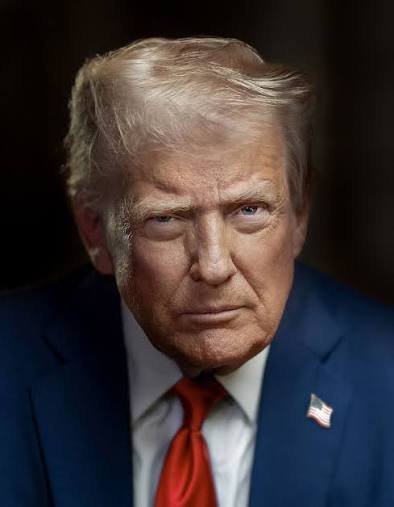
President Donald Trump's July 20 executive order (opens in a new tab) may become one of the most consequential industrial policy decisions of the post-Cold War era. By sharply restricting defense sourcing waivers, requiring mine-to-product supply chain mapping, accelerating qualification of domestic suppliers, and demanding greater contractor accountability, the order signals a profound shift in American strategic thinking. Rare Earth Exchanges® believes this is more than procurement reform—it is another defining milestone of the Great Powers Era 2.0™, where industrial ecosystems increasingly determine geopolitical power. Yet executive orders cannot manufacture permanent magnets, train metallurgists, or build separation plants overnight. Success will require something far larger: a coordinated national mobilization of government, industry, academia, labor, and capital to rebuild America's strategic industrial base before geopolitical events force the issue.
The Iran War Was the Warning Shot
Wars rarely reveal their most important lessons on the battlefield. They reveal them in factories and supply chains.
Our recent analysis of the Iran conflict argued that America's greatest vulnerability was never simply the number of Tomahawks or Patriot interceptors expended. It was the uncomfortable realization that replenishment itself increasingly depends upon industrial ecosystems America no longer fully controls. Iran's missile enterprise is sustained by procurement networks reaching into China's manufacturing base and strengthened by Russian military cooperation. Every precision interceptor launched against Tehran is therefore an indirect test of American industrial endurance against a broader strategic alignment. President Trump's executive order should be viewed through precisely that lens.
Washington Finally Recognizes the New Battlefield
For decades, America's defense establishment treated global supply chains as commercial infrastructure optimized for efficiency and cost. That assumption belonged to an era when globalization appeared politically stable and geopolitical rivals were viewed as dependable trading partners.
The executive order recognizes that era has ended. By tightening sourcing requirements, restricting waivers beginning January 1, 2027, requiring contractors to trace supply chains back to raw materials, accelerating qualification of domestic suppliers, and directing comprehensive supply-chain illumination, Washington is acknowledging a strategic reality Rare Earth Exchanges® has advanced since our launch in January 2025: industrial ecosystems have become strategic terrain. For investors, the message is unmistakable. Critical materials are no longer commodities. They are instruments of national power.
The Midstream Is the Real Prize
Perhaps the order's greatest strength is what it implicitly recognizes. Strategic advantage is not secured by mines alone. Complete bills of materials, supplier vetting, mine-to-product traceability, and accelerated qualification all point toward the same conclusion: the decisive bottleneck lies in the industrial midstream—rare earth separation, metals, alloys, permanent magnets, precision manufacturing, and trusted supply-chain verification.
Owning ore without controlling the industrial chain that transforms it into military capability is no longer sufficient.
That insight sits at the very heart of our thesis: Great Powers Era 2.0™.
An Executive Order Is Not an Industrial Strategy
The executive order correctly diagnoses America's strategic vulnerability.
Whether it cures it is another matter. Industrial ecosystems cannot be rebuilt through regulation alone. America faces shortages of metallurgists, process engineers, mining specialists, magnet manufacturers, skilled trades, permitting capacity, testing facilities, and qualification infrastructure. For example, China produces about 10,000 mining engineers per year; the U.S. produces about 200.
Capital formation remains uneven. Environmental reviews remain lengthy. Supply chains remain fragmented. Above all, execution remains dispersed across dozens of agencies and hundreds of private actors, in some ways competing mine-to-magnet programs. This moment therefore demands something far more ambitious than compliance. It demands real planning, coordination, even national orchestration.
America needs a whole-of-nation industrial strategy that aligns workforce development, university research, vocational education, permitting reform, project finance, allied partnerships, advanced manufacturing, and mine-to-magnet execution under a common strategic objective. In many respects, it requires an Operation Warp Speed for Critical Materials—compressing years of fragmented decision-making into a coherent national mobilization.
The Investment Thesis
For investors, this executive order represents far more than a regulatory event. It confirms that Washington has entered the industrial phase of geopolitical competition. The winners will not necessarily be those owning the largest mineral deposits. They will be companies capable of building the processing plants, metalmaking capacity, alloy production, permanent magnet manufacturing, software, traceability platforms, engineering talent, and integrated supply chains that national security now demands.
Important for our community. The Great Powers Era 2.0 is no longer emerging.
It has arrived. The question is no longer whether America understands the challenge.
It is whether America can execute faster than its competitors.


0 Comments
No replies yet
Loading new replies...
Moderator
Join the full discussion at the Rare Earth Exchanges Forum →