
Highlights
- Tungsten prices have surged over 200% in 2026 as China tightens export controls and restricts shipments to just 15 approved firms, exposing a highly concentrated supply chain where China controls 80-85% of global production and dominates critical refining capacity.
- The strategic chokepoint isn't mining—it's China's control of midstream processing from tungsten concentrates to ammonium paratungstate (APT), the industrial gateway used across defense, aerospace, semiconductors, and automotive sectors where demand is rising 8% annually.
- With no exchange-traded pricing and opaque OTC markets anchored to Chinese policy, tungsten has become a geopolitically managed asset rather than a free market commodity, leaving the U.S. structurally exposed with no active domestic mines.
Sharp escalation in global tungsten markets—with prices up more than 200% this year—signals something far larger than a commodity spike. A late-April 2026 report (opens in a new tab) by Reuters journalists Ashitha Shivaprasad and Anmol Choubey shows tightening Chinese export controls and rising military demand are colliding to expose a fragile, highly concentrated supply chain. Tungsten—essential for aerospace, munitions, semiconductors, and high-temperature systems—has quietly become a strategic chokepoint, with China capping exports, cutting mining quotas, and restricting shipments to just 15 approved firms through 2027.
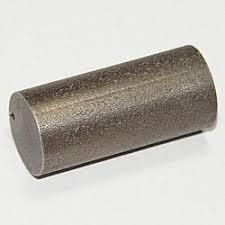
The Supply Chain Reality: Concentrated, Layered, Controlled
Today’s tungsten ecosystem is dominated by three mining hubs:
- China (~80–85%) – the overwhelming global producer
- Vietnam (~5–7%) – led by Masan High-Tech Materials
- Russia (~3–5%) – smaller but strategically relevant
Beyond mining, control tightens. China processes and refines the majority of tungsten concentrates into ammonium paratungstate (opens in a new tab) (APT) and downstream powders—the true industrial gateway. European pricing hubs (e.g., Rotterdam) reflect global pricing, but not control.
Where Value Is Captured
Tungsten is consumed across:
- Automotive (25–30%)
- Industrial tooling and cutting (largest share)
- Defense and aerospace (~12% → rising to ~15%)
- Electronics and semiconductors
Key players include:
- China Minmetals (opens in a new tab), Xiamen Tungsten (opens in a new tab), China Tungsten & Hightech (opens in a new tab) (state-backed ecosystem)
- Masan (opens in a new tab) (Vietnam), Almonty (opens in a new tab) (Korea/Portugal), Wolfram Bergbau (opens in a new tab) (Austria)
But the system is clear: China doesn’t just mine—it controls processing, pricing, and export pathways.
The Ecosystem Advantage
China’s tungsten dominance is not accidental. It built:
- integrated mining → refining → manufacturing chains
- state-backed pricing discipline
- export licensing as a geopolitical lever
This is the same playbook seen in rare earths.
The Strategic Shift
As defense demand rises ~8% annually and geopolitical tension persists, tungsten is transitioning from commodity to a strategic asset class. The U.S., with no active mines, remains structurally exposed.
Tungsten Pricing
Tungsten occupies a strategically critical but opaque corner of global commodities markets: it is not exchange-traded like copper or gold, but instead priced through fragmented, over-the-counter benchmarks—primarily ammonium paratungstate (APT)—tracked by agencies such as Fastmarkets, Argus, Asian Metal, and SMM, with China’s domestic market serving as the dominant pricing anchor and Europe (Rotterdam) acting as a secondary reference.
With no liquid futures market, pricing is largely determined through private, long-term bilateral contracts, making the market less transparent, difficult to hedge, and highly sensitive to policy shifts. China’s control—producing roughly 80–85% of global supply and dominating refining—allows it to influence prices directly through quotas, export restrictions, and domestic policy, meaning global pricing often follows Chinese signals rather than pure market forces. Structurally, tungsten is not a free market commodity but a geopolitically managed chokepoint, where control over pricing transparency equates to control over risk, and China holds both.
REEx Bottom Line
This is Great Powers Era 2.0 in motion: Control the midstream, control the market.
Western response must move beyond mining headlines to:
- refining capacity
- recycling scale
- industrial ecosystem buildout
Because in tungsten—as in rare earths—the chokepoint is not in the ground. It’s in the system.
Citation: Shivaprasad, A., & Choubey, A. (2026). Tungsten breaks records as China's export curbs and military demand boost investment. Reuters.


0 Comments
No replies yet
Loading new replies...
Moderator
Join the full discussion at the Rare Earth Exchanges Forum →