
Highlights
- U.S. Energy Secretary Chris Wright declared at the G7 Energy Ministers' meeting that the West must use 'non-market practices' to counter China's rare earth monopoly, marking a shift away from free-market approaches.
- G7 nations agreed to form a Critical Minerals Alliance with direct subsidies, stockpile coordination, and preferential procurement to build non-Chinese refining capacity.
- Wright's statement confirms that strategic minerals are now instruments of national power rather than free-market commodities, signaling a post-neoliberal era of government-backed industrial policy.
Speaking from Toronto at this week’s G7 Energy Ministers’ meeting, U.S. Energy Secretary Chris Wright declared (opens in a new tab) that the West must be prepared to use “non-market practices” to counter China’s overwhelming dominance in rare earth production. Wright’s remarks—delivered as the G7 finalizes a new critical minerals alliance—mark a public acknowledgment that market forces alone can’t dislodge Beijing’s command of the rare earth value chain. Has the U.S. government been studying Rare Earth Exchanges (REEx) content? We know they have.
Table of Contents
“China used non-market tactics to squish the rest of the world out of manufacturing these products,” Wright said, adding that coordinated intervention is now “a strategic necessity.”
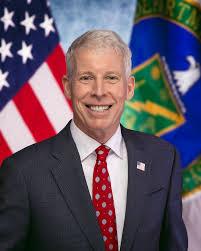
Chris Wright: Embracing Reality
Reading Between the Lines: Industrial Policy Goes Prime Time
Wright’s comments confirm what REEx has argued since onset of the platform: the U.S. can no longer outsource industrial policy to the invisible hand. The Defense Department’s equity stake in MP Materials hinted at this shift, but Wright’s statement elevates it to formal doctrine. G7 ministers from Canada, France, Germany, Japan, and the U.K. reportedly agreed in principle that direct subsidies, stockpile coordination, and preferential procurement may be required to jump-start non-Chinese refining capacity.
Canada’s host, Energy Minister Tim Hodgson, announced plans to launch a G7 Critical Minerals Alliance aimed at mobilizing private investment for projects that bypass Chinese-controlled firms. This could inject life into stalled Western initiatives in magnet metals, battery precursors, and advanced processing.
Between Pragmatism and Propaganda
The AFP-sourced report (opens in a new tab), while factual in tone, echoes U.S. political messaging that paints China as the sole manipulator of global prices. While Beijing’s export curbs and market flooding tactics are well documented, Western governments, too, are now openly embracing interventionist policy—just from the opposite angle. The timing of Wright’s comments, coming days after China suspended its new export controls for one year, also suggests a carefully choreographed balance of pressure and concession between the world’s two critical minerals superpowers.
Still, the pivot toward “non-market” responses represents a tectonic shift. The West is acknowledging that strategic minerals are not a free-market commodity—they’re instruments of national power. For investors, this signals a future defined by government-backed industrial realignment rather than laissez-faire globalization.
Rare Earth Reality Check
The rhetoric is bold—but the test will be execution. Without scaled feedstock, separation, and metallization capacity, even the most muscular policy will remain aspirational. Yet Wright’s declaration is a clear marker that the post-neoliberal minerals era has arrived.
This report originates from a France 24/AFP news item and should be independently verified before forming business or investment conclusions.
©!-- /wp:paragraph -->


0 Comments
Discuss this article