
Highlights
- Canada supplies 63% of U.S. crude oil imports and ~99% of natural gas imports, making it a critical energy dependency.
- The combined US-Canada trade imbalance shrinks to ~$21 billion when services surplus offsets the $48.3B goods deficit.
- Canada holds uranium, potash, nickel, cobalt, graphite, copper, and rare earth potential coveted by China, Europe, and Japan.
- Aggressive tariffs risk pushing Canada toward Beijing, Brussels, and Tokyo at a moment when non-China supply chains are being built.
- Washington must treat Canada as a strategic industrial partner, not a transactional trade target, to win the Great Powers Era 2.0 competition.
Washington may be squeezing Canada precisely when the world is bidding for what Canada owns. The tariff fight is about trade, but the strategic ledger includes oil, natural gas, freshwater, and one of the planet’s richest mineral endowments. In Great Powers Era 2.0™, Canada is not merely America’s northern customer. It is potentially one of the most valuable nodes in the emerging non-China industrial network.
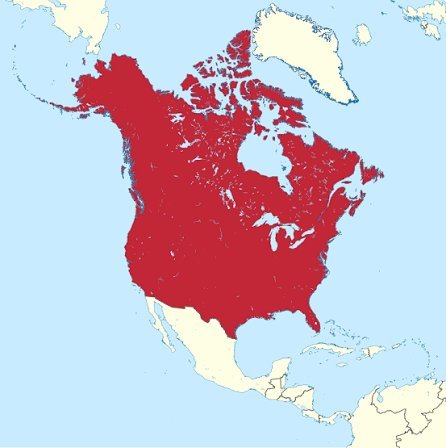
REEx Insight: The Balance Sheet Beneath the Border
The headline trade deficit deserves context. In 2025, America ran a $48.3 billion goods deficit with Canada but a $27.7 billion services surplus—shrinking the combined imbalance to roughly $21 billion.
Then comes energy. America imported $111 billion of Canadian energy in 2025. Canada supplied roughly 3.9 million barrels of crude oil per day—about 63% of all U.S. crude imports—and approximately 99% of U.S. natural-gas imports. That’s a serious dependency.
And there is another strategic asset rarely appearing in tariff headlines: water. Canada holds roughly 20% of the world's freshwater reserves and 7% of renewable freshwater supply—although much is geographically inaccessible and cannot simply be exported south.
Great Powers Era 2.0: Don't Misprice the Neighbor
Now add uranium, potash, nickel, cobalt, graphite, copper, and rare earth potential.
China sees opportunity. Europe sees a democratic resource partner. Japan is already supporting Canadian critical-mineral and rare-earth projects. Canada increasingly sees choices.
That is the Great Powers Era 2.0™ churn: resources are being reorganized into competing networks of mines, processing plants, capital, technology, energy, and alliances. Trump may ultimately extract better trade terms. But Washington should distinguish leverage from strategic value. President Trump needs to be strategic and not transactional in focus. The future of America depends on this.
America needs Canada for more than hockey sticks and dairy. It needs a friendly, resource-rich northern industrial platform capable of helping break Chinese processing dependence.
Winning the tariff argument while nudging that platform toward Beijing, Brussels, and Tokyo would be a remarkably expensive victory.


0 Comments
No replies yet
Loading new replies...
Moderator
Join the full discussion at the Rare Earth Exchanges Forum →