
Highlights
- Wyoming secured regulatory control over radioactive byproducts in rare earth mining, reducing permitting costs and timelines but not addressing core supply chain dependencies.
- The U.S. controls minimal rare earth separation (China holds 85–90%) and magnet production capacity, meaning faster mining permits don't equal supply chain sovereignty.
- Rare Element Resources' Bear Lodge Project benefits from streamlined regulation but lacks heavy rare earths and scaled processing needed to break Chinese midstream dominance.
The State of Wyoming has a new agreement with the Nuclear Regulatory Commission (opens in a new tab) (NRC) to assume control over radioactive byproducts tied to rare earth mining. The shift could cut permitting costs and timelines—an operational win—but does not resolve the deeper structural reality: America remains heavily dependent on foreign, primarily Chinese, midstream processing capacity.
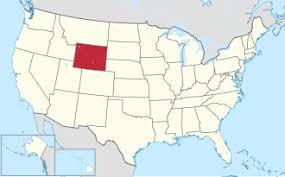
The Quiet Power Shift Beneath the Surface
Wyoming has secured regulatory primacy over uranium- and thorium-bearing byproducts associated with rare earth extraction—materials that previously triggered overlapping federal and state oversight. The practical effect is straightforward: fewer bureaucratic layers, lower permitting costs, and faster project timelines. That matters. But not in the way the headlines imply.
Speed Is Not Sovereignty
The agreement with the NRC removes duplicative regulation and improves permitting efficiency. Projects like Rare Element Resources and its Bear Lodge initiative stand to benefit immediately, assuming this expedites regulatory processes.
An important point, however. Has permitting been the core constraint in the rare earth supply chain? Frankly, the real leverage lies downstream—where China still controls roughly 85–90% of global rare-earth separation and an even greater share of magnet production. That is the choke point that defines geopolitical and commercial power. True, this project comes with the development of a demonstration-scale processing facility, but full-scale processing remains years away.
Local Updates
Writing for Cowboy State Daily (opens in a new tab), Renée Jean covers some solid points:
- Dual federal-state oversight has historically slowed U.S. projects
- Cost reductions and timeline compression are meaningful at the project level
- Wyoming is positioning itself as a serious domestic hub
But is it a stretch to imply that such a milestone represents a trajectory toward “independence”
That conclusion is likely premature. As Rare Earth Exchanges™ continues to remind, without scaled separation, metallization, and magnet manufacturing, increased mining throughput risks reinforcing—not breaking—external dependence.
The Missing Middle: America’s Processing Gap
The most consequential omission that much of the media continues to reinforce is the midstream.
Wyoming can now likely permit faster. But extraction without processing is not a strategy based on the REEx supply chain rankings construct—it is a feedstock pipeline. Until the United States builds industrial-scale separation capacity—particularly for heavy rare earths like dysprosium and terbium—these materials will continue to flow into a system largely controlled abroad.
Why This StillMatters
So in reality, this is not a breakthrough. Rather, it represents a necessary precondition.
In the Rare Earth Exchanges “Great Powers Era 2.0,” supply chain power is not defined by what you mine—but by what you can separate, refine, and manufacture at scale. Wyoming has strengthened the upstream node.
The decisive nodes remain elsewhere.
Regulatory efficiency is real progress. But it is not sovereignty.
Until the United States closes the midstream and downstream gaps, faster permitting will accelerate activity—without fundamentally shifting control of the rare earth supply chain.
Profile & Other Upstream Challenges
Rare Element Resources Ltd. (opens in a new tab) (OTCQB: REEMF) is advancing one of the more prominent U.S. rare earth assets through its Bear Lodge Project (opens in a new tab) in Wyoming, a carbonatite-hosted deposit with relatively strong grades (~3–4% TREO) and a commercially attractive concentration of magnet-critical neodymium and praseodymium (Nd/Pr), which make up roughly 20–25% of its resource. Supported by a demonstration-scale processing facility in Upton and backed by majority owner General Atomics, the company aims to bridge upstream mining and midstream processing.
However, while Bear Lodge is a solid light rare earth (LREE) asset with infrastructure and development advantages, it contains only limited heavy rare earths like dysprosium and terbium—key materials for high-performance magnets—leaving it insufficient on its own to address the West’s most acute supply chain vulnerability. Thorium is present at manageable levels typical of such deposits, adding regulatory complexity but not materially altering the project’s strategic profile in a market still dominated by China’s processing capacity.


0 Comments
No replies yet
Loading new replies...
Moderator
Join the full discussion at the Rare Earth Exchanges Forum →