
Highlights
- Xi Jinping and Kazakh President Tokayev met in Shanghai to reinforce cooperation across energy, minerals, AI, and digital infrastructure.
- Kazakhstan holds significant reserves of uranium, rare earth elements, copper, chromium, and titanium, making it a key prize in global critical mineral competition.
- China is integrating resource development, transportation corridors, financing, and technology standards into a coordinated Central Asia strategy.
- The U.S. and European partners are also expanding critical minerals and infrastructure partnerships with Kazakhstan to reduce dependence on China.
- Investors should watch Kazakhstan as a prime example of Great Powers Era 2.0 competition spanning logistics, processing, digital infrastructure, and political influence.
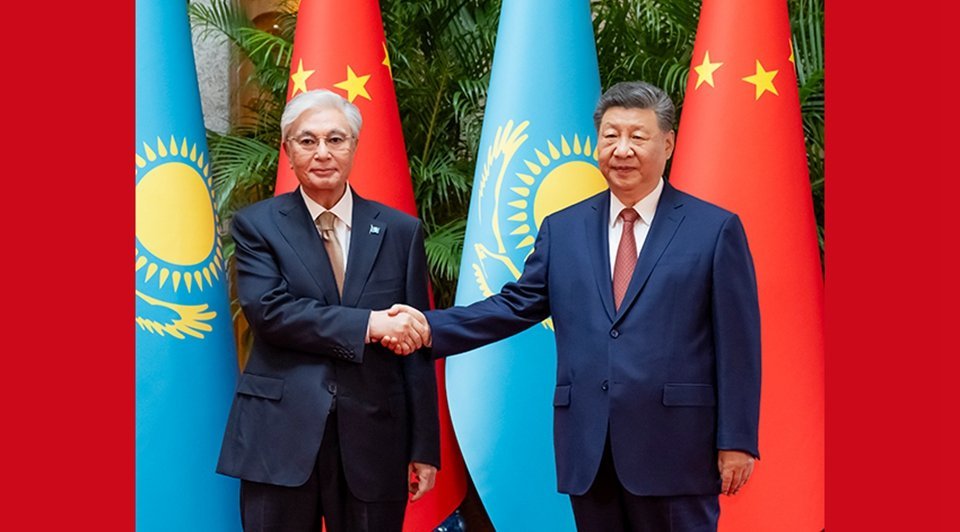
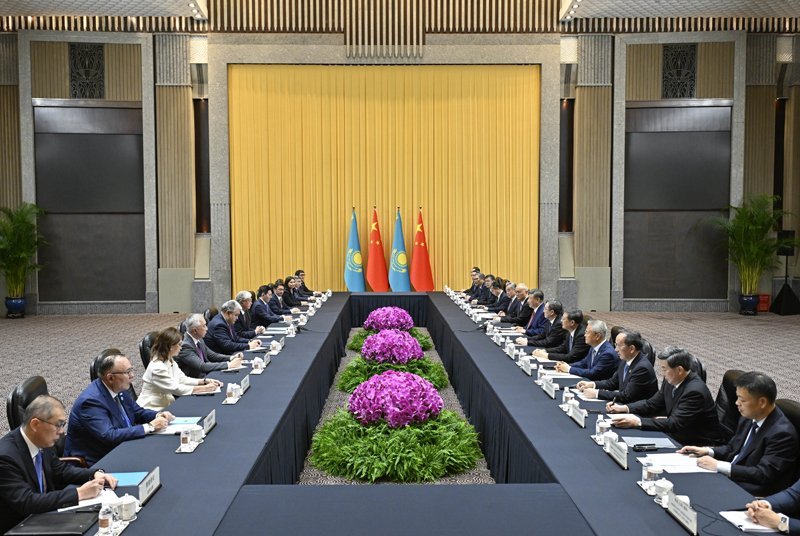
Chinese President Xi Jinping and Kazakh President Kassym-Jomart Tokayev (opens in a new tab) used a July 16 meeting in Shanghai to reinforce cooperation across energy, mineral resources, transportation, finance, artificial intelligence, and digital infrastructure. No single flagship project was announced, but the meeting sends an important strategic signal. Kazakhstan sits at the crossroads of Eurasia and possesses significant reserves of uranium, rare earth elements, copper, chromium, titanium, and other critical minerals. As the Great Powers Era 2.0™ accelerates, both China and the West are expanding efforts to strengthen economic and strategic partnerships with Astana, making Kazakhstan an increasingly important arena in the global competition for critical mineral supply chains.
The Meeting in Shanghai
Critical Minerals Move to the Center of the Relationship
Xi called for expanded cooperation in energy and mineral resources while accelerating implementation of key bilateral projects. Although Chinese state media did not identify specific initiatives, the emphasis aligns with Beijing's long-term strategy of integrating resource development, infrastructure, financing, and industrial cooperation across Central Asia.
For China, Kazakhstan represents more than a supplier of raw materials. It is an important partner in developing resilient regional supply chains that support advanced manufacturing and high-technology industries.
Infrastructure and AI Expand China's Regional Footprint
Beyond minerals, Xi advocated expanding direct flights, improving international road transport, strengthening cross-border e-commerce, and increasing cooperation in artificial intelligence and the digital economy.
Taken together, these initiatives extend well beyond traditional trade. Transportation corridors, digital infrastructure, and technology standards increasingly shape how strategic materials move from mine to manufacturer—an increasingly important competitive advantage in today's geopolitical environment.
Kazakhstan Balances East and West
While China continues to deepen its engagement, Kazakhstan has not placed all of its strategic bets on Beijing. The United States and European partners have also expanded cooperation with Kazakhstan on critical minerals, investment, infrastructure, and the development of alternative supply chains intended to reduce dependence on China.
Rather than viewing Kazakhstan as choosing one side, investors should recognize that the country is becoming an increasingly contested strategic partner. Astana continues to pursue a multi-vector foreign policy designed to attract investment from multiple powers while preserving its strategic autonomy.
Why Investors Should Care
The significance of the meeting lies less in any individual agreement than in the broader geopolitical trajectory.
China continues to integrate minerals, transportation, financing, digital infrastructure, and artificial intelligence into a coordinated regional strategy. Meanwhile, the United States and its allies are pursuing many of the same objectives through investment, diplomacy, and critical minerals partnerships.
For investors, Kazakhstan is becoming one of the clearest examples of Great Powers Era 2.0™ in action. The competition is no longer simply over access to mineral deposits. It increasingly encompasses logistics corridors, processing capacity, digital infrastructure, financing, industrial partnerships, and long-term political influence. Companies positioned to participate in these emerging supply chains may benefit regardless of which geopolitical bloc ultimately secures greater influence.
Disclaimer: This report is based primarily on reporting from Xinhua, China's state-owned news agency. The official statements and descriptions of bilateral agreements have not been independently verified. Readers should evaluate the information alongside reporting from independent and international sources before making investment, policy, or commercial decisions.


0 Comments
No replies yet
Loading new replies...
Moderator
Join the full discussion at the Rare Earth Exchanges Forum →