
Highlights
- Zambia publicly accuses the United States of linking a $2 billion health package to preferential access to critical minerals, exposing the transactional nature of modern resource diplomacy in Africa.
- Critical minerals have evolved from industrial commodities into strategic bargaining chips in the widening U.S.-China competition for African supply chain dominance.
- The real geopolitical choke point extends beyond mining to midstream processing, where China maintains decades of industrial advantage in refining, separation, and manufacturing.
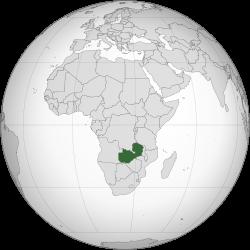
Zambia has publicly accused (opens in a new tab) the United States of linking a $2 billion health support package to preferential access to critical minerals, exposing the increasingly transactional nature of modern resource diplomacy. Is this yet more evidence of the Great Powers Era 2.0 thesis? The dispute highlights a deeper geopolitical shift: critical minerals are no longer merely industrial commodities—they are now bargaining chips in a widening contest between the U.S. and China for supply chain influence across Africa.
The New Scramble Wears a Suit
Once upon a time, great powers sent gunboats. Now they send health agreements, data-sharing clauses, and mineral financing packages.
The Associated Press report (opens in a new tab) captures something very real: the strategic center of gravity has shifted. Rare earths, battery minerals, copper, and critical inputs are now deeply intertwined with national security, AI infrastructure, electrification, and military manufacturing. Zambia knows it. Washington knows it. Beijing mastered it years ago. What makes this story notable is not merely the accusation—it is the normalization of resource-linked diplomacy itself.
Beneath the Humanitarian Language
Several elements in the report appear grounded in reality. The U.S. is clearly attempting to reduce China’s dominance across African mineral supply chains while restructuring foreign aid into more transactional agreements. That aligns with broader “America First” industrial policy trends. But the article also carries omissions. It discusses minerals largely as upstream assets—ore bodies and extraction rights. Missing almost entirely is the industrial truth REEx repeatedly emphasizes: mining is only the opening act. The real choke point remains midstream processing, separation, refining, alloying, and magnet manufacturing. China’s power comes less from geology than from decades of industrial execution.
The Fog of Moral Framing
The AP piece leans heavily toward the humanitarian critique while underexploring the geopolitical logic driving Washington. Great powers do not pursue mineral security out of charity. China’s past couple of decades of investment in Africa certainly includes extensive fine print. No, they pursue it because advanced economies and defense systems increasingly depend on constrained materials.
The uncomfortable reality: in the Great Powers Era 2.0, health, data, and minerals are converging into a single strategic negotiation.
That may disturb readers. But ignoring it would be worse.


0 Comments
No replies yet
Loading new replies...
Moderator
Join the full discussion at the Rare Earth Exchanges Forum →