
Highlights
- China is institutionalizing control over trade associations and chambers of commerce in Zhejiang province, transforming them from advocacy groups into policy execution arms that enforce industrial discipline and compliance.
- The reform addresses three macro pressures: accelerating strategic industrial policy in AI and semiconductors, managing economic friction from overcapacity, and hardening internal cohesion amid geopolitical supply chain decoupling.
- By disciplining Zhejiang's decentralized private sector economy, China strengthens system-level coordination across critical mineral value chains—from pricing power to export compliance—though risks suppressing the market spontaneity that drives innovation.
China is moving to further institutionalize control over how industries organize themselves. At a provincial meeting in Hangzhou, Zhejiang officials advanced a new phase of reform targeting trade associations and chambers of commerce—entities that in China function less as independent advocates and more as policy transmission mechanisms between the state and industry.
This is not bureaucratic housekeeping. It is a system design.
Zhejiang is a prosperous, densely populated coastal province in eastern China, south of Shanghai, with Hangzhou as its capital. It is a top economic powerhouse—often called the "backbone of China"—driving growth via private enterprise, digital technology, top-tier port logistics (Ningbo-Zhoushan), and significant manufacturing, particularly in textiles and electromechanical products.
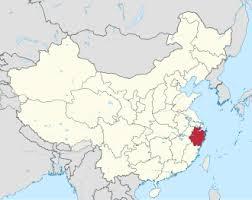
From Trade Groups to Execution Arms
The directive reinforces alignment with Xi Jinping’s doctrine of “correct political achievement,” signaling that industry groups must prioritize long-term national outcomes over short-term commercial gain. In practice, associations are being repositioned as execution arms of industrial policy—responsible not just for coordination, but for enforcing direction, discipline, and compliance across fragmented markets.
Why This Is Happening Now
This reform aligns with three macro pressures:
- Industrial Policy Acceleration – As China pushes deeper into strategic sectors (AI, semiconductors, rare earths), coordination failures become unacceptable.
- Economic Friction – Slower growth and overcapacity risks require tighter signaling mechanisms to avoid destructive competition (“involution”).
- Geopolitical Pressure – Export controls and supply chain decoupling are forcing China to harden internal cohesion.
Zhejiang is being used as a testbed for this model.
Why Zhejiang Matters
Zhejiang is not a random province. It is one of China’s most dynamic private-sector economies—home to Alibaba, Geely, and thousands of export-driven SMEs. It has historically been decentralized, entrepreneurial, and market-driven.
If Beijing can successfully discipline Zhejiang’s fragmented, private-sector-heavy ecosystem, it can replicate that model nationally—including in more strategic sectors.
Implications for Rare Earth and Critical Minerals
While Zhejiang is not a rare earth mining hub (that distinction belongs to Inner Mongolia, Sichuan, Jiangxi), the reform matters downstream:
- Pricing Power – Associations can help coordinate pricing expectations and reduce internal undercutting
- Demand Signaling – Better alignment between magnet producers, EV firms, and upstream suppliers
- Standards & Compliance – Reinforcing environmental, processing, and export frameworks
- Data Control – Centralized intelligence on production, inventory, and trade flows
In effect, this strengthens China’s ability to manage the entire value chain—not just supply it.
China’s Strategic Aim—Control the System, Not Just the Resource
China’s rare earth advantage has never been just about geology. It is about system-level coordination—mines, separation, refining, metallurgy, magnet manufacturing, and policy all moving in sync.
This reform extends that logic: Control the organizations → control the industry → control the market.
The Hidden Risk—Coordination vs. Innovation
The same system that enhances coordination can suppress competition, obscure real price signals, and reduce entrepreneurial dynamism—especially in provinces like Zhejiang that historically thrived on market spontaneity.
In dialectical terms: the push for order may erode the very disorder that drives innovation.
Bottom Line
China is not just tightening control over resources—it is tightening control over how industries behave. For rare earths and critical minerals, that means an even more coordinated—and harder to disrupt—system of dominance.
Disclaimer: This report is based on information published by the China Rare Earth Industry Association and Chinese state-affiliated media. It reflects state-originated perspectives and should be independently verified before use in business or investment decisions.


0 Comments
No replies yet
Loading new replies...
Moderator
Join the full discussion at the Rare Earth Exchanges Forum →