
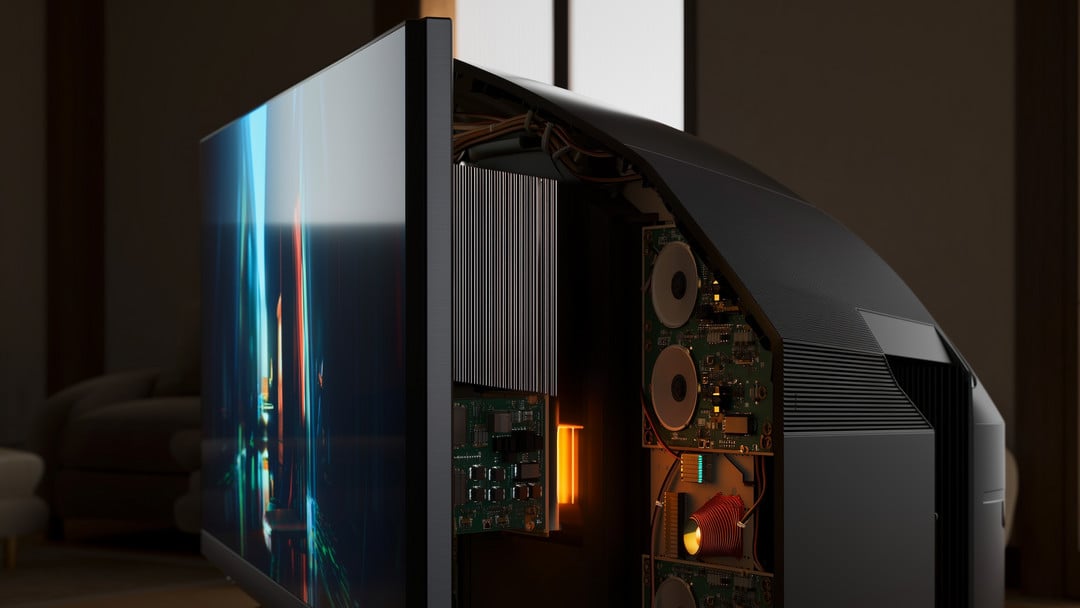
Before plasma displays arrived, big-screen home viewing meant bulky CRTs or early projection setups that struggled with size, uniformity, and off-angle image quality. Plasma technology made wall-sized flat screens practical during the 2000s by delivering strong viewing angles, convincing motion, and cinema-friendly contrast that many viewers still remember as film-like. Rare earth elements (REEs) mattered because getting bright, stable red, green, and blue light from a gas-discharge panel relies on phosphor chemistry, while surrounding electronics and speakers depend on magnets, alloys, and polishing compounds to meet heat, vibration, and longevity requirements. This article explains how plasma displays work at the cell level, where REEs show up in phosphors and components, what the supply chain looks like, which breakthroughs made the technology viable, and what today's policy and materials constraints mean for legacy products and parts availability in 2026.
Table of Contents
How Did Plasma Displays Change Home Viewing—and Why Do Rare Earths Matter?
Before plasma displays arrived in living rooms, big-screen home viewing meant one of two things: a massive, back-breaking CRT television or an early projection setup that washed out under any ambient light. Both struggled with uniformity, off-angle viewing, and sheer size limitations. Flat panels existed, but they were small and often compromised on contrast and motion.
Plasma displays changed all of that during the 2000s. Suddenly, a screen measuring 42, 50, or even 65 inches could hang on a wall. The picture quality was striking—deep blacks, wide viewing angles, and a smoothness during fast motion that many viewers still describe as "film-like." For a generation of home theater fans, plasma became the gold standard for movie night.
What most people never thought about was the chemistry inside those panels. Getting bright, stable red, green, and blue light from a gas-discharge cell depends on phosphor materials, and many of those phosphors rely on rare earth elements. The magnets in speakers and internal electronics also use rare earth alloys. Even the glass polishing compounds that ensured defect-free panels at large sizes often contained rare earth oxides.
This article explains how plasma displays work at the cell level, where rare earth elements show up, what the supply chain looks like, which breakthroughs made the technology viable, and what today's materials and policy landscape means for anyone still using, repairing, or studying these panels.
Rare Earth Role in Plasma Displays
Which Elements Are Used and Why
Every plasma panel contains thousands of tiny gas-filled cells. When electricity excites the gas, it produces ultraviolet light—invisible to our eyes. To turn that UV energy into the red, green, and blue light we actually see, each cell is coated with a phosphor layer. Rare earth elements are critical ingredients in those phosphors because they produce narrow, stable color emission and hold up reasonably well under heat and prolonged use.
The most important rare earths in plasma phosphors are europium, terbium, and yttrium. Europium is the primary activator for red emission. Terbium handles green. Yttrium serves as a common host material—the structural backbone of the phosphor crystal that europium or terbium sits inside. Cerium sometimes appears as a sensitizer that boosts energy transfer efficiency, and it is widely used in cerium oxide polishing compounds during glass manufacturing. These roles are well documented in phosphor reviews published in journals such as the Journal of the Electrochemical Society and in U.S. Department of Energy critical materials reports from 2025 and 2026.
Beyond the panel itself, rare earths show up in the hardware surrounding the screen. Neodymium, praseodymium, and dysprosium are found in the powerful permanent magnets used in speakers and certain electromechanical components. Dysprosium specifically improves a magnet's ability to resist demagnetization at high temperatures—an important trait inside a warm plasma enclosure. Samarium-cobalt magnets, while less common in consumer electronics, may appear where extreme heat tolerance is needed. The U.S. Geological Survey Mineral Commodity Summaries for 2026 and IEEE technical references on magnet grades confirm these applications.
Lanthanum and cerium also play roles in glass polishing and some optical glass formulations. Even though a plasma TV is never marketed as a "rare earth product," the manufacturing yield and surface quality of its large glass panels can depend on cerium oxide polishing compounds, as noted in International Energy Agency critical minerals analyses from 2025 and 2026.
How It Works
The connection between rare earths and picture quality is direct. Here is the basic chain of events inside a single plasma cell:
The drive electronics fire a voltage pulse across a tiny cell filled with a neon-xenon gas mixture. That discharge produces ultraviolet photons. Those UV photons strike the phosphor coating on the cell wall. The rare-earth-activated phosphor absorbs the UV energy and re-emits it as visible light—red from europium-doped phosphor, green from terbium-doped phosphor, or blue from a phosphor that may use other chemistries. The eye sees the combined output of neighboring red, green, and blue subpixels as a single full-color pixel.
Outside the panel, rare earth magnets in neodymium-iron-boron or samarium-cobalt formulations allow speakers and inductors to be compact yet powerful. This matters in a product that already runs warm. Magnets doped with dysprosium maintain their magnetic strength at elevated temperatures, reducing the risk of performance drift inside a hot enclosure.
Glass finishing ties in at the manufacturing stage. Cerium oxide polishing removes micro-scratches and haze from the large front glass, which directly affects image uniformity and defect rates. Without consistent polishing, large panels would show visible imperfections that undermine picture quality.
Journey from Mine to Product
Supply Chain Steps
Rare earth elements do not come out of the ground ready to use. The journey from mine to plasma display involves several specialized steps.
Mining produces a mixed rare earth concentrate—a blend of many elements bound together in mineral deposits. That concentrate goes through chemical separation, typically solvent extraction, to isolate individual rare earth oxides at high purity. From there, the path splits depending on the end use.
For phosphors, purified oxides undergo chemical synthesis to form precise crystal structures. Particle size, shape, and surface treatment are all controlled carefully. The finished phosphor powder is mixed with a binder and coated onto the cell walls inside the plasma panel.
For magnets, separated oxides are reduced to metals, then alloyed with iron, boron, or cobalt. The alloy is milled into fine powder, pressed into shape, sintered at high temperature, and finally magnetized. These finished magnets go into speakers, inductors, and other components that are assembled into the display.
Process descriptions and current supply context are documented by the U.S. Geological Survey in 2026, the International Energy Agency in its 2025 and 2026 minerals analyses, and manufacturing overviews in ASM International materials handbooks.
Typical Chokepoints
Several points in this chain can create bottlenecks. Separation capacity is a major one. Turning mixed concentrate into individual high-purity oxides requires complex chemistry and tight process control. Heavy rare earths like dysprosium and terbium are naturally less abundant than lighter elements like cerium and lanthanum, making their supply more constrained.
Magnet production can bottleneck at the sintering and powder-processing stage, where meeting tight tolerances for coercivity and temperature stability requires specialized equipment and expertise.
Phosphor production depends on consistent precursor purity and particle morphology. Small shifts in particle size or composition can change brightness, aging behavior, or color balance across a large panel.
These specialized processing steps—high-temperature calcination, controlled-atmosphere handling, fine-particle management—create constraints that can affect parts availability long after the last new plasma display leaves a factory.
Statistics and Societal Impact
Quantitative Snapshot
Understanding the numbers helps explain why rare earth supply matters. According to International Energy Agency critical minerals reports from 2025 and 2026, a single country—China—still accounts for a dominant share of global rare earth separation and refining capacity, although new projects in Australia, the United States, and elsewhere are gradually expanding.
The U.S. Geological Survey Mineral Commodity Summaries for 2026 report that global rare earth production continues to grow, driven largely by demand from electric vehicles and wind turbines. Prices for heavy rare earths like dysprosium and terbium remain elevated compared to lighter elements, reflecting their scarcity and the difficulty of separating them.
Legacy flat-panel televisions, including plasma units, remain part of the global installed base. While precise numbers for plasma sets still in service are hard to pin down, device and household indicators tracked by the International Telecommunication Union suggest that millions of older large-screen TVs remain in use worldwide, particularly in markets where replacement cycles are longer.
Energy use is another measurable factor. Older large-screen plasma displays can draw significantly more power than modern LED-backlit LCD or OLED panels of comparable size, as documented in U.S. Department of Energy test procedure records and independent consumer lab measurements from 2025 and 2026.
Downstream Effects
Plasma displays helped normalize the idea of a large, cinema-style screen in an ordinary living room. This shift influenced how content was mastered and how consumers came to expect wide viewing angles and smooth motion handling, especially during the peak adoption years between roughly 2005 and 2013.
The technology's higher energy use and heat output had real household impacts. Owners dealt with increased electricity bills, ventilation needs, and noticeable room warming—factors that eventually pushed regulators to pay closer attention to energy standards for large-screen televisions.
Plasma ownership also introduced mainstream consumers to concepts like image retention and panel care. Avoiding static on-screen elements, managing brightness settings, and running break-in routines became part of everyday electronics literacy. These habits shaped how later technologies, including OLED, communicated similar concerns to buyers.
Rare earth components contributed to all of this indirectly. Stable phosphors enabled consistent color at large sizes. Compact magnets kept speakers and power components manageable inside slim enclosures. Polishing compounds helped achieve the manufacturing yields needed to make big flat panels commercially viable—even though consumers never saw "rare earths" on any spec sheet.
Innovators and History
Key Breakthroughs
Plasma display technology traces back to the 1960s, but it took decades of refinement before panels were ready for living rooms. Early commercialization depended on developing stable phosphor formulations and improving the barrier rib structures that separate individual cells. These ribs reduced cross-talk between neighboring pixels and improved uniformity across the screen. Historical proceedings from the Society for Information Display document these foundational steps.
Manufacturing scale-up was its own challenge. Handling large sheets of glass, sealing them reliably, and controlling defects at commercial volumes required advances in process engineering. Improved drive electronics and power supplies capable of handling high-voltage, high-frequency switching were equally important. IEEE conference proceedings and technical disclosures from Panasonic, Pioneer, and Samsung describe these developments.
Motion quality—one of plasma's most celebrated traits—improved through subfield driving strategies that broke each video frame into rapid pulses of light. Better dithering and control algorithms reduced visual artifacts while preserving the perceived smoothness that film enthusiasts valued. SID Digest publications and independent display measurement labs have documented these advances in detail.
The technology's decline was driven by a combination of factors: falling LCD prices, improving LED backlighting, plasma's thickness and weight disadvantages, brightness and glare limitations in bright rooms, and tightening energy-efficiency standards. Historical TV shipment data from IHS Markit and national energy program summaries trace this transition through the early 2010s.
From Lab to Product
Plasma displays reached consumers not because of a single breakthrough but because manufacturers integrated phosphor chemistry, cell architecture, and high-yield production into a workable system.
Panasonic became the volume leader, iterating on efficiency and cost with each generation. Pioneer earned a reputation for the deepest black levels in its late-generation "Kuro" line, which many enthusiasts still regard as a reference point for contrast performance. Samsung and LG also produced plasma panels, contributing to competitive pricing and broader adoption. SID histories and contemporaneous engineering retrospectives describe how each manufacturer approached design trade-offs differently.
Standardized video formats and HDMI connectivity helped accelerate adoption by reducing integration headaches. Meanwhile, a growing culture of independent display testing and enthusiast measurement pressured manufacturers to improve grayscale accuracy and gamma tracking for home cinema use. Standards histories from the Consumer Technology Association and independent lab methodology write-ups reflect this feedback loop between measurement culture and product quality.
Why It Matters Now
Current Drivers
In 2026, no manufacturer is producing new plasma display panels. The technology matters now primarily as a legacy installed base. Many units remain in service because their owners value the distinctive motion handling, contrast, and viewing-angle performance that plasma provided.
Repair and refurbishment interest remains active. Parts scarcity—particularly power supply boards, sustain boards, and Y-buffer boards—drives a small but dedicated ecosystem of technicians and salvage operations. Disposal concerns also factor in, since plasma panels contain materials that require careful handling at end of life.
Rare earth relevance persists in two ways. First, replacement components like speakers and inductors may contain rare earth magnets whose availability and cost are influenced by broader supply dynamics. Second, the phosphor and magnet science developed for plasma displays remains directly relevant to modern technologies—from LED phosphors to electric vehicle motors—that compete for the same raw materials.
Reports from the United Nations Environment Programme on e-waste and circular economy practices from 2025 and 2026 highlight plasma TVs as part of a broader challenge: managing aging electronics that contain valuable but hard-to-recover materials.
Security and Policy Context
Processing concentration remains the central supply risk. Much of the world's rare earth separation and downstream refining has historically been concentrated in China, (opens in a new tab)which affects pricing and availability for rare-earth-intensive components across the entire electronics industry, according to International Energy Agency analyses from 2025 and 2026.
Policy responses in the 2025–2026 period emphasize onshoring and "friend-shoring" of critical mineral processing, strategic stockpiling, and traceability requirements. These policies can indirectly influence replacement-component costs even for discontinued products like plasma displays.
Recycling programs are expanding, particularly for magnets and manufacturing scrap, but recovering specific rare earths from complex mixed consumer products remains technically difficult and often uneconomical. The European Commission's critical raw materials updates and U.S. Department of Energy recycling program summaries from 2025 and 2026 describe pilot efforts and the gaps that remain.
Standards and procurement rules increasingly reward energy efficiency and repairability. For the plasma repair community, this means that the economic viability of refurbishment depends partly on broader policy trends that shape what spare parts suppliers choose to stock and reproduce.
Future Outlook
Materials and Design Trends
Magnet research continues to reduce dependence on heavy rare earths like dysprosium and terbium. Techniques such as grain-boundary diffusion allow manufacturers to achieve high coercivity with less heavy-REE content by targeting specific microstructural regions rather than uniformly doping the entire magnet. Where thermal margins are less demanding, these improved neodymium-iron-boron formulations can substitute for heavier, costlier compositions. Samarium-cobalt remains a choice for high-heat environments despite its higher price. The U.S. Department of Energy critical materials program and peer-reviewed magnet research from 2025 and 2026 document these trends.
Phosphor innovation now focuses primarily on LEDs, lasers, and specialty lighting rather than plasma panels. However, the underlying science of rare-earth-activated phosphors—color conversion efficiency, thermal stability, aging behavior—remains relevant to discussions across display and lighting technologies. Reviews in the Journal of Luminescence and SID technical publications from 2025 and 2026 continue to build on knowledge originally developed for plasma and fluorescent lighting applications.
Recycling scale-up will likely prioritize bulk magnet streams and manufacturing scrap first, because these offer higher rare earth concentrations and better economics than recovering small amounts from individual consumer products. International Energy Agency reports and national recycling pilot summaries from 2025 and 2026 outline this trajectory.
For plasma displays specifically, the practical "materials future" is about sustaining repairs. Capacitors, power boards, and compatible replacement components matter more than new panel chemistry. This makes documentation of interchangeable parts and known substitutes especially valuable to the repair community.
Five- to Ten-Year Scenario
Demand for rare earths over the next decade will be driven overwhelmingly by electric vehicle motors, wind power generators, robotics, and defense electronics. These high-growth sectors can tighten supply for heavy rare earths and indirectly raise costs for niche replacement components used in legacy consumer electronics.
A plausible bottleneck is midstream capacity—separation plants, metal-making facilities, and alloying lines (opens in a new tab)—because opening new mines does not automatically produce the high-purity inputs that magnets and phosphors require. The International Energy Agency and U.S. Geological Survey both flag this gap in their 2025 and 2026 outlooks.
Mitigation strategies include diversifying separation capacity across more countries, scaling up recycling of magnet scrap, and implementing policy-backed procurement that rewards traceable, responsibly sourced supply chains. These changes tend to unfold over multi-year investment cycles, so near-term relief is limited.
For consumers and technicians, the practical takeaway is straightforward. Working plasma displays will become increasingly dependent on harvested parts and specialized refurbishment skills. Knowledge about heat management, phosphor aging patterns, and safe board-level repair will remain central to keeping these panels in service. The era of new plasma sets is over, but the era of understanding and maintaining them is far from finished.
Glossary
Phosphor: A material that absorbs higher-energy radiation, such as ultraviolet light, and re-emits it as visible light. In plasma displays, rare earth activators like europium and terbium give phosphors their stable color output.
Subpixel: The individual red, green, or blue light-producing element within a display. Three subpixels—one of each color—combine to form a single full-color pixel.
Coercivity: A measure of a magnet's resistance to losing its magnetization. Higher coercivity, often achieved by adding dysprosium, means the magnet holds up better under heat and opposing magnetic fields.
NdFeB: Neodymium-iron-boron, a permanent magnet material known for its high magnetic strength relative to size. It is widely used in compact electronics, speakers, and motors.
SmCo: Samarium-cobalt, a permanent magnet material valued for its ability to maintain performance at high temperatures and resist corrosion, though it costs more than NdFeB.
Sintering: A manufacturing process that heats powdered material below its melting point to fuse particles into a dense, solid part. It is essential for producing permanent magnets and some ceramic components.
Grain-boundary diffusion: A technique for improving magnet coercivity by introducing heavy rare earth elements only at the boundaries between crystal grains, rather than throughout the entire magnet. This achieves better thermal performance while using less of the scarce heavy rare earth material.
FAQs
Are plasma displays still made in 2026?
Plasma displays are not in mainstream production in 2026. Most availability is limited to the used market, refurbishment channels, or remaining old stock in niche situations. Historical TV shipment tracking and manufacturer exit timelines reported by firms such as IHS Markit and industry retrospectives summarized by the Society for Information Display confirm that major manufacturers ceased plasma panel production by the mid-2010s.
Do plasma displays always get burn-in?
Permanent burn-in is not inevitable, but plasma displays can develop image retention or uneven phosphor wear when static elements are displayed for long periods at high brightness, especially as panels age. It is important to distinguish temporary image retention, which fades after varied content is shown, from permanent phosphor wear that results in lasting brightness or color imbalance. Independent display measurement and engineering references such as SID educational materials and consumer lab testing methodology notes provide detailed explanations of these phenomena.
Why do plasma displays look good for movies and motion?
Many viewers associate plasma displays with strong motion clarity because of how the technology drives light in short pulses and how it handles 24p film cadence, which can reduce sample-and-hold blur compared with some other flat-panel behaviors. However, there are tradeoffs including dithering noise at certain brightness levels and absolute brightness limits compared with modern LED-backlit panels. SID proceedings and independent measurement lab explanations of motion perception offer technical detail on these characteristics.
What rare earths are most relevant to plasma displays specifically?
The most relevant REEs are typically those associated with phosphors, including europium for red emission, terbium for green emission, and yttrium as a host matrix, as well as those used in magnets found in speakers and components, such as neodymium, dysprosium, and samarium in some designs. Exact formulations vary by manufacturer and generation. U.S. DOE critical materials reports (2025-2026) and peer-reviewed phosphor and magnet materials reviews provide further detail on these element roles.
What are the most common failure modes technicians see in older plasma displays?
Common issues include power supply failures from capacitor aging and heat stress, sustain and scan board faults causing lines or no image, fan noise or buzzing complaints, and gradual brightness or color shift from panel aging. Technicians should document symptoms carefully and verify safe discharge practices before any internal work. Manufacturer service literature archives and established electronics repair references offer guidance on diagnosis and safe handling procedures.
Conclusion
Plasma displays may no longer roll off production lines, but their legacy continues to shape how we think about large-screen home viewing, motion quality, and contrast performance. Rare earth elements were essential enablers of the technology, providing the phosphor chemistry for vivid color conversion and the magnet materials for compact, heat-tolerant components. In 2026, the relevance of REEs to plasma displays lives on through repair ecosystems, parts scarcity, and the broader critical minerals conversation that now spans EVs, wind energy, and defense. Understanding where these elements come from, how supply chains can bottleneck, and what policy shifts are underway helps consumers, technicians, and policymakers navigate the intersection of legacy technology and modern resource constraints. Whether you are maintaining a beloved plasma set or studying the materials that made flat-panel television possible, the rare earth story remains a practical and strategic consideration worth following.
