
Highlights
- N.A.N. MagneTech plans India's first fully integrated oxide-to-NdFeB permanent magnet facility in Andhra Pradesh with a $130 million Phase I investment.
- The project targets 1,200 metric tonnes of annual magnet production by Q1 2028, with a long-term expansion goal of 10,000 tonnes per year.
- Technical advisors include Dr. Masato Sagawa, inventor of the sintered NdFeB magnet, and veteran metallurgist Dr. John Ormerod, lending credibility to the venture.
- Key commercial claims—including Australian feedstock supply and automotive offtake agreements—remain unverified, leaving significant execution risk unresolved.
- If completed on schedule, the facility could make India one of the largest non-Chinese integrated magnet producers and reduce dependence on Chinese imports.
India has unveiled one of its most ambitious rare earth manufacturing projects yet. N.A.N. MagneTech plans to invest ₹1,250 crore (approximately US$130 million) to build what it describes as India's first fully integrated oxide-to-NdFeB permanent magnet manufacturing facility, targeting commercial production in Q1 2028. If successfully executed, the project would represent an important step toward reducing India's dependence on Chinese magnets. But investors should distinguish between announced capacity and bankable production. Several key claims—including Australian feedstock supply and automotive offtake agreements—remain undisclosed and therefore impossible to independently verify.
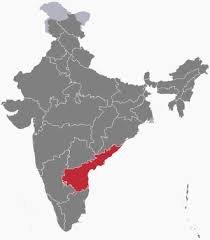
Andhra Pradesh
India's Magnet Moonshot: A Bold Bet—Now the Hard Questions Begin
The race for rare earth leadership is no longer about finding deposits. It is about building factories capable of producing world-class magnets at commercial scale. N.A.N. GreenMet announced that its subsidiary, N.A.N. MagneTech, will construct what it calls India's first fully integrated high-performance NdFeB permanent magnet manufacturing facility at Andhra Pradesh's Naidupeta Industrial Park. Phase I calls for an investment of ₹1,250 crore (approximately US$130 million) to produce 1,200 metric tonnes annually, with a long-term expansion target of 10,000 tonnes per year, beginning with commercial production planned for Q1 2028.
The Right Strategy—If Execution Follows
Unlike many announced rare earth projects, N.A.N. proposes to integrate the complete value chain: oxide processing, metal production, alloy manufacturing, sintered NdFeB magnets, and recycling. That is strategically significant because magnets—not mining—remain the world's largest bottleneck. The company also announced long-term feedstock arrangements, including heavy rare earth oxides from a "major Australian producer," while stating it has already executed offtake agreements with domestic automotive OEMs and Tier-1 suppliers. If validated, these could materially reduce two of the industry's largest commercial risks: raw material availability and customer demand.
The technical leadership also stands out. Few projects can point to both Dr. Masato Sagawa, inventor of the sintered NdFeB magnet, and Dr. John Ormerod, one of the industry's most experienced magnet metallurgists.
The Questions Investors Should Be Asking
Several important questions remain unanswered. Which Australian producer has committed feedstock? Are heavy rare earths sourced entirely outside China, or does the supply chain still depend on Chinese separation or metals? Are the reported automotive offtake agreements binding contracts, framework agreements, or memoranda of understanding? Has financing for the full project been secured? Can automotive qualification and production ramp realistically be completed by Q1 2028? Finally, does the planned expansion from 1,200 tonnes to 10,000 tonnes represent committed investment or a long-term aspiration? None of these questions undermine the project—but they are central to evaluating execution risk.
Why Investors Should Care
Rare Earth Exchanges® has consistently argued that the world's strategic vulnerability is not rare earth mining—it is the integrated midstream of separation, metals, alloys, and permanent magnets. This announcement directly targets that bottleneck.
If completed on schedule, N.A.N. MagneTech could become one of the largest non-Chinese integrated magnet producers outside Japan and help establish India as a meaningful participant in the global magnet supply chain. Yet investors should keep the calendar in mind. Commercial production is not expected until Q1 2028, well after key geopolitical milestones including expanding U.S. defense sourcing restrictions and the ongoing restructuring of global supply chains. In other words, this is an important announcement—but not yet a transformed supply chain.
Organizations Mentioned
- N.A.N. GreenMet Pvt. Ltd. — Project sponsor and parent company.
- N.A.N. MagneTech Pvt. Ltd. — Magnet manufacturing subsidiary developing the project.
- Naidupeta Industrial Park (Andhra Pradesh) — Planned manufacturing site.
- Government of Andhra Pradesh — Providing land allocation and investment incentives.
- Dr. Masato Sagawa — Inventor of the sintered NdFeB permanent magnet; Senior Technical Advisor.
- Dr. John Ormerod — Chairman of the Technology Board and internationally recognized rare earth magnet expert.
- Dr. Gaurav Shukla — Deputy CEO overseeing technical development.
- Unnamed Australian rare earth producer — Claimed supplier of rare earth feedstock, including heavy rare earth oxides (identity not disclosed).
- Unnamed Indian automotive OEMs and Tier-1 suppliers — Claimed offtake partners (identities not disclosed).
Profile
N.A.N. MagneTech Pvt. Ltd. is an Indian advanced manufacturing company established in 2026 by N.A.N. GreenMet, the critical minerals platform founded by Navin Agarwal, Vice Chairman of Vedanta Ltd., to build India's domestic rare earth permanent magnet industry. The company is developing what it describes as India's first fully integrated oxide-to-NdFeB (neodymium-iron-boron) magnet manufacturing facility at Naidupeta Industrial Park in Andhra Pradesh. Backed by an initial investment of ₹1,250 crore (approximately US$130 million), Phase I is designed to produce 1,200 metric tonnes of high-performance sintered NdFeB magnets annually, with a long-term expansion target of 10,000 tonnes per year. The facility is expected to integrate rare earth oxide processing, metal and alloy production, magnet manufacturing, and recycling under one roof. N.A.N. MagneTech is advised by internationally recognized experts, including Dr. Masato Sagawa, inventor of the NdFeB permanent magnet, and Dr. John Ormerod, a veteran rare earth magnet metallurgist, and aims to supply magnets for electric vehicles, wind turbines, industrial automation, aerospace, and defense while reducing India's heavy dependence on imported magnets, predominantly from China.
Source Disclaimer: This article is based primarily on a company press release issued by N.A.N. GreenMet. While the project vision, leadership team, and announced investment are clearly stated, several material claims—including feedstock agreements, customer offtake contracts, financing status, and future revenue projections (approximately ₹1,200-1,500 crore, or US$125-156 million annually at current exchange rates)—have not been independently verified. Investors should view the announcement as an important strategic development rather than confirmation of future commercial success.


0 Comments
No replies yet
Loading new replies...
Moderator
Join the full discussion at the Rare Earth Exchanges Forum →