
Highlights
- Myanmar supplies a majority of China's heavy rare earth feedstock, with over 90% of production entering China's refining ecosystem
- India's true bottleneck is midstream capacity—lacking sufficient separation, refining, and magnet manufacturing to capitalize on Myanmar ore
- The Kachin Independence Army controls significant rare earth territory amid an environmental crisis with over 2,500 leaching pits documented in Chipwi Township alone
- Russia's role as a principal arms and diplomatic supporter of Myanmar's junta is largely absent from the analysis, leaving an incomplete geopolitical picture
- Rare earth security will be determined by control of the entire value chain—from contested Myanmar deposits to separation plants and magnet factories across Asia
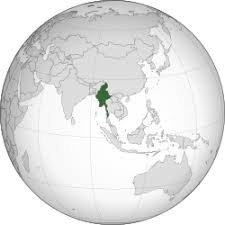
India wants heavy rare earths. Myanmar has them. But a new policy (opens in a new tab) paper argues that geology alone cannot overcome war, politics, and China's entrenched dominance. In "Exploring Myanmar's Role in India's Rare-Earth Elements Security," Sreeparna Banerjee (opens in a new tab) of the Indian think tank Observer Research Foundation (ORF) concludes that Myanmar's dysprosium- and terbium-rich deposits could eventually help diversify India's supply chain. Yet the study finds that ongoing conflict, fragmented territorial control, environmental degradation, and China's overwhelming influence make Myanmar an impractical supplier in the near term. Rather than rushing into procurement, Banerjee argues India should strengthen its domestic refining, separation, and permanent magnet industries while maintaining careful strategic engagement with Myanmar.
Myanmar rebel-held mines are ranked number one on the Rare Earth Exchanges® (REEx) Insights Rankings.
How the Study Was Conducted
This is a geopolitical policy analysis rather than original field research. Banerjee synthesizes government reports, trade statistics, academic literature, Reuters reporting, ISP-Myanmar research, and Chinese customs data to examine India's critical-mineral strategy, Myanmar's rare earth sector, and China's role in the regional supply chain.
What the Paper Gets Right
The paper correctly identifies the central reality of today's rare earth market: Myanmar mines; China controls the value chain. More than 90% of Myanmar's rare earth production ultimately enters China's refining ecosystem, while Myanmar supplies a majority of China's imported heavy rare earth feedstock. China's processing dominance—not simply its mining capacity—gives Beijing extraordinary leverage over global dysprosium and terbium markets.
The paper also recognizes an important point often overlooked by policymakers: India's bottleneck is not merely access to ore. Even if India secured Myanmar concentrates tomorrow, it still lacks sufficient domestic separation, refining, and magnet manufacturing capacity to fully capitalize on those resources. This aligns closely with Rare Earth Exchanges' longstanding position that midstream capability—not upstream mining—is the true strategic chokepoint.
Where the Analysis Stops Short
The report acknowledges that the Kachin Independence Army (KIA) now controls significant rare earth territory and notes the region's "strong Christian networks." However, it never fully explains that the Kachin are overwhelmingly Christian, a distinction that has shaped decades of conflict with Myanmar's largely Buddhist military establishment and influences relationships with international NGOs, diaspora communities, and Western governments. That omission matters because ethnic identity, religion, and governance all affect how resource control evolves—not simply military geography.
Likewise, while Banerjee carefully documents China's close relationship with Myanmar's military authorities, its influence over border crossings, and Beijing's engagement with both the junta and ethnic armed organizations, the paper gives almost no attention to Russia's role in sustaining Myanmar's military government.
Yet, as Rare Earth Exchanges has learned from our network on the ground there, Russia has become one of the junta's principal suppliers of aircraft, weapons, training, and diplomatic support. Omitting Moscow leaves readers with an incomplete picture of the external powers shaping Myanmar's political future.
On the Land
While the paper acknowledges that Myanmar's rare earth mining causes serious environmental damage, its treatment is relatively limited. Banerjee notes that widespread use of ammonium sulfate in-situ leaching contaminates soil, groundwater, and river systems, and warns that sourcing minerals from these conflict zones could create reputational risks for India. However, the paper stops short of fully examining the scale of the ecological crisis. It gives little attention to the documented deforestation, thousands of leaching pits, destruction of mountain ecosystems, impacts on local communities, or the long-term environmental legacy of largely unregulated mining in Kachin State.
Although it cites research showing mining sites expanded from roughly 130 in 2020 to more than 370 by late 2024, including over 2,500 leaching pits in Chipwi Township, these findings are presented primarily as strategic supply-chain risks rather than as one of the world's most significant environmental disasters associated with heavy rare earth extraction.
Study Limitations
Banerjee appropriately acknowledges uncertainty surrounding reports of possible Indian engagement with Kachin authorities and notes that no formal agreement has been confirmed. More broadly, the analysis relies heavily on secondary sources rather than independent field investigation. Production volumes, informal trade flows, militia finances, and Chinese commercial influence remain inherently difficult to verify in an active conflict zone.
Why This Matters
The paper reaches the correct strategic conclusion—but perhaps understates its significance. Myanmar is not simply another mineral supplier. It is becoming the world's most geopolitically consequential heavy rare earth province outside China itself. Whoever ultimately governs Kachin's and other rebel-held mines—and whoever controls the downstream refining—will influence global supply, pricing, and strategic leverage for years to come. For investors, the lesson is straightforward: rare earth security will not be decided by mine ownership alone. It will be determined by who controls the entire chain—from contested deposits in Myanmar to separation plants and magnet factories across Asia.
Sreeparna Banerjee

Citation: Banerjee, S. (2026). Exploring Myanmar's Role in India's Rare-Earth Elements Security. Observer Research Foundation, Occasional Paper No. 553.


0 Comments
No replies yet
Loading new replies...
Moderator
Join the full discussion at the Rare Earth Exchanges Forum →