
Highlights
- Japan became the first nation to continuously recover rare earth-bearing mud from nearly 5,700 meters beneath the Pacific Ocean near Minamitorishima.
- Over 54% of recovered material consists of medium and heavy rare earths including dysprosium, yttrium, and gadolinium—the scarcest and most strategically valuable elements.
- The celebrated 16-million-ton resource estimate is a geological figure, not a proven mineable reserve, and no commercial cost curve has been published.
- Commercial success still requires beneficiation, chemical extraction, oxide separation, and metal production—steps currently dominated by China.
- If successful, Minamitorishima could become one of the few sovereign heavy rare earth supply streams controlled by a U.S. ally, but commercial proof is still pending.
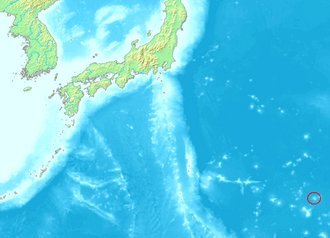
For decades, the world's rare earth conversation has revolved around geology. Japan's latest achievement shifts the conversation to engineering. In February, Japan became the first nation to continuously recover rare earth-bearing mud from nearly 5,700 meters (3.5 miles) beneath the Pacific Ocean near Minamitorishima. This week, government scientists reported that approximately 54% of the recovered rare earth content consisted of medium and heavy rare earth elements—including dysprosium, yttrium, and gadolinium—while the remaining 46% comprised light rare earths such as neodymium. The accomplishment is genuine. But investors should resist confusing an engineering milestone with a commercial mining breakthrough.
The Real Breakthrough Was Reaching the Mud
The discovery itself is not new. Researchers have long known that Japan's Exclusive Economic Zone contains enormous quantities of rare earth-bearing mud, with one widely cited estimate suggesting roughly 16 million metric tons of rare earth oxides. What Japan demonstrated was something entirely different: the ability to retrieve that material continuously from one of the most hostile industrial environments on Earth.
For a country squeezed by China's heavy rare earth export controls, even modest domestic production could become strategically significant.
But Mining Is Only the First Mile
Recovering mud from the seabed is the easy part. Commercial success still requires beneficiation, chemical extraction, oxide separation, metal production, alloy manufacturing, and ultimately magnet production. China continues to dominate nearly every one of those downstream steps, particularly for heavy rare earths. Without competitive processing, Japan risks proving it can recover mud without fundamentally changing supply-chain dependence.
Economics remain equally uncertain. No commercial cost curve has been published. No recoverable reserve has been defined. The celebrated 16-million-ton figure represents a geological resource estimate—not a proven mineable reserve. Japan itself has acknowledged that the current sampling area is too limited to define the deposit's commercial scale.
Heavy Rare Earths Are Why This Matters
The reported composition may be the most important development. More than half of the recovered material consists of medium and heavy rare earths—the scarcest and most strategically valuable elements in the supply chain.
Outside China's sphere of influence, commercially meaningful heavy rare earth production remains extraordinarily limited. Today, most ionic-clay heavy rare earth supply still originates from southern China, Myanmar, and Laos, with some emerging processing capability in Malaysia. Dysprosium, terbium, and yttrium have become increasingly difficult to procure outside China, particularly in qualified commercial volumes. Even if Japan ultimately produces only modest quantities, it could establish one of the few sovereign heavy rare earth supply streams controlled by a U.S. ally.
Strategic Victory—Commercial Proof Still Pending
Japan deserves credit for accomplishing something no one else has achieved. It has demonstrated that deep-sea recovery of rare earth-bearing mud is technically possible. What it has not yet demonstrated is repeatable commercial production, competitive operating costs, scalable processing, environmental sustainability, or bankable project economics.
If Japan succeeds, Minamitorishima could become one of the most strategically important heavy rare earth assets outside China. Until then, investors should treat it for what it is today: an extraordinary engineering achievement, an important geopolitical option—and a commercial project that still has everything to prove.


0 Comments
No replies yet
Loading new replies...
Moderator
Join the full discussion at the Rare Earth Exchanges Forum →