
Highlights
- Laos is emerging as a critical upstream supplier of heavy rare earth feedstock within China's vertically integrated rare earth industry, extending Beijing's resource control beyond its borders.
- Environmental damage including contaminated waterways, fish kills, and community unrest surrounds rapidly expanding ion-adsorption clay mining in Houaphanh and Xiangkhouang provinces.
- Independent researchers, NGOs, and analysts are converging on the same conclusion: Laos is a key node in China's broader critical minerals strategy, not merely a peripheral mining story.
- Heavy rare earths like dysprosium, terbium, and yttrium remain among the most strategically constrained materials globally, making upstream control in Laos geopolitically significant.
- China's true advantage lies in controlling separation, refining, alloys, and magnet manufacturing—the highest-value segments—while using Laos to secure upstream feedstock supply.
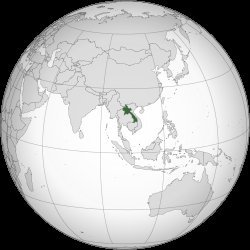
A new analysis from the Stimson Center's China Environment Forum (opens in a new tab) documents expanding environmental damage associated with Chinese-backed rare earth mining in Laos, reinforcing trends Rare Earth Exchanges® has been tracking throughout 2026. While the article contributes valuable field reporting and local interviews, it largely confirms—rather than changes—the strategic picture. Laos is rapidly evolving into a critical upstream supplier of heavy rare earth feedstock for China's vertically integrated rare earth industry. The larger story is not simply pollution. It is Beijing's continued expansion of its critical minerals ecosystem beyond its borders as the West races to build alternative supply chains.
A Missing Herd Reveals a Much Bigger Story
The article begins with a striking account: villagers confronting a Chinese mining company after cattle disappeared near a rare earth operation in Houaphanh Province. Beneath that local dispute lies a broader pattern of contaminated waterways, fish kills, soil erosion, community unrest, and weak environmental enforcement surrounding rapidly expanding ion-adsorption clay mining.
Those findings closely align with Rare Earth Exchanges' previous investigations. Earlier this year, we identified Houaphanh and Xiangkhouang as the epicenter of China's expanding rare earth footprint in Laos, documented the 2024 wastewater release affecting dozens of villages, traced ownership through Chinese corporate filings, and highlighted the country's opaque permitting and disclosure regime.
Environmental Story to Geopolitical Story
The Stimson Center understandably focuses on environmental governance. Rare Earth Exchanges believes the larger strategic story lies one step further downstream. Laos is becoming an increasingly important component of an emerging Myanmar-Laos heavy rare earth corridor supplying China's processing industry. The objective extends well beyond acquiring additional ore. China's comparative advantage remains its overwhelming control of separation, refining, metals, alloys, and permanent magnet manufacturing—the highest-value segments of the supply chain.
Viewed through that lens, expanding mining activity in Laos is not an isolated development. It represents another chapter in Beijing's long-term strategy of extending resource security beyond its borders while preserving domestic control over value-added manufacturing.
Independent Reporting Is Converging
One notable aspect of the Stimson report is how closely its findings mirror earlier Rare Earth Exchanges reporting.
Over recent months, REEx has examined the corporate ownership structures behind major Lao projects, environmental incidents, satellite imagery, governance weaknesses, Japanese strategic engagement, and Laos' growing role within China's heavy rare earth supply chain. That convergence is meaningful. Independent journalists, academic researchers, NGOs, and market analysts are increasingly reaching similar conclusions: Laos is no longer a peripheral mining story. It is becoming an increasingly important node within China's broader critical minerals strategy.
Rare Earth Exchanges' View
Investors should resist viewing Laos as merely another emerging mining jurisdiction. The country's importance lies less in the size of individual deposits than in its role within a rapidly evolving regional industrial ecosystem. Heavy rare earth elements—including dysprosium, terbium, and yttrium—remain among the most strategically constrained materials in the global economy. As environmental restrictions, geopolitical tensions, and supply-chain security become increasingly intertwined, control over upstream resources will matter—but control over processing, refining, alloys, magnets, and downstream manufacturing will matter even more. That is why Laos represents more than an environmental story.
It is a case study in Great Powers Era 2.0™, where nations compete not simply for mineral deposits, but for resilient industrial ecosystems stretching from geology to finished products. Beijing continues to expand that ecosystem across Southeast Asia. Whether the United States, Japan, Europe, Australia, and their partners can construct a credible alternative remains one of the defining strategic and investment questions of the coming decade.


0 Comments
No replies yet
Loading new replies...
Moderator
Join the full discussion at the Rare Earth Exchanges Forum →