
Highlights
- GRINM Group displayed solid-state batteries, metal-matrix composites, and high-magnesium aluminum at the 2026 World Robot Conference in Beijing.
- Its lightweight structural aluminum for robots was named among the Top 10 Robotics Innovation Achievements from Chinese central state-owned enterprises.
- GRINM executives visited UBTECH, Unitree, and DEEP Robotics exhibits, signaling direct commercialization links between materials suppliers and robot OEMs.
- China's strategy integrates raw materials, engineered components, batteries, and sensing into a domestic robotics ecosystem, challenging Western supply-chain depth.
- GRINM holds over 2,300 patents and 1,300 technology transfers, bridging state-funded R&D with industrial-scale manufacturing across nonferrous and rare-earth sectors.
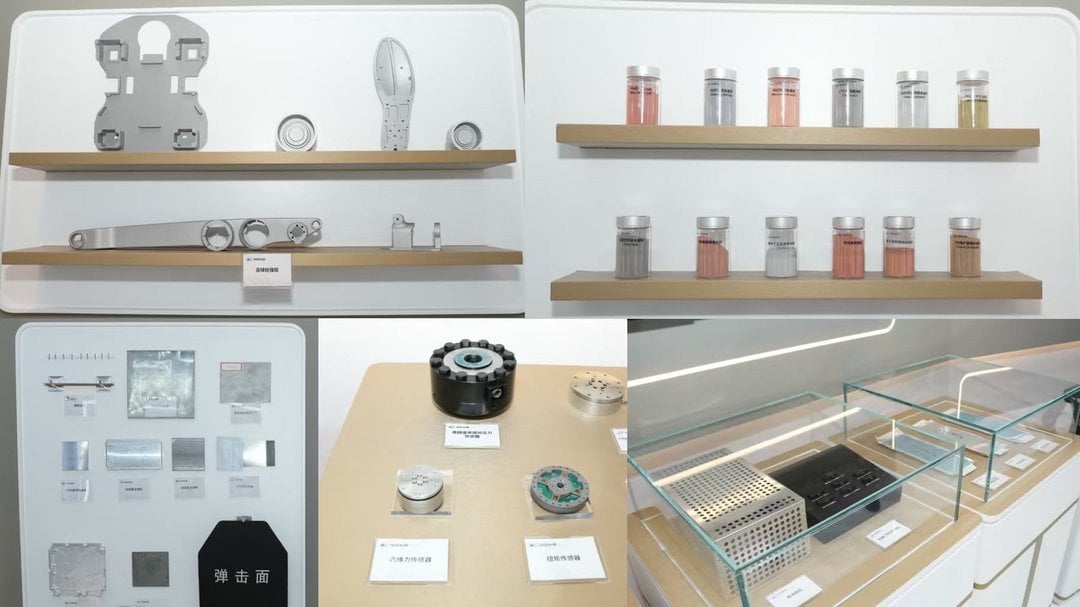
China’s state-owned GRINM Group used the 2026 World Robot Conference in Beijing to showcase a portfolio of advanced materials, sensors, and energy technologies aimed at the rapidly expanding robotics and embodied-AI market. GRINM subsidiaries presented additive-manufacturing powders, metal-matrix composites, high-magnesium lightweight aluminum, high-performance battery cells, wide-temperature halide all-solid-state batteries, six-axis force sensors, torque sensors, and AI-based olfactory detection modules. Its high-magnesium, lightweight structural aluminum components for robots were selected among the conference’s “Top 10 Robotics Innovation Achievements” from Chinese central state-owned enterprises.
REEx Insight: China Is Building the Robot From the Materials Up
The important takeaway is that China’s robotics strategy is not confined to humanoid assemblers such as Unitree or UBTECH. It increasingly extends into the materials, sensors, batteries, and specialty components underneath the robot. GRINM’s exhibition shows how China is linking its established metallurgy and materials-science capabilities directly to embodied AI. Lightweight structural alloys can reduce robot mass and energy consumption; metal powders and composites enable complex precision components; force and torque sensors improve manipulation; and next-generation solid-state batteries could eventually increase operating range, safety, and temperature tolerance.
For Western manufacturers, this is another reminder that competition in humanoid robotics may be decided as much by supply-chain depth as by software or final assembly. China is attempting to create integrated domestic ecosystems spanning raw materials, engineered materials, components, batteries, sensing, and finished machines.
The source does not provide commercial volumes, customer contracts, battery performance metrics, or pricing, so these technologies should not yet be treated as proven large-scale breakthroughs. But their positioning at China’s premier robotics event—and direct engagement with leading robot makers—suggests a deliberate commercialization push.
From Laboratory Materials to Robot Supply Chains
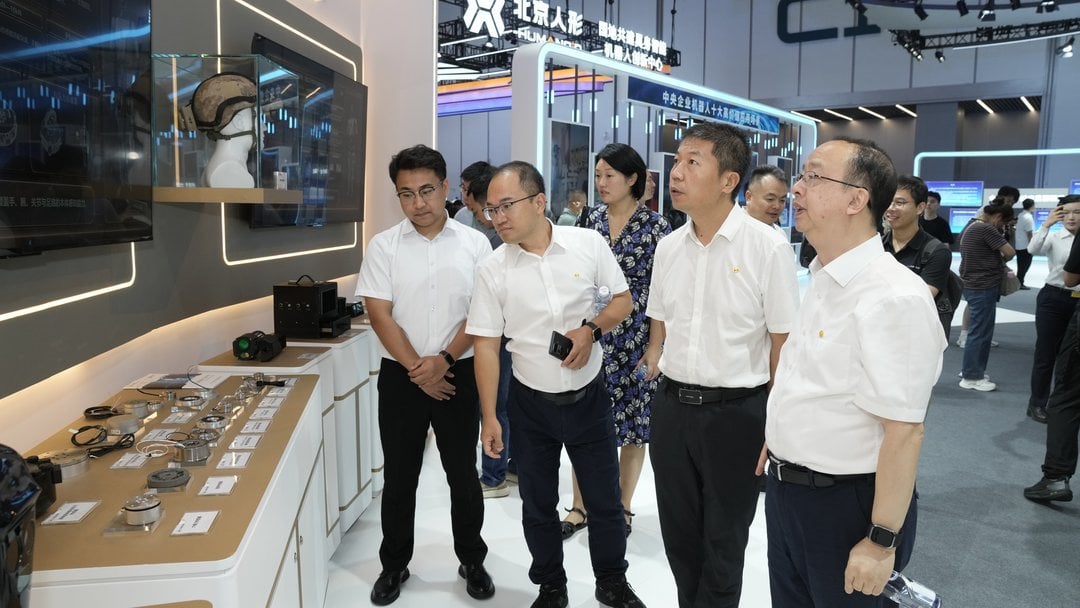
On August 20, GRINM Deputy General Manager Mao Changhui and Chief Accountant Qi Shuyong visited the conference, reviewing technology development, market promotion, customer engagement, and industrialization plans. Mao called for closer collaboration with robot manufacturers, core-component suppliers, and research institutes to accelerate the integration of new materials into robotics. GRINM executives also visited exhibits from UBTECH Robotics, Unitree Robotics, and DEEP Robotics, highlighting potential links between China’s materials champions and its increasingly prominent robot OEMs.
Profile
China’s GRINM Group, founded in 1952 and directly supervised by the State Council’s SASAC, is far more than a research institute: it is a strategic bridge between Chinese state-directed science and industrial-scale commercialization. Headquartered in Beijing, GRINM spans rare-earth separation and metallurgy, high-purity metals and alloys, advanced nonferrous materials, semiconductors, batteries, composites, testing, and environmental technologies, operating more than 20 national-level innovation platforms.
With more than 2,300 authorized patents and 1,300 technology transfers, GRINM’s importance lies in its ability to move discoveries from laboratories into factories and strategic supply chains. Its close relationship with China Rare Earth Group further embeds GRINM within China’s drive for technological self-reliance and downstream dominance. For Western competitors, GRINM illustrates a defining feature of China’s industrial model: mineral resources, government-funded R&D, intellectual property, process engineering, and commercial manufacturing are deliberately connected rather than treated as separate industries.
Source Disclaimer: This report originates from GRINM Group, a Chinese state-owned enterprise, and should be treated as corporate/state-source reporting rather than independent journalism. Claims concerning innovation rankings, technological performance, commercialization, and market readiness should be independently verified before forming business or investment conclusions.


0 Comments
No replies yet
Loading new replies...
Moderator
Join the full discussion at the Rare Earth Exchanges Forum →