
Highlights
- China's rare-earth export controls and a paused $14 billion U.S. arms package for Taiwan are converging ahead of the September 24 Xi-Trump summit.
- No public evidence confirms a rare-earth-for-Taiwan bargain, but the strategic overlap creates what REEx calls a Transition Vulnerability Window.
- November 10 marks expiration of China's suspension of expanded 2025 rare-earth export controls, adding urgency to U.S. supply-chain independence efforts.
- Taiwan's $29.7 billion backlog of U.S. weapons orders illustrates a broader defense-industrial production bottleneck compounding America's leverage deficit.
- China holds critical materials leverage, Taiwan holds semiconductor leverage, and the U.S. remains partially dependent on both in an era of interlocking dependencies.
Two clocks are counting down in Washington. President Xi Jinping is expected to meet President Trump on September 24, with Beijing preparing an unusual delegation of Chinese business leaders. One U.S. priority is securing more Chinese rare-earth export licenses. Then, on November 10, China's suspension of several expanded 2025 export controls expires. At the same time, a proposed $14 billion U.S. arms package for Taiwan remains paused, officially linked by one senior Navy official to munitions demands from the Iran conflict.
Is there a connection? There is no public evidence that Washington is trading Taiwan arms for rare-earth access. But the strategic overlap is too important for investors to ignore.
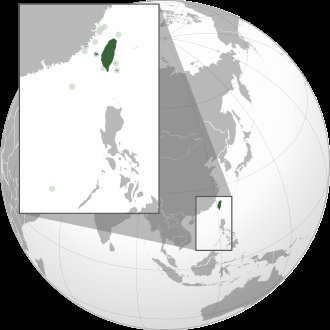
REEx Insight — Two Chokepoints Enter the Same Room
China has something Washington cannot quickly replace: enormous capacity across rare-earth separation, metals, and magnets. Taiwan has something the world cannot quickly replace either: extraordinary concentration of advanced semiconductor manufacturing.
America is trying to reduce both dependencies—but time matters.
China's leverage is no longer theoretical. Some Chinese suppliers recently halted shipments of critical materials to U.S. customers amid concerns over Beijing's rules, while licenses and supplies of materials including yttrium remain constrained.
Meanwhile, America's defense-industrial base faces its own capacity problem. Acting Navy Secretary Hung Cao told Congress the Taiwan sale was paused to preserve munitions for Operation Epic Fury. Yet another U.S. source subsequently said Taiwan sales were unrelated to Iran. That ambiguity matters.
For Beijing, the issue looks very different: Taiwan is a sovereignty question, not a bargaining chip. China strongly opposes American weapons sales to the island and raised the issue directly during Trump's May meeting with Xi. Trump subsequently said he had made “no commitment either way.”
REEx therefore sees a Transition Vulnerability Window rather than evidence of a secret bargain: America is attempting to reduce Chinese material dependence while simultaneously sustaining Taiwan deterrence, but its replacement industrial capacity is not yet mature.
Forty Years of Weapons—Then a Pause
U.S. defensive arms support has continued since Washington switched diplomatic recognition to Beijing in 1979. Taiwan has subsequently purchased F-16s, Patriots, Harpoons, Abrams tanks, HIMARS, and other systems. That history makes today's $14 billion pause noteworthy—but not unprecedented evidence of abandonment. Taiwan also has an estimated $29.7 billion backlog of previously ordered U.S. weapons, illustrating a broader production bottleneck.
November 10 Meets January 1
November 10 does not mean all Chinese rare-earth controls suddenly return. It is the expiration date for China's suspension of specific October 2025 measures, including controls involving additional medium/heavy rare earths, equipment, and technology.
Then comes January 1, 2027, when expanded DFARS restrictions tighten the permissible supply chain for covered defense magnets.
Here lies the paradox: Washington is legislating toward independence faster than American industry can physically build it.
Great Powers Era 2.0™ — Taiwan Is Where the Chokepoints Converge
A forced change in Taiwan's status would not simply hand China functioning semiconductor factories; conflict, sanctions, infrastructure damage, and workforce disruption could instead cripple production. Nor is there evidence Washington intends to exchange Taiwan's security for magnets. And China must be mindful of its own contradictions, over-capacity, and its need for markets. Access to more U.S. consumer markets frankly continues to be leverage for President Trump.
But Great Powers Era 2.0™ is increasingly about interlocking dependencies.
China possesses leverage in critical materials. Taiwan possesses leverage in advanced semiconductors. America possesses military, technological, and financial leverage while remaining partially dependent on both.
The September 24 summit should therefore be watched for what happens across seemingly separate negotiating files: rare-earth licenses, trade, technology—and Taiwan. The evidence does not yet show a rare-earth-for-Taiwan bargain.
The more unsettling finding is that today's supply-chain architecture makes such strategic leverage possible in the first place.


0 Comments
No replies yet
Loading new replies...
Moderator
Join the full discussion at the Rare Earth Exchanges Forum →