
Highlights
- Xi proposed five BRICS initiatives covering AI, special economic zones, digital infrastructure, smart manufacturing, and engineering talent at the New Delhi Summit.
- The New Delhi Declaration endorsed BRICS SEZ cooperation, resilient value chains, standards collaboration, and cross-border payment solutions.
- BRICS increasingly connects mineral-rich Brazil, South Africa, and Indonesia with China's processing base, Indian industrial ambitions, Russian resources, and Gulf capital.
- Western vulnerability extends beyond mine supply—Washington and Brussels must compete across the full industrial stack to avoid ceding value-added processing and standards.
- China assumes BRICS chairmanship in 2027, giving Beijing a key opportunity to convert these institutional frameworks into operating programs.
Chinese President Xi Jinping used the September 13 BRICS Summit in New Delhi to propose five initiatives covering artificial intelligence, special economic zones, digital infrastructure, smart manufacturing, and engineering talent. More strategically, Xi called on the expanded BRICS grouping to maintain stable industrial and supply chains and “foster a large integrated market.”
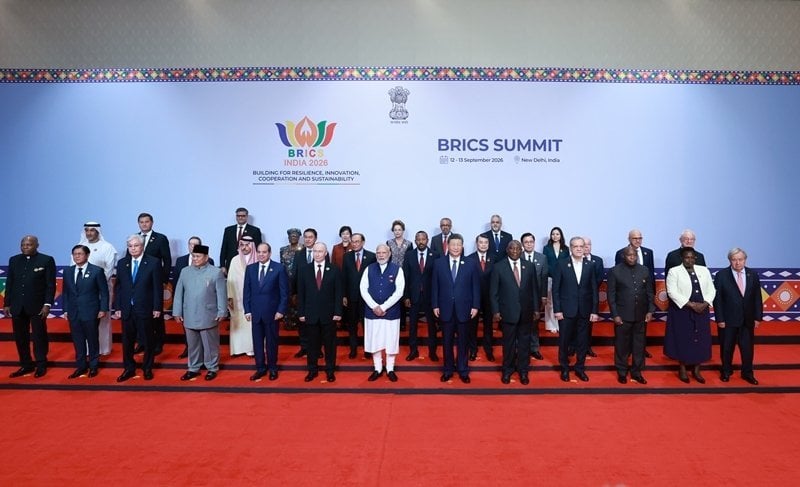
REEx Insight | Great Powers Era 2.0™ Takes Shape
For Rare Earth Exchanges®, the important story is not another BRICS communiqué. It is the emergence of the connective tissue of a competing industrial ecosystem.
The Great Powers Era 2.0™ thesis holds that geopolitical competition is increasingly ecosystem versus ecosystem. Control of a mine matters, but competitive power increasingly comes from connecting minerals to processing, metals, magnets, manufacturing, financing, standards, technology, talent, and ultimately customers.
Xi's five initiatives map remarkably well onto that stack. Special economic zones connect investment and production. Digital platforms connect companies. Common standards reduce industrial friction. Smart-factory cooperation transfers manufacturing capability. Engineering alliances develop human capital. AI creates another layer of technological integration.
Critically, this is no longer solely a Chinese proposal. The New Delhi Declaration supports exploring BRICS SEZ cooperation, strengthening resilient global value chains, standards collaboration, smart manufacturing and robotics, and practical cross-border payment solutions.
That does not mean BRICS has created a China-controlled critical-minerals bloc. India, Brazil, and other members maintain substantial strategic autonomy. Indeed, as REEx has reported, Prime Minister Narendra Modi warned at this very summit that weaponizing critical minerals and technology can obstruct global progress—a pointed message given China's mineral-processing dominance.
But the direction deserves Western attention. BRICS increasingly links mineral-rich Brazil, South Africa, and Indonesia with China's enormous processing and manufacturing base, India's industrial ambitions, Russian resources, and Gulf capital.
The Western vulnerability is therefore bigger than mine supply. Washington and Brussels must compete across the entire industrial stack—or risk financing upstream diversification while value-added processing, standards, manufacturing, and commercial networks consolidate elsewhere.
Five Pieces of the Architecture
Xi proposed a BRICS AI open-source community, a special-economic-zone partnership, a digital-industry cloud platform, cooperation on smart factories and manufacturing standards, and a BRICS engineer-training alliance with competency recognition. China will also host a BRICS services-trade forum in 2027.
No mine, refinery, magnet plant, or critical-mineral offtake was announced. The breakthrough is instead institutional architecture—potential infrastructure through which future deals could move. China assumes the BRICS chairmanship in 2027, giving Beijing an opportunity to turn these initiatives into operating programs.
Source Disclaimer: This news item originates from Xinhua, the official news agency of China's state, and Chinese government sources. Statements concerning Chinese intentions should be independently verified before being relied upon for investment, commercial, or geopolitical decisions. REEx cross-checked key claims against the BRICS New Delhi Declaration and independent reporting, including Reuters and Indian media.


0 Comments
No replies yet
Loading new replies...
Moderator
Join the full discussion at the Rare Earth Exchanges Forum →