
Highlights
- At least seven civilians, including a child, were killed in a June 17 airstrike near Kyauktaw in Myanmar's Rakhine State, with 15 others injured.
- The Arakan Army controls much of Rakhine State as Myanmar's military increasingly relies on airpower amid territorial losses on multiple fronts.
- Myanmar's conflict zones overlap with critical mineral supply chains, trade corridors, and infrastructure projects of strategic global importance.
- Junta leader Min Aung Hlaing met with China's Xi Jinping in Beijing on the same day as the reported airstrike.
- Human rights organizations and UN agencies have repeatedly documented civilian casualties from Myanmar military air operations across contested regions.
Reports from Myanmar's western Rakhine State indicate that at least seven civilians, including a five-year-old child, were killed in an airstrike near Kyauktaw on June 17. Witnesses and rescue workers cited by multiple media outlets reported that military (the Junta) aircraft dropped several bombs on the area, injuring at least 15 others. As of publication, Myanmar's military government has not publicly commented on the incident.
While details of this specific strike remain subject to independent verification, the broader pattern is well established.
Rakhine State
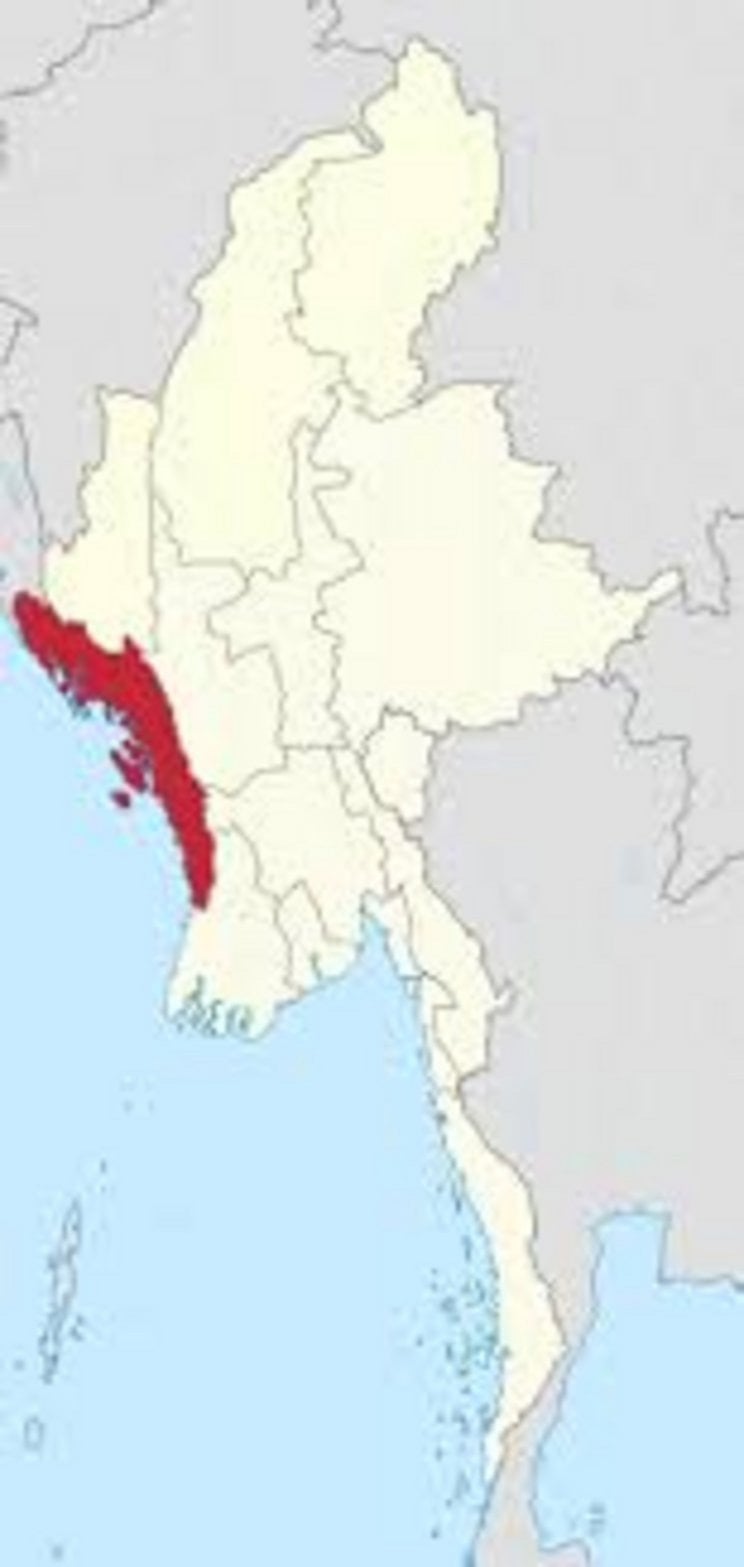
Much of Rakhine State is now controlled by the Arakan Army (AA), one of Myanmar's most powerful ethnic armed organizations. As the military government has lost ground across multiple fronts, analysts and international observers have documented an increasing reliance on airpower in contested regions.
Rare Earth Exchanges®, Reuters, United Nations agencies, and human rights organizations have repeatedly reported civilian casualties linked to junta air operations, while military authorities maintain they are targeting insurgent positions and security threats.
The alleged June 17 strike follows a series of similar incidents. Kyauktaw Township was the site of a deadly 2025 airstrike that reportedly killed students at a boarding school. Other documented attacks across Rakhine have struck villages, schools, medical facilities, and detention centers.
For Rare Earth Exchanges readers, the significance extends beyond the immediate tragedy. Myanmar's conflict zones—Rakhine, Kachin, Shan, and Karen States—have become strategic terrain where trade corridors, infrastructure projects, energy routes, and critical mineral supply chains increasingly overlap with civil war.
Available evidence suggests the June 17 attack was conducted by the Myanmar Air Force, operating under the military government led by Min Aung Hlaing. Whether civilians were deliberately targeted remains disputed. What is less disputed is that civilians continue to bear a disproportionate share of the conflict's human cost.
Note that, as Rare Earth Exchanges reported today, Junta leader Min Aung Hlaing (opens in a new tab) met with China’s head Xi Jinping in Beijing in parallel with the attack.
In Great Powers Era 2.0, investors should remember a hard truth: critical minerals do not emerge from spreadsheets. They emerge from real places, often marked by contested sovereignty, fragile governance, and human suffering. Myanmar remains one of the clearest examples of that reality.
See a televised account out of India via WION (opens in a new tab).
Register today: REEx Marketplace™ (opens in a new tab)


0 Comments
No replies yet
Loading new replies...
Moderator
Join the full discussion at the Rare Earth Exchanges Forum →