
Highlights
- Myanmar's Chipwi-Pangwa district holds some of the world's most critical heavy rare earth deposits, rich in dysprosium and terbium essential for EV and defense magnets.
- Xi Jinping's June 16 meeting with Myanmar's junta leader coincided with military offensives against the Kachin Independence Army, which controls key rare earth mining regions.
- China, India, and Western nations are all maneuvering for influence over Myanmar's heavy rare earth supply chain in what analysts call Great Powers Era 2.0.
- Satellite imagery documents thousands of chemical leaching ponds causing severe environmental destruction across Kachin State's mountains and waterways.
- The outcome of Myanmar's civil war may determine who controls a critical upstream link in the global permanent magnet supply chain.
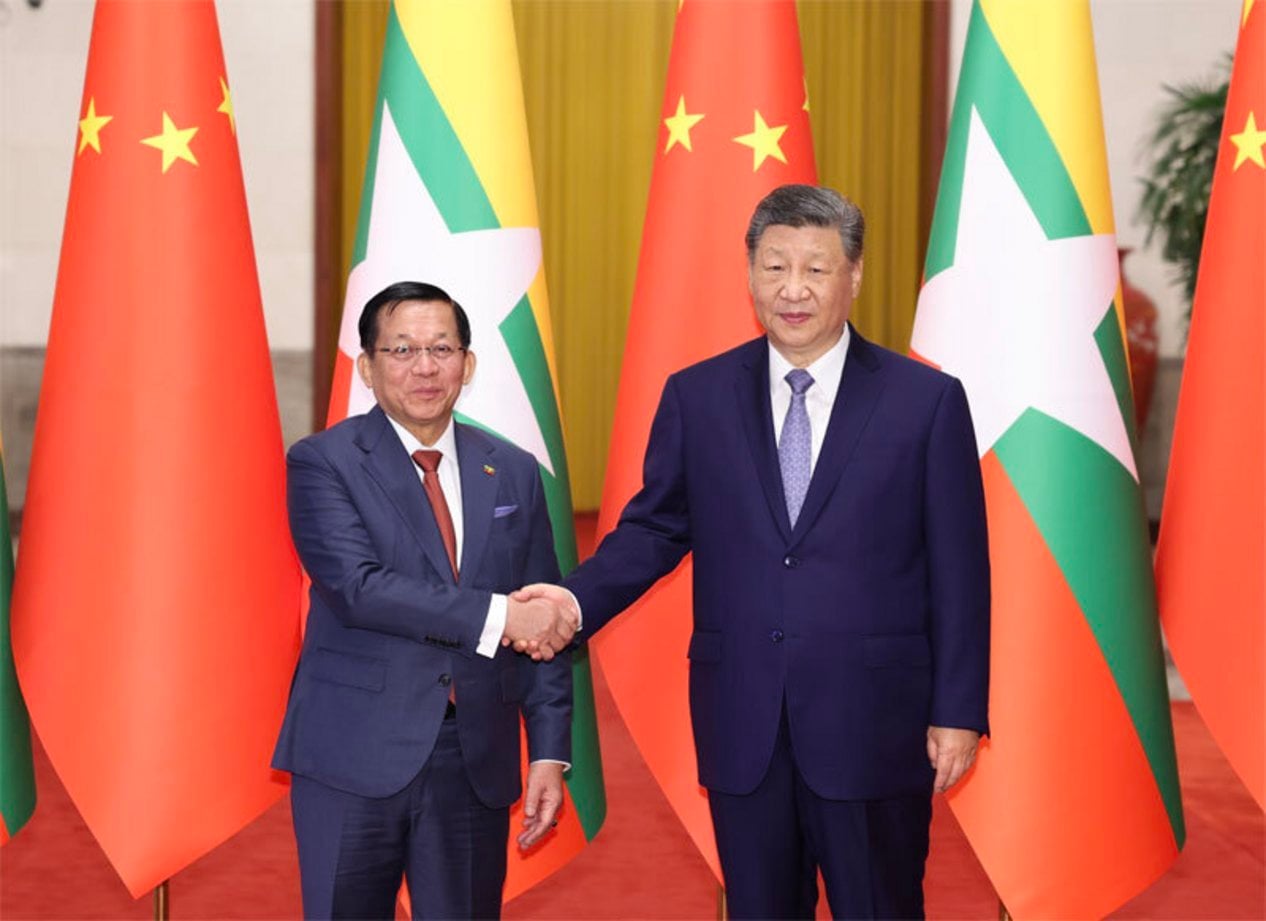
For investors trying to understand the global rare earth supply chain, the most consequential story in critical minerals today may not be unfolding in Beijing, Washington, or Brussels. It is unfolding in the mountains of northern Myanmar. In May and June, Myanmar's military government intensified operations against ethnic armed organizations, particularly the Kachin Independence Army (KIA), which controls much of the Chipwi-Pangwa rare earth district near the Chinese border. Days later, on June 16, Chinese President Xi Jinping hosted (opens in a new tab) Myanmar leader Min Aung Hlaing (opens in a new tab) in Beijing, reaffirming strategic cooperation and signing multiple agreements. The timing may not be accidental. Control of Myanmar's heavy rare earth resources has become a strategic issue not only for Myanmar's civil war, but for China, India, and the future of the global magnet supply chain.
On the morning of June 16, President Xi Jinping held talks with Myanmar President Min Aung Hlaing, who was on a state visit to China, at the Great Hall of the People in Beijing. (Photo by Huang Jingwen, Xinhua News Agency)
The Crown Jewels of Heavy Rare Earths
Rare Earth Exchanges® ranks Myanmar's rebels in aggregate and the held rare earth districts among the most strategically important upstream heavy rare earth assets on Earth.
The ionic-clay deposits around Chipwi and Pangwa are rich in dysprosium and terbium—the heavy rare earths essential for permanent magnets used in electric vehicles, wind turbines, robotics, drones, advanced electronics, and modern defense systems.
Multiple independent analyses suggest that northern Myanmar has supplied a substantial share of the world's heavy rare earth feedstock in recent years, making it one of the most critical links in China's magnet manufacturing ecosystem.
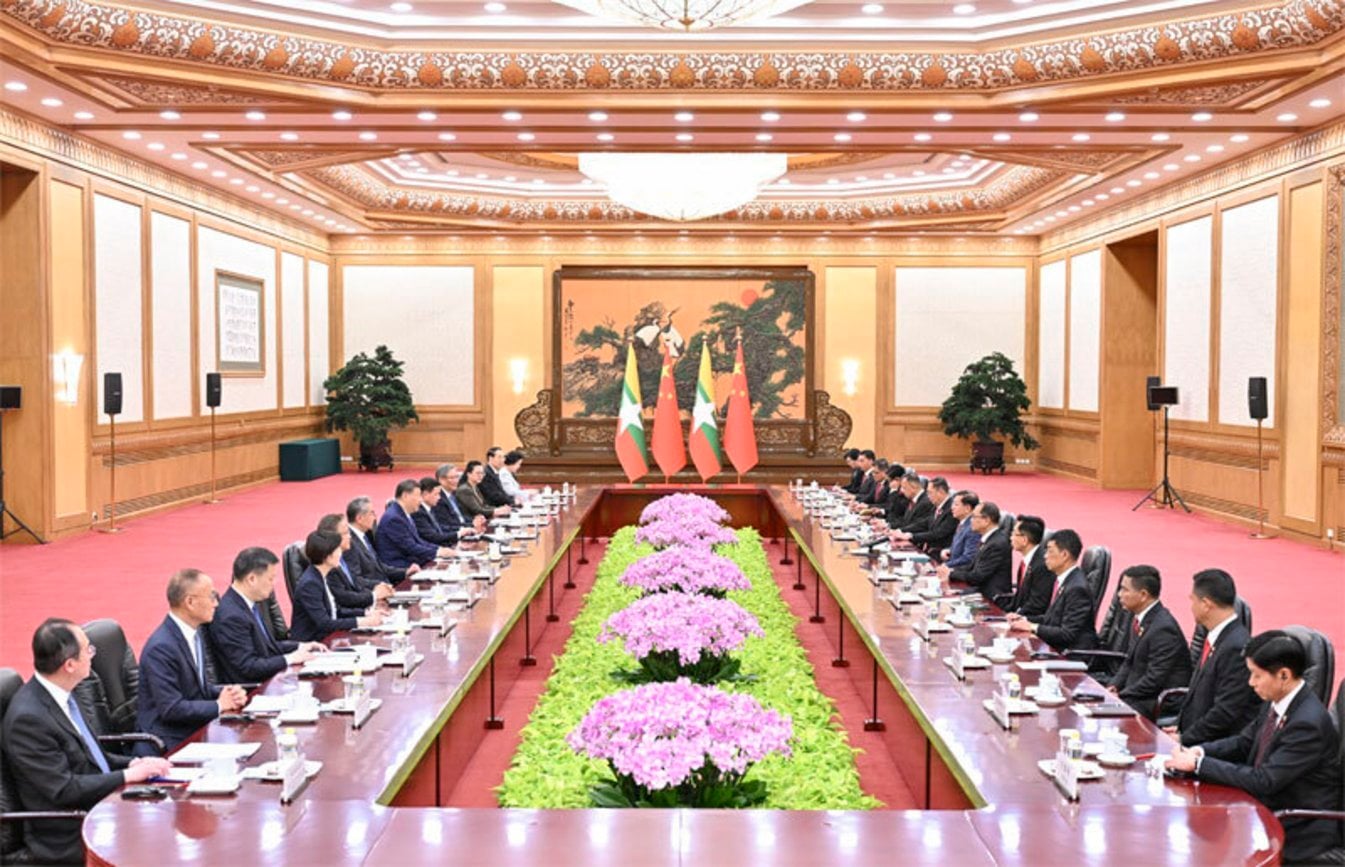
On the morning of June 16, President Xi Jinping held talks with Myanmar President Min Aung Hlaing, who was on a state visit to China, at the Great Hall of the People in Beijing. (Photo by Yin Bogu, Xinhua News Agency)
Mapping the Players
The conflict landscape is complex and increasingly fragmented.
- KIA/KIO (Kachin Independence Army/Organization (opens in a new tab)): Controls much of the Chipwi-Pangwa mining region in northern Kachin State.
- United Wa State Army (UWSA (opens in a new tab)): Controls autonomous territory in eastern Shan State where new Chinese-linked rare earth mining operations have emerged.
- NDAA (Mongla Group (opens in a new tab)): Controls portions of eastern Shan State where additional mining activity has been reported.
- Karen National Union (opens in a new tab) (KNU): Controls strategically important trade corridors near Thailand but is not a major rare earth mining actor.
- Various junta-aligned militias continue to operate along transportation and border corridors.
Notably, China conducts business across this fragmented landscape, engaging the central government while maintaining commercial relationships that ultimately depend on access to resources located in territories controlled by non-state actors.
Xi's Visit and Great Powers Era 2.0
Xi Jinping's June visit with Min Aung Hlaing elevated the relationship to a new level. Official Chinese statements emphasized support for Myanmar's sovereignty, expansion of the China-Myanmar Economic Corridor, Belt and Road cooperation (opens in a new tab), border stability, and economic integration. The subsequent China-Myanmar Joint Statement specifically referenced deeper cooperation in mining, infrastructure, and economic development.
At nearly the same moment, India announced expanded cooperation with Myanmar in critical minerals and rare earths.
This is Great Powers Era 2.0 in its purest form: a civil war wrapped around a critical mineral supply chain, with major powers maneuvering for influence over strategic resources.
The Human and Ecological Tragedy
Behind every kilogram of dysprosium lies a darker story, largely unfolding indirectly under China’s watch.
Satellite imagery and field investigations document thousands of chemical leaching ponds carved into Kachin's mountains. Acid-based extraction has contaminated waterways, destroyed forests, destabilized hillsides, and damaged agricultural land. Rights groups have documented allegations of labor exploitation, trafficking, unsafe working conditions, and severe environmental degradation linked to mining operations serving Chinese supply chains. While individual allegations vary in evidentiary strength, the broader environmental devastation is well established.
Kachin State
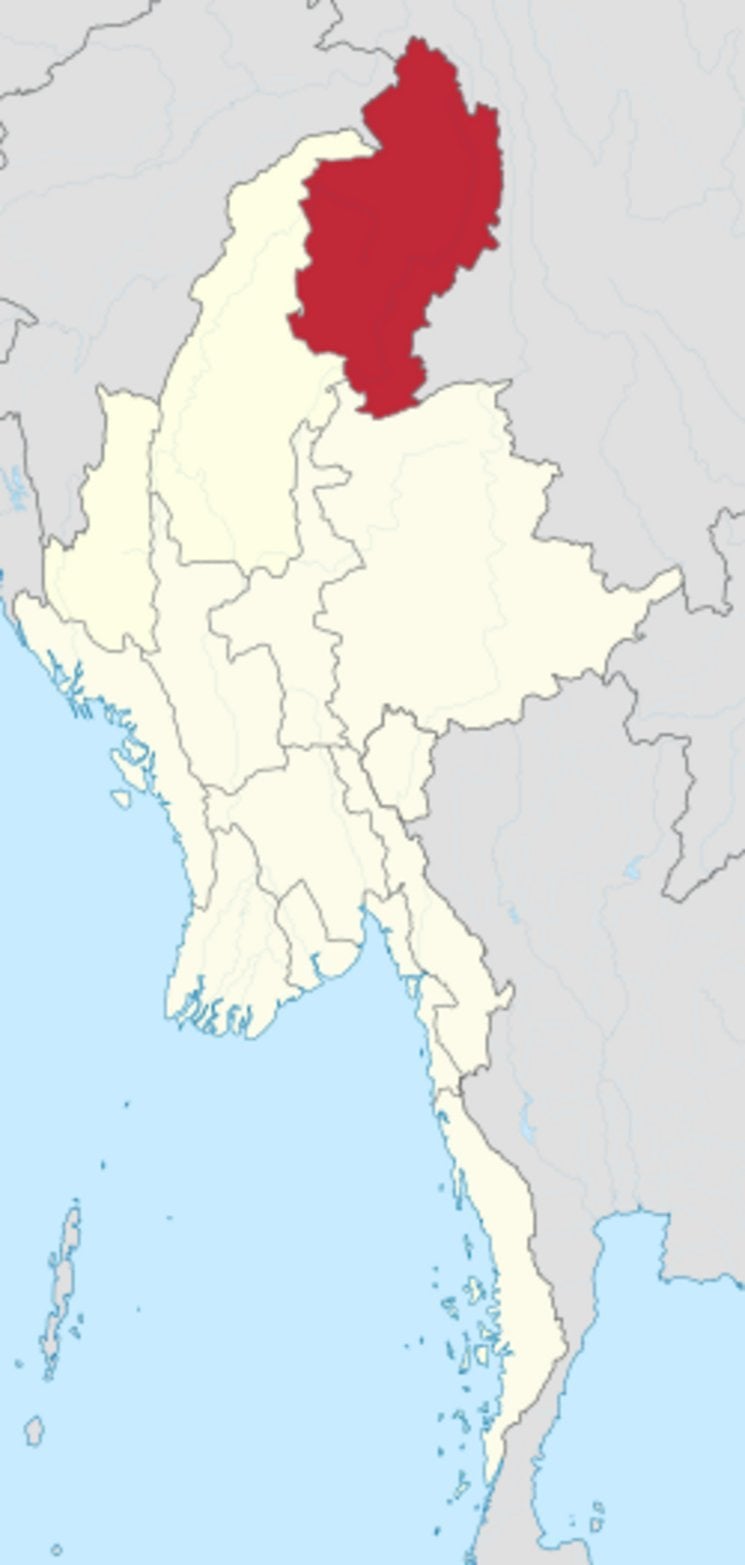
Meanwhile, Myanmar's wider war continues to displace millions. Airstrikes and military operations persist across Kachin, Chin, Karen, and other ethnic regions. This overwhelmingly means the junta is targeting ethnic towns and villages, with heavy rare earth mines on the minds of the power structure.
Often overlooked in international coverage is that many of the communities fighting for autonomy—including large portions of the Kachin and Chin populations—are predominantly Christian minorities struggling for self-determination and basic rights promised many decades ago.
What Investors Should Watch
The key takeaway is simple. China dominates rare earth processing, but some of its most important heavy rare earth feedstocks originate in territory it does not directly control. The KIA and other rebel groups sit atop deposits that help power China's magnet industry. The junta wants greater control over those resources. Beijing wants stability and uninterrupted supply. India seeks access. The West seeks alternatives.
Beneath the language of peace, development, and cooperation lies a harder reality: one of the most important resource struggles of the twenty-first century is unfolding in Myanmar's mountains. And the magnets powering the future may ultimately depend on who prevails.
Register today: REEx Marketplace™ (opens in a new tab)


0 Comments
No replies yet
Loading new replies...
Moderator
Join the full discussion at the Rare Earth Exchanges Forum →