
Highlights
- The U.S. Forest Service opened a 30-day public scoping period for the Bull Hill Mine EIS, a procedural milestone, not a mining authorization.
- Bull Hill is designated under the federal FAST-41 program to accelerate strategic infrastructure reviews while maintaining environmental requirements.
- Rare Element Resources has advanced demonstration-scale processing technology, but financing and commercial-scale production remain unresolved.
- A domestic mine alone cannot eliminate U.S. dependence on China without rebuilding the full separation, metals, alloys, and magnet supply chain.
- For investors, Bull Hill is an encouraging step, but strategic independence requires a complete mine-to-magnet ecosystem still far from realized.
The U.S. Forest Service has launched the environmental review process for Rare Element Resources' (opens in a new tab) proposed Bull Hill Mine in Wyoming, marking another step toward potential domestic rare earth production. The news accurately reflects a procedural milestone—not project approval. Rare Earth Exchanges finds the article factually sound but incomplete. The real investment story is not simply permitting a mine, but whether Bull Hill can ultimately contribute to a secure, end-to-end U.S. rare earth supply chain spanning separation, metals, and magnets.
A Green Light to Study—Not Yet to Mine
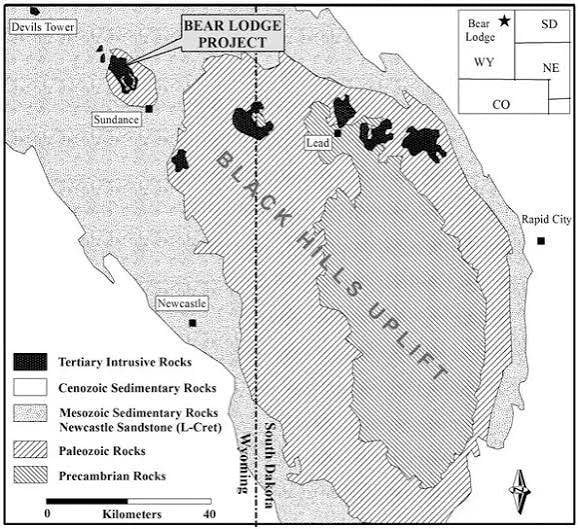
America's rare earth ambitions advanced this week as the U.S. Forest Service opened a 30-day public scoping period for the proposed Bull Hill Mine, part of Rare Element Resources' Bear Lodge Rare Earth Project near Sundance, Wyoming.
The review begins preparation of an Environmental Impact Statement (EIS), gathering public input before any permitting decisions are made. The project's designation under the federal FAST-41 program reflects Washington's effort to accelerate reviews for strategically important infrastructure while maintaining environmental requirements.
The Fine Print Investors Should Read
The reporting is accurate but procedural. The announcement does not authorize mining, nor does it guarantee final approval.
Bull Hill remains one of the more strategically important U.S. rare earth projects because Rare Element Resources has already advanced demonstration-scale processing technology for the Bear Lodge deposit. Yet significant milestones remain, including completion of environmental review, financing, commercial-scale processing, and ultimately integration into downstream supply chains.
The Mine Is Only Chapter One
The article also omits the industry's central challenge. A domestic mine alone does not eliminate dependence on China.
Rare earth ore must still move through separation, metal production, alloy manufacturing, and permanent magnet fabrication—the very stages where China maintains overwhelming global leadership. The Great Powers Era 2.0 has exposed this reality: permitting more mines is necessary, but rebuilding the complete mine-to-magnet ecosystem is what ultimately determines strategic independence.
For investors, Bull Hill is an encouraging milestone—but the finish line remains far beyond the mine gate.


0 Comments
No replies yet
Loading new replies...
Moderator
Join the full discussion at the Rare Earth Exchanges Forum →