
Highlights
- China upgraded its bilateral relationship with Namibia, prioritizing mining, infrastructure, and industrial cooperation as part of a long-term critical minerals strategy.
- No new rare earth deals were signed, but Beijing reaffirmed mineral cooperation as central to its broader Africa engagement model integrating diplomacy, trade, and technology transfer.
- Namibia hosts significant rare earth projects including Lofdal's heavy rare earths and Kameelburg, positioning it as a rising critical minerals jurisdiction.
- China's approach reflects 'mine-to-magnet diplomacy,' reinforcing upstream supply chains that feed its dominant downstream rare earth processing and magnet industries.
- Western governments pursuing similar critical mineral goals in Africa remain years behind China in building comparable long-term geopolitical relationships.
China and Namibia have elevated their bilateral relationship to what Beijing calls a "Community with a Shared Future for the New Era," signaling deeper cooperation across mining, energy, infrastructure, agriculture, education, and technology. While no new mining agreements or rare earth investments were announced, Beijing used the visit to reaffirm mineral cooperation as a cornerstone of its broader Africa strategy. For Western governments and investors, the meeting reinforces an important reality: competition over rare earths and critical minerals is increasingly being won through long-term geopolitical relationships—not just individual mining projects. Welcome to an accelerating Great Powers Era 2.0.
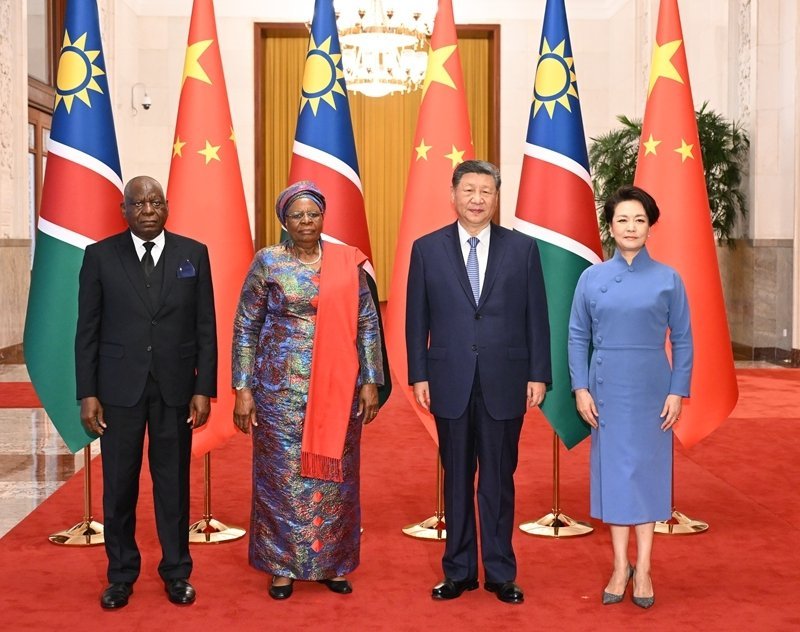
Diplomacy Meets the Mine Gate
During Namibian President Netumbo Nandi-Ndaitwah's (opens in a new tab) state visit to Beijing, Chinese President Xi Jinping announced an upgrade in bilateral relations, emphasizing stronger political coordination and expanded economic cooperation.
Xi outlined three priorities:
- Deepening political and strategic cooperation.
- Expanding trade and investment.
- Strengthening collaboration in infrastructure, energy, mining, agriculture, education, science and technology, and youth development.
For investors, Xi's comments on mining stood out. Rather than emphasizing resource extraction alone, he framed mineral cooperation as a means of helping African nations transform their natural resource wealth into broader economic development. Xi reaffirmed China's willingness to expand mining cooperation under principles of "mutual benefit," consultation, and market-oriented commercial cooperation.
Namibia
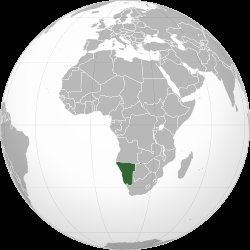
Following the meeting, both governments signed agreements covering trade, healthcare, education, and human resources, and issued a joint declaration formalizing the upgraded partnership.
More Strategy Than Transaction
No major mining investment, acquisition, or rare earth project was announced. That, however, misses the larger story.
China is signaling that Africa—and Namibia in particular—will remain central to its long-term critical minerals strategy. Rather than focusing solely on purchasing raw materials, Beijing continues promoting a broader model that integrates mining, infrastructure, industrial development, technology transfer, trade, and long-term diplomatic engagement.
For Western policymakers, the message is clear: strategic mineral competition increasingly extends well beyond the mine gate.
Namibia's Quiet Rise as a Critical Minerals Powerhouse
Namibia has emerged as one of Africa's most strategically important critical mineral jurisdictions.
Beyond its globally significant uranium industry, the country hosts growing lithium, graphite, copper, and rare earth opportunities. Among the most notable rare earth projects:
- Lofdal, being advanced by Namibia Critical Metals Corp. (TSXV: NMI) in partnership with JOGMEC, is one of the world's most advanced heavy rare earth projects outside China, particularly rich in dysprosium and terbium.
- Kameelburg, being explored by Kendrick Resources PLC (LSE: KEN), has attracted increasing attention following encouraging exploration results, although the project remains in the exploration stage.
Rare Earth Exchanges® has previously examined both projects as part of Namibia's growing importance in global rare earth diversification.
Mine-to-Magnet Diplomacy
What makes this meeting noteworthy is not the announcement of a new mine.
China already dominates much of the world's rare earth separation, metals, alloys, and permanent magnet manufacturing.
By strengthening long-term relationships with resource-rich nations such as Namibia, Beijing is simultaneously reinforcing the upstream portion of the supply chain that ultimately feeds those downstream industries. Viewed through that lens, the summit represents another example of what Rare Earth Exchanges has increasingly described as resource diplomacy—using political relationships, infrastructure investment, trade, and industrial cooperation to strengthen strategic supply chains over decades rather than relying solely on commercial transactions. This is what we coined the Great Powers Era 2.0.
July 10, President Xi Jinping held talks with Namibian President Evariste Ndetwa, who was on a state visit to China, at the Great Hall of the People in Beijing.
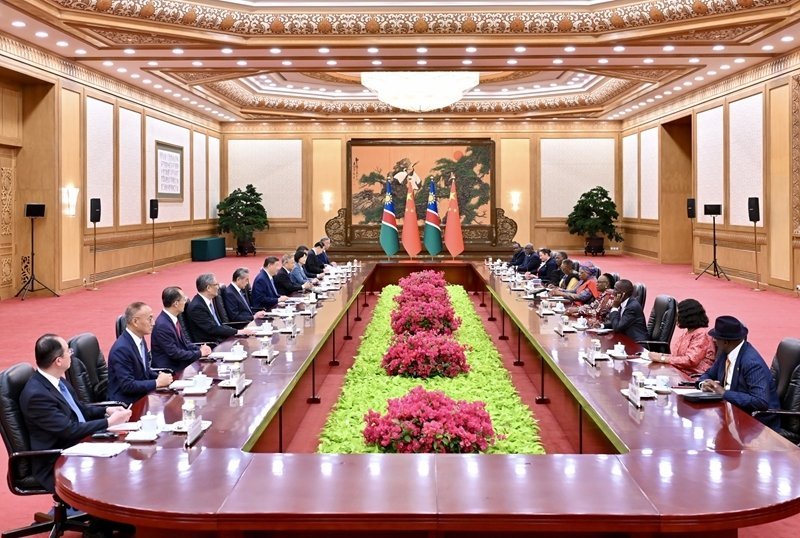
Credit: Photo by Gao Jie, Xinhua News Agency
REEx Takeaway
For investors, the significance lies less in what was signed than in what was reinforced. China continues to deepen long-term partnerships with resource-rich nations while integrating mining, infrastructure, industrial development, and trade into a single strategic framework. Western governments are increasingly pursuing similar objectives, but in many parts of Africa they remain several years behind in building comparable relationships.
As competition for critical minerals intensifies, the winners may not simply be those that discover the next world-class deposit—they may be those that build the strongest geopolitical partnerships around it.
Disclaimer: This report is based primarily on an official news release published by Xinhua News Agency, a state-owned Chinese news organization. Official government statements reflect the positions of the People's Republic of China and should be independently verified where possible. No specific new mining investment, rare earth project, or acquisition was announced during the visit beyond the broader policy commitments and cooperation agreements described.


0 Comments
No replies yet
Loading new replies...
Moderator
Join the full discussion at the Rare Earth Exchanges Forum →