
Highlights
- China's MIIT unveiled its first national policy targeting traditional industries like ceramics, tea, and silk, with 2028 and 2030 modernization targets.
- The policy proposes converting tacit worker knowledge—process parameters, formulations, and techniques—into reusable AI-driven data assets and industrial knowledge graphs.
- By 2030, China aims to develop world-class companies and move traditional industries toward the upper reaches of the global value chain.
- Though rare earths are not covered, the model has direct implications: China could institutionalize the process expertise that makes rare earth separation and magnet manufacturing productive.
- The West may be rebuilding rare earth industrial capacity while China works on digitizing the accumulated experience that makes that capacity competitive.
China has unveiled its first national-level industrial policy specifically targeting historically significant traditional industries, setting 2028 and 2030 goals for sectors including traditional Chinese medicine, ceramics, silk, tea, brewing, and traditional crafts. The initiative goes well beyond cultural preservation. Beijing wants these industries to become higher-end, smarter, greener, and more internationally competitive, using artificial intelligence, advanced manufacturing, standardization, and stronger brands.
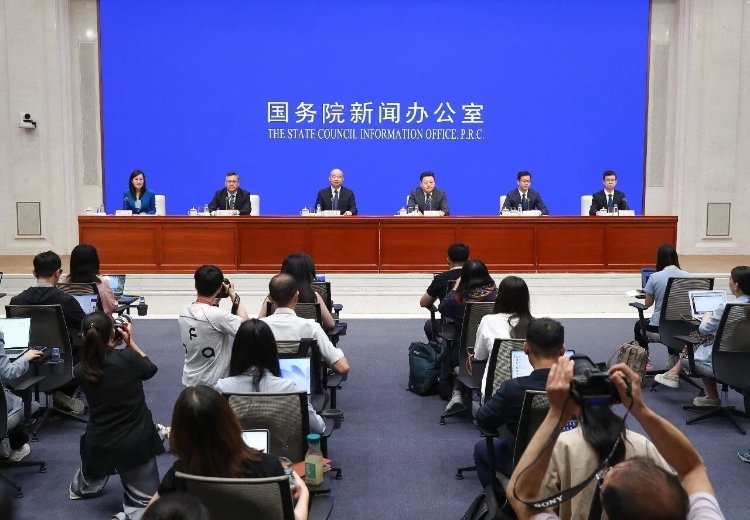
By 2028, China targets 50 enterprises with annual revenue of RMB 10 billion or more, 100 nationally recognized consumer brands, and multiple RMB 100 billion industry clusters. By 2030, it aims to develop world-class companies and brands and move these industries toward the middle and upper reaches of the global value chain.
REEx Insight — China Wants to Turn Know-How Into Data
For REEx, the most consequential element isn't tea or ceramics. It is Beijing's proposed method for converting accumulated human know-how into scalable industrial intelligence.
China's Ministry of Industry and Information Technology (MIIT) describes the AI strategy as “data-driven, model-supported and scenario-deployed.” The government wants knowledge still residing in workers' experience—such as process parameters, formulations, operating techniques, and fault diagnosis—systematically collected, standardized, and converted into reusable data assets. AI models and industrial knowledge graphs could then help decode that knowledge and improve process consistency.
Rare earths are not covered by this policy. But the model deserves Western attention.
Rare-earth separation, metallization, alloying, and magnet manufacturing depend heavily on accumulated process knowledge. The West can finance new plants, but rebuilding decades of operator experience is much harder. If China increasingly learns to capture tacit industrial knowledge digitally, an advantage historically residing in individual engineers and operators could become institutionalized, transferable, and potentially AI-enhanced.
That changes the competitive equation. The West may be rebuilding industrial capacity while China works on digitizing the experience that makes capacity productive.
From Craftsman to Algorithm
Beijing specifically proposes creating regional “industrial brains,” digitizing knowledge such as ceramic glaze formulations and process parameters, and using AI to build process knowledge graphs.
Officials envision “future factories” with dynamic production control, online quality traceability, and flexible intelligent scheduling. Examples include AI vision systems grading tea and algorithms dynamically adjusting kiln temperatures to reduce ceramic defects. The industries covered are already substantial: Beijing estimates approximately 25,000 large-scale enterprises, nearly 3.5 million workers, and RMB 8 trillion in annual revenue.
REEx Connect
| Organization / Contact | Role | REEx Relevance |
|---|---|---|
| Ministry of Industry and Information Technology (MIIT) | Lead industrial ministry | AI, digitization and industrial modernization |
| Xie Yuansheng | Vice Minister, MIIT | Presented policy and AI strategy |
| Feng Haicang | MIIT Consumer Goods Industry Department | Industrial and brand-development policy |
| State Administration for Market Regulation | Standards and quality authority | Standardization and quality modernization |
| Wei Hong | Director-General, Standards Innovation Department | Standards strategy |
| Ministry of Commerce | National commerce ministry | Distribution, brands and international markets |
| Zhang Xiang | Ministry of Commerce official | Market-development strategy |
| Ministry of Culture and Tourism | Cultural and heritage authority | Traditional skills and commercialization |
| Shan Gangxin | Director-General, Intangible Cultural Heritage Department | Heritage and workforce development |
Source Transparency: This news item is based on an official Chinese government press conference and government/state-media materials. Policy targets, statistics and claimed outcomes should be independently verified. REEx's analysis—particularly the potential implications for rare-earth and critical-material manufacturing—is an independent interpretation and is not stated in the underlying policy.


0 Comments
No replies yet
Loading new replies...
Moderator
Join the full discussion at the Rare Earth Exchanges Forum →