
Highlights
- Baotou plans 564 major projects in 2026 spanning rare earth permanent magnets, hydrogen storage, energy storage systems, and advanced steel manufacturing, signaling China's accelerating industrial buildout despite Western geopolitical pressures.
- China is moving beyond rare earth mining into high-value magnet manufacturing and integrated industrial ecosystems, while Inner Mongolia North Heavy Industries claims a breakthrough in ultra-high-pressure steel pipes that could break foreign technological monopolies.
- Baotou exemplifies Great Powers Era 2.0 strategy—full-spectrum industrial dominance through vertically integrated ecosystems—while Western nations remain trapped in slow permitting, fragmented policy, and political gridlock.
From steel and magnets to hydrogen, Baotou’s industrial machine accelerates. In Baotou—China’s undisputed rare earth industrial hub—cranes are swinging, factories are rising, and Beijing’s industrial ambitions are turning into concrete, steel, magnets, and energy infrastructure at remarkable speed.
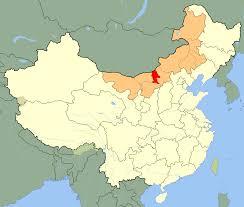
According to local reports, Baotou plans to advance 564 major projects in 2026, including government-backed projects valued at over RMB 50 million and enterprise-led projects valued at over RMB 100 million. The developments span rare earth permanent magnets, hydrogen storage, energy storage systems, advanced steel manufacturing, renewable energy integration, and “green computing” infrastructure.
The broader message is difficult to miss: despite geopolitical tensions, tariffs, export controls, and Western de-risking efforts, China continues to accelerate industrial buildout across strategic sectors tied to future manufacturing power.
The Magnet Race Is Moving Far Beyond Mining
One of the more important developments involves a rare-earth permanent magnet integration project by Baotou INST Magnetic New Materials (opens in a new tab). Local officials claim the project is already ahead of schedule due to fast-tracked approvals and coordinated government support, with equipment installation expected in May and phased production targeted for September.
That matters because China keeps moving deeper into the highest-value segments of the rare-earth supply chain: magnet manufacturing, downstream applications, integrated systems, and advanced industrial ecosystems. The West still often frames rare earth strategy around mining projects. China increasingly frames the sector around industrial orchestration.
The Quiet Strategic Signal Hidden in Steel
Another potentially significant development involves Inner Mongolia North Heavy Industries (opens in a new tab), which claims it successfully trial-produced 18-meter ultra-long ultra-high-pressure seamless thick-wall steel pipes in late 2025 and plans to scale annual production capacity to 360 units this year.
The article explicitly states the project could “break foreign technological monopolies.”
If accurate, that language deserves attention.
Ultra-high-pressure industrial piping systems can have applications across petrochemicals, hydrogen transport, defense manufacturing, advanced energy systems, and strategic industrial infrastructure. China appears focused not merely on industrial catch-up, but on systematically replacing foreign technological dependence.
Great Powers Era 2.0 Is Already Here
At first glance, this reads like regional economic boosterism. Underneath, however, sits something much larger. Baotou is evolving into a vertically integrated industrial ecosystem spanning rare earths, magnets, hydrogen, storage systems, advanced steel, renewables, and industrial manufacturing. That ecosystem strategy is exactly what Rare Earth Exchanges™ calls _Great Powers Era 2.0_—a world where nations compete not simply for resources, but for full-spectrum industrial dominance.
The uncomfortable reality for the West is this: China is still building industrial capacity at extraordinary speed while much of the democratic world remains trapped in the early stages of industrial policy formulation. That is, slow permitting, fragmented policy, financing uncertainty, and political gridlock. With American midterms around the corner, this polarization may intensify before not.
Disclaimer: This report originates from Chinese local/state-linked media and references projects connected to state-supported industrial policy. Investors should independently verify all construction timelines, production claims, technology milestones, and commercialization outcomes.


0 Comments
No replies yet
Loading new replies...
Moderator
Join the full discussion at the Rare Earth Exchanges Forum →