
Highlights
- CWRU's patented chloride-based molten-salt electrolysis technology selected under a $10M DOE Critical Materials Innovation Hub initiative to produce dysprosium and terbium metals domestically.
- Partners include Energy Fuels and MP Materials for feedstock and separation, plus Ames and Lawrence Livermore national labs, creating a credible commercialization pathway.
- The project targets the oxide-to-metal conversion bottleneck in the rare earth magnet supply chain, a step where China still holds dominant global advantage.
- Energy Fuels' acquisition of ASM—which already has commercial NdPr metallization and NdFeB alloy capacity—sets a real-world benchmark CWRU's electrochemical route must eventually meet.
- Key investor metrics to watch: metal purity, energy intensity, throughput, and whether the process handles real-world feedstocks economically at industrial scale.
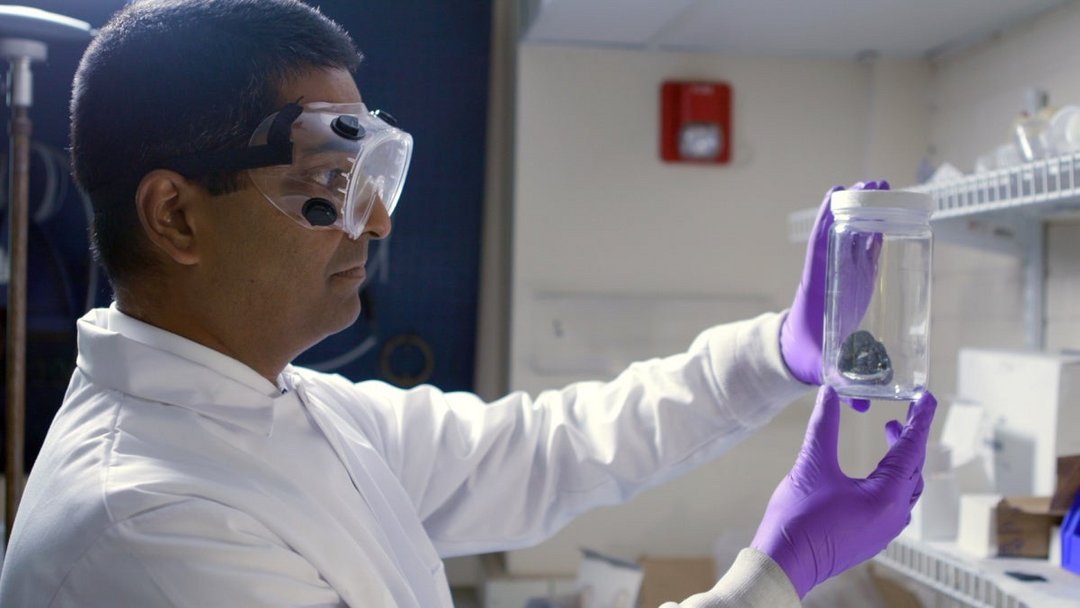
America is beginning to produce separated heavy rare-earth oxides, but another difficult choke point remains before the magnet: turning rare earth feedstocks into usable metals. Case Western Reserve University (CWRU), led by Professor Rohan Akolkar, (opens in a new tab) Tamar Maltz Professor of Energy Innovation in the Department of Chemical and Biomolecular Engineering at the Case School of Engineering, has been selected to develop its patented chloride-based molten-salt electrolysis technology for efficient domestic dysprosium and terbium metal production. The project is one of seven selected under a $10 million DOE Critical Materials Innovation Hub initiative—but remains early-stage R&D subject to award negotiations.
REEx Insight: America Is Filling the Supply Chain One Choke Point at a Time
This project matters because separation and metallization are different businesses. Energy Fuels has already demonstrated 99.9%-pure Dy and Tb oxides in Utah and is building commercial-scale heavy-REE separation capacity. MP Materials is commissioning its own Dy/Tb separation circuit. Yet producing oxide still leaves another technically demanding conversion: ore → separation → oxide → metal → alloy → magnet.
CWRU is attacking that next bottleneck.
The partner lineup makes the research unusually relevant: Energy Fuels and MP Materials bring emerging U.S. feedstock and separation capabilities; Ames and Lawrence Livermore (opens in a new tab) contribute national-lab expertise; industry partners provide a potential commercialization bridge. If Akolkar's electrochemistry can achieve high purity, competitive energy consumption, acceptable yields, and continuous industrial-scale operation, it could fill a genuine hole in America's magnet chain.
But "if" is doing considerable work. Laboratory electrochemistry is not a commercial metallization plant. Investors should watch four things: purity, energy intensity, throughput, and whether the process handles real-world feedstocks economically.
A Comment on the Other Heavies
The challenge extends beyond dysprosium and terbium. Other heavy rare earths—including yttrium, ytterbium (Yb), holmium (Ho), lutetium (Lu), and, depending on classification, europium (Eu)—occur in smaller quantities and can be difficult and expensive to separate because rare earth elements have remarkably similar chemical properties. They are often needed only in kilograms or tonnes rather than the much larger volumes associated with NdPr, but that can make them more strategically fragile, not less: yttrium is important in advanced ceramics, lasers, and electronics; ytterbium and holmium in specialized lasers and photonics; lutetium in medical imaging and other high-value applications; and europium in phosphors and displays. These are classic "small-volume, enormous-consequence" materials. A shortage measured in tonnes—or sometimes much less—can constrain production systems worth orders of magnitude more.
That is why the strategic issue is not the market value of the rare earth itself, but the economic output sitting downstream of it. Claims that critical-mineral disruptions could threaten trillions of dollars of economic activity, potentially approaching $10 trillion across exposed industries, are directionally plausible as supply-chain exposure estimates, but should not be presented as $10 trillion of output that would necessarily be lost without a specific economic model supporting that figure.
Great Powers Era 2.0: The Battle Moves to Metallurgy
CWRU's release overreaches in saying Nd, Pr, Dy, and Tb metals are not produced domestically at least in small amounts: MP already markets NdPr metal produced at its Texas facility and partner locations. The broader thesis, however, is right. China's advantage extends far beyond mines. It encompasses separation, metallization, alloy-making, equipment, skilled operators, and magnets.
In Great Powers Era 2.0™, owning ore is not enough. The countries that master the chemistry and metallurgy between the mine and magnet capture strategic power—and economic value.
REEx Connect
| Player | Strategic Role |
|---|---|
| Case Western Reserve University | Heavy-REE metallization technology lead |
| Rohan Akolkar | Principal investigator; electrochemistry specialist |
| DOE / CMI Hub | Federal R&D sponsor |
| Energy Fuels | U.S. Dy/Tb oxide producer and project partner |
| MP Materials | U.S. NdPr producer; developing Dy/Tb separation |
| Ames / Lawrence Livermore | National-laboratory partners |
| University of Arizona / AML / Current Chemicals | Research and industry partners |
One additional REEx insight: Energy Fuels' August acquisition of ASM makes the timing particularly interesting. ASM's Korean Metals Plant already has commercial NdPr metallization and 1,300 tpa NdFeB alloy capacity, expanding toward 3,600 tpa, while developing Dy/Tb metallization. That creates a useful benchmark for CWRU: the question is no longer whether non-Chinese metallization technology can exist. It is whether CWRU's electrochemical route can eventually make heavy rare-earth metals in America more efficiently, cheaply, and at sufficient scale to compete.


0 Comments
No replies yet
Loading new replies...
Moderator
Join the full discussion at the Rare Earth Exchanges Forum →