
Highlights
- New Frontier Minerals has restarted field activities at Harts Range after testing only 6 of 46 priority exploration targets.
- Independent geological research suggests the broader Harts Range region may represent a district-scale copper-nickel-PGE system, expanding regional interest.
- No JORC resource estimate, metallurgical results, or processing flowsheet has been announced, leaving commercial viability unproven.
- For heavy rare earth projects, metallurgy—not geology—is often the decisive hurdle separating exploration promise from economic reality.
- Investors should distinguish geological potential from strategic supply chain capacity until key processing and recovery questions are answered.
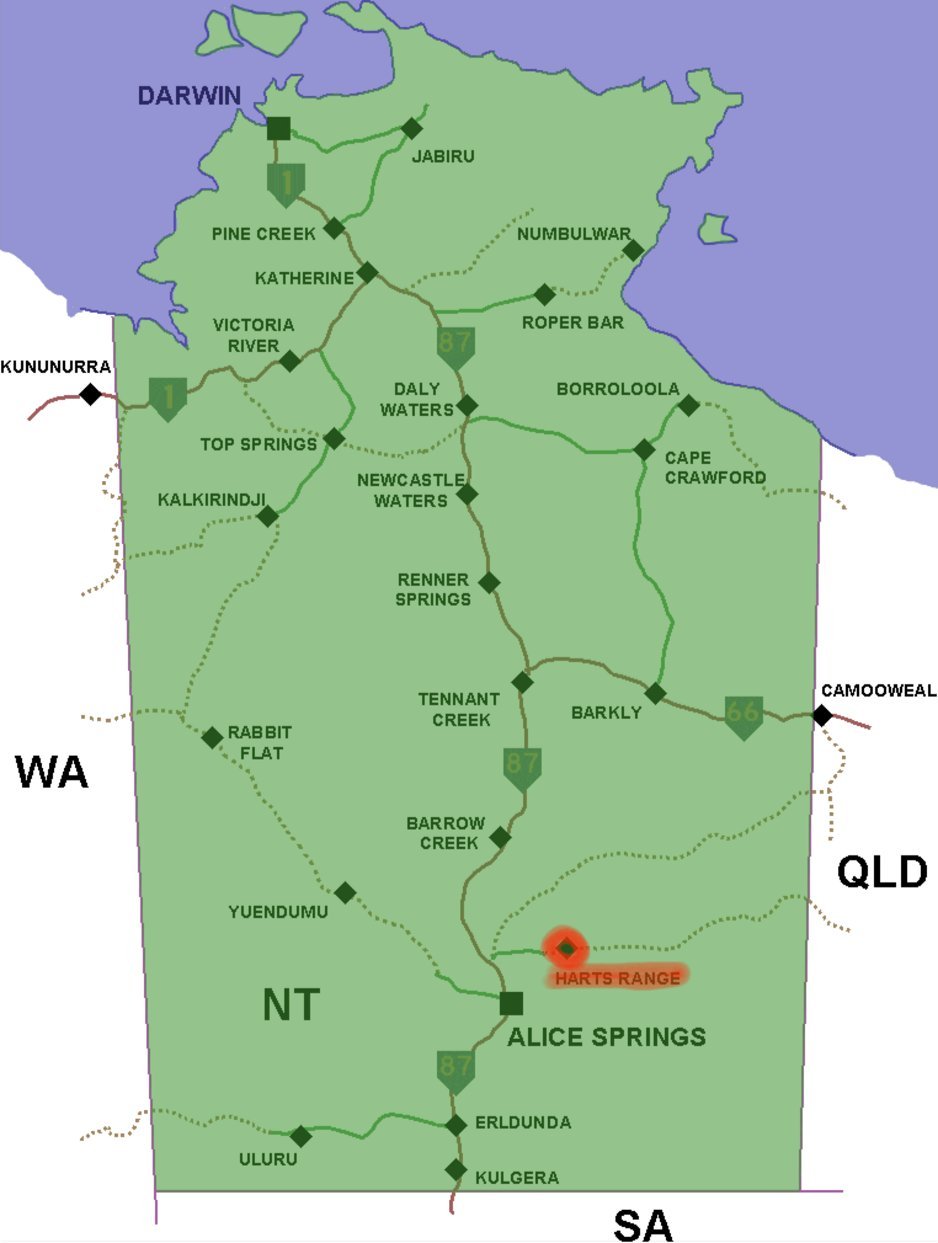
New Frontier Minerals (opens in a new tab) (ASX: NFM) has resumed exploration at its Harts Range Heavy Rare Earths and Niobium Project in Australia's Northern Territory, planning to evaluate roughly 40 of its remaining 46 priority exploration targets. The company also points to independent geological research suggesting the broader Harts Range region could represent a district-scale copper-nickel-platinum group element (PGE) system. Rare Earth Exchanges® view: this is a meaningful exploration update, but not yet a commercial rare earth story. Investors should distinguish geological potential from economic value. No new mineral resource, metallurgy, processing pathway, or development milestone has been announced.
The Ground Is Speaking—But It Hasn't Answered Yet
Every mining district begins with promise. Very few become profitable mines.
New Frontier Minerals has restarted field activities at Harts Range after only six of its original 46 exploration targets have been drill tested. Initial work will focus on the Kings Cross prospect, followed by Bank and Cusp, where previous rock-chip sampling and reverse-circulation drilling identified encouraging tungsten mineralization.
The company also highlighted recent geological work by Litchfield Minerals, supported through the BHP Xplor program, suggesting the broader Harts Range region may represent a much larger copper-nickel-PGE mineral system. While that expands regional geological interest, it does not independently confirm the economic potential of New Frontier's rare earth project.
Geology Is Only Chapter One
The announcement accurately reflects renewed exploration activity across a largely underexplored land package. That alone gives investors additional news flow over the coming months. But the industry's history is filled with districts that looked exceptional on geological maps yet failed commercially.
The company has announced no updated JORC-compliant resource estimate, no Preliminary Economic Assessment (PEA), no metallurgical test results, no mineral processing flowsheet, and no evidence that any heavy rare earth mineralization can ultimately be separated economically into saleable oxides.
For heavy rare earth projects, metallurgy—not geology—is often the decisive hurdle.
What Really Matters for the Rare Earth Supply Chain
From a strategic supply chain perspective, Harts Range remains an early-stage upstream exploration story.
The commercial questions investors should be asking remain unanswered:
- Which heavy rare earth elements dominate the deposit—dysprosium, terbium, yttrium, or others?
- What mineral species host those elements?
- What recovery rates can be achieved through processing?
- Can concentrates ultimately feed an ex-China separation, metal, alloy, and permanent magnet supply chain?
Until those questions are answered, Harts Range represents geological opportunity—not yet strategic supply chain capacity. For investors, that's an important distinction. Mineral discoveries create headlines. Commercial processing creates industries.
Register today: REEx Marketplace™ (opens in a new tab)


1 Comment
1 reply
Loading new replies...
Active member
Join the full discussion at the Rare Earth Exchanges Forum →