
Highlights
- Lanzhou LSZK Technology and Lanzhou University signed agreements covering joint research, talent development, and an AI + advanced materials R&D platform.
- Professor Pinxian Xi's work on rare-earth nanomaterial design aims to shift production from experience-based adjustment to scientifically controlled manufacturing.
- The initiative targets domestic substitution and upgrading of high-end rare-earth nanomaterials for aerospace, precision manufacturing, and advanced equipment.
- China's downstream R&D accumulation—spanning materials science, process engineering, and AI-assisted development—poses a long-term competitive threat beyond resource control.
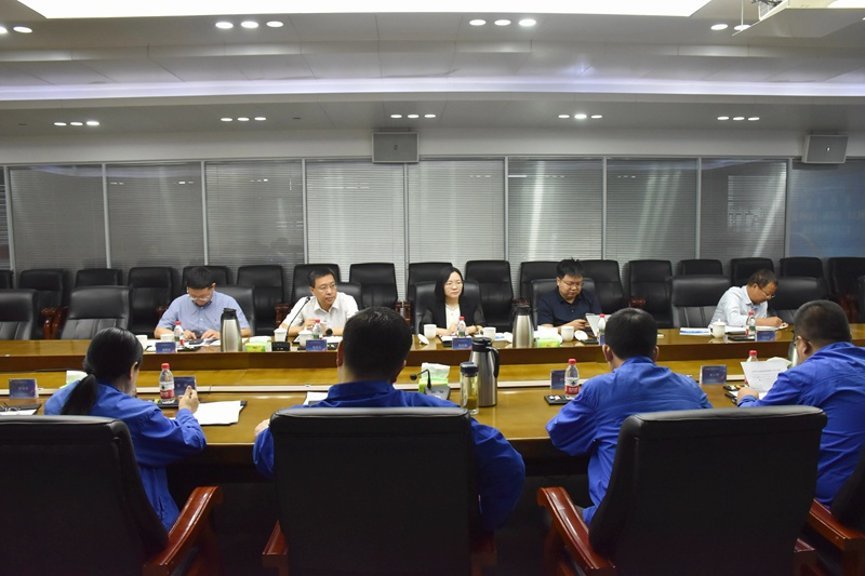
Lanzhou LSZK Technology (opens in a new tab) and Lanzhou University (opens in a new tab) are expanding a university-industry partnership designed to move advanced materials—including high-end rare-earth nanomaterials—from laboratory research toward industrial production. At an August 27 meeting, participants reached agreements covering joint research programs, talent development, a zinc-industry research institute, and an “AI + advanced materials” R&D platform. The strategically important objective is solving the difficult “last mile”: turning promising laboratory chemistry into repeatable, scalable, and commercially useful manufacturing.
Discussion at the Meeting
REEx Insight | The Next Competitive Front Is Materials Know-How
China's rare-earth advantage does not end with mining, separation, metals, or magnets. Increasingly, the competition extends into engineered materials, process intellectual property, and application-specific products. That makes this initiative worth watching. Professor Pinxian Xi's Lanzhou University research includes rational design of rare-earth nanomaterials and understanding how nanoscale location and structure affect material performance. Independent Chinese reporting also confirms Xi has worked inside LSZK on problems involving rare-earth reaction mechanisms and product structural stability, helping shift production from experience-based process adjustment toward more scientifically controlled manufacturing.
The new initiative seeks to connect that science directly with pilot testing, engineering, and eventually markets. AI and machine learning are another important layer: Lanzhou University's broader rare-earth research program has already identified these tools as methods for understanding structure-performance relationships and designing new functional materials.
Why REEx Tracks China's Downstream R&D
In the aggregate, REEx monitors developments like this because China's greatest long-term competitive threat may not be simply control of rare-earth resources—it is the continuous accumulation of downstream manufacturing knowledge. Hundreds of incremental advances across universities, laboratories, processors, metals producers, magnet makers, and advanced-material companies can compound into lower costs, better performance, faster commercialization, and deeper intellectual-property advantages. For the United States and Europe, the danger is that rebuilding mines and separation capacity alone could leave Western industry competing against a Chinese ecosystem simultaneously advancing materials science, process engineering, AI-assisted R&D, and application-specific manufacturing. That is why seemingly small downstream R&D announcements matter when viewed collectively.
From Laboratory to Production Line
LSZK plans to provide pilot-scale validation and engineering capabilities while Lanzhou University researchers address industrial problems identified by manufacturers. The model is unusually direct: industry defines the problem, academia develops the science, and pilot facilities test whether it survives scale-up. Xi specifically highlighted domestic substitution and upgrading of high-end rare-earth nanomaterials for aerospace, precision manufacturing, and advanced equipment. Zhang Haoli, meanwhile, called for AI-assisted materials development to accelerate higher-value product iterations.
The significance is therefore not today's production volume. It is China's continuing effort to shorten the distance between scientific discovery and industrial dominance.
REEx Connect
| Organization | Key Contact | Strategic Relevance |
|---|---|---|
| Lanzhou LSZK Technology | Kang Xiangjing | Director & General Manager; scale-up and commercialization |
| Lanzhou University | Zhang Haoli | Executive Dean, Graduate School; AI-enabled materials R&D |
| Lanzhou University / LSZK | Pinxian Xi | Professor / technology executive; rare-earth nanomaterials and industrial process development |
| Lanzhou University | Chen Fengjuan | Professor; technology transfer and industrial collaboration |
| Lanzhou University | Huo Yong | Frontier Science Center researcher |
| Luoyang Tongyi Times New Materials | Fu Huiwen | Chairman; advanced-materials industrial participant |
Source disclaimer: The underlying news item originates from Chinese state-owned-enterprise media and primarily reports statements by participating institutions. Claims concerning technological progress, commercialization, and future applications should therefore be independently verified. REEx has cross-checked key elements against additional Chinese and academic sources.


0 Comments
No replies yet
Loading new replies...
Moderator
Join the full discussion at the Rare Earth Exchanges Forum →