
Highlights
- Pakistan has promising rare earth occurrences but lacks JORC- or NI 43-101-compliant resource estimates, metallurgy, or project economics.
- A 2025 sample shipment to U.S. Strategic Metals included Nd and Pr-bearing material, but no assays, tonnage, or proof of separated rare earth products have been disclosed.
- REEx identifies four critical gates beyond security: resource definition, mineralogy, metallurgy, and economics before Pakistan can be called a proven rare earth supplier.
- Pakistan's strongest near-term asset may be geopolitical optionality—leveraging CPEC infrastructure and dual relationships with China and the U.S. to attract capital.
- Shipping rare earth-bearing material is not equivalent to possessing a commercially viable rare earth industry.
Pakistan may occupy an increasingly valuable intersection of minerals and geopolitics, but investors should separate proven deposits from national potential. Writing in the Pakistan Observer, Zahid Maqsood Sheikh argues that Pakistan's critical minerals could combine with the China-Pakistan Economic Corridor (opens in a new tab) (CPEC) to create a new mineral-export platform. The geography is real; the rare-earth investment case remains much less mature. Pakistan has promising occurrences and exploration targets, but the article provides no JORC- or NI 43-101-style rare-earth resource, reserve, metallurgy, or project economics supporting its broader claims of rare-earth “wealth.”
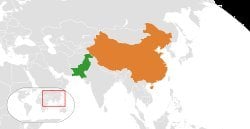
REEx Insight — Great Powers Era 2.0™ Meets the Corridor
Pakistan fits REEx's Great Powers Era 2.0 thesis unusually well: strategic geography is becoming an asset alongside geology. CPEC links Pakistan economically with China, yet Islamabad is simultaneously courting American critical-mineral capital. In October 2025, Pakistan sent U.S. Strategic Metals a sample shipment containing antimony, copper concentrate, and material reported to contain Nd and Pr. USSM confirmed the shipment—but public disclosure still lacks assays, tonnage, mineralogy, or proof of separated rare-earth products.
That distinction is crucial. Shipping rare-earth-bearing material is not the same as possessing a commercially proven rare-earth industry. Pakistan's real opportunity may therefore be geopolitical optionality: use its location, CPEC infrastructure, and relationships with both China and the United States to attract capital and processing technology.
But Great Powers Era 2.0 cannot repeal geology.
First Prove the Rock
The Observer correctly identifies security as a major obstacle in mineral-rich regions. REEx would add four more gates: resource, mineralogy, metallurgy, and economics.
Until those appear, Pakistan is best described as rare-earth prospective—not yet a demonstrated rare-earth supply alternative.
REEx's 2025 forensic review: When “First Shipment” Isn't Always What It Seems
This framing is more defensible than the original Observer language because Pakistan clearly has mineral potential and clearly shipped samples—but neither fact yet demonstrates a scalable rare-earth mine-to-separated-oxide supply chain.


0 Comments
No replies yet
Loading new replies...
Moderator
Join the full discussion at the Rare Earth Exchanges Forum →