
Highlights
- GSI identified 8.1–8.15 million tonnes of alluvium averaging 746 ppm TREE at Pata Gangaram, Telangana—an early-stage G3 inferred resource, not a reserve.
- Simple arithmetic yields only about 6,100 tonnes of contained rare earth elements before mining losses, processing, and separation are factored in.
- Monazite is the primary REE-bearing mineral, bringing thorium contamination that makes extraction legally complex and commercially expensive in India.
- Key data gaps remain: Nd-Pr-Dy-Tb distribution, mineral recovery rates, thorium content, metallurgy, and infrastructure costs are all still unknown.
- India is expanding critical-mineral exploration and auctioning blocks, but Pata Gangaram represents a geological inventory entry, not a commercial breakthrough.
India has found more rare-earth-bearing dirt. It has not found an 8.1-million-tonne rare-earth deposit. The Geological Survey of India (GSI) reports 8.1–8.15 million tonnes of alluvium averaging 746 ppm total rare earth elements (TREE) at Pata Gangaram, Telangana. The distinction matters: this is an early-stage G3 inferred resource, not a reserve, mine, or new source of magnet materials.
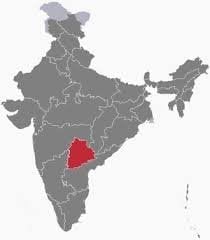
REEx Insight: The Headline Is Bigger Than the Metal
At 746 ppm, simple arithmetic implies only about 6,100 tonnes of contained TREE across 8.15 million tonnes of material—before mining losses, beneficiation, recovery, separation, or economics. More importantly, government exploration records identify monazite as the REE-bearing mineral, alongside zircon, ilmenite, and rutile. Monazite commonly brings thorium—and India itself says monazite's radioactive association makes extraction long, complex, and expensive. That is the missing investment story.
From Alluvium to Magnet Is a Very Long Road
The Times of India (opens in a new tab) deserves credit for explicitly warning readers that Pata Gangaram is not a proven or commercially mineable reserve and has not been auctioned. But grade alone tells investors remarkably little. We still need the Nd-Pr-Dy-Tb distribution, mineral recovery, concentrate grade, thorium content, metallurgy, operating costs, and infrastructure requirements. Without those data, commercial value is speculative. The broader news is nevertheless important. India is systematically expanding exploration while auctioning critical-mineral blocks and attempting to build domestic processing. Pata Gangaram strengthens the geological inventory—but geology is only the opening move.


0 Comments
No replies yet
Loading new replies...
Moderator
Join the full discussion at the Rare Earth Exchanges Forum →