
Highlights
- China Rare Earth Industry Association met with Huadian Coal Industry Group to accelerate rare earth permanent magnet motor deployment in coal mining operations.
- Both organizations agreed to develop customized magnet formulations optimized for mining applications, reducing costs while advancing China's low-carbon mine initiative.
- CREIA described the initiative as moving China's rare earth industry 'from the materials end to the application end,' reflecting Beijing's broader downstream industrial strategy.
- China is creating new domestic demand for rare earth products through industrial deployment, reducing reliance on export markets while strengthening its manufacturing ecosystem.
- Western governments face a strategic challenge that extends beyond securing raw materials to competing in industries that transform rare earths into commercially indispensable products.
China's rare earth industry is expanding beyond producing materials—it is actively cultivating new industrial customers. The China Rare Earth Industry Association (CREIA) announced that Vice Chairman and Secretary General Lin Anli recently led a delegation to Huadian Coal Industry Group Co., Ltd. (opens in a new tab), where executives discussed accelerating the large-scale deployment of rare earth permanent magnet motors across China's coal mining operations. Although the announcement focuses on energy-efficient mining equipment, it reveals something more important: Beijing continues pushing rare earth innovation further downstream, creating new commercial applications that increase long-term domestic demand for rare earth materials.
Huadian Coal Industry Group and the China Rare Earth Industry Association Strategic Exchange Meeting
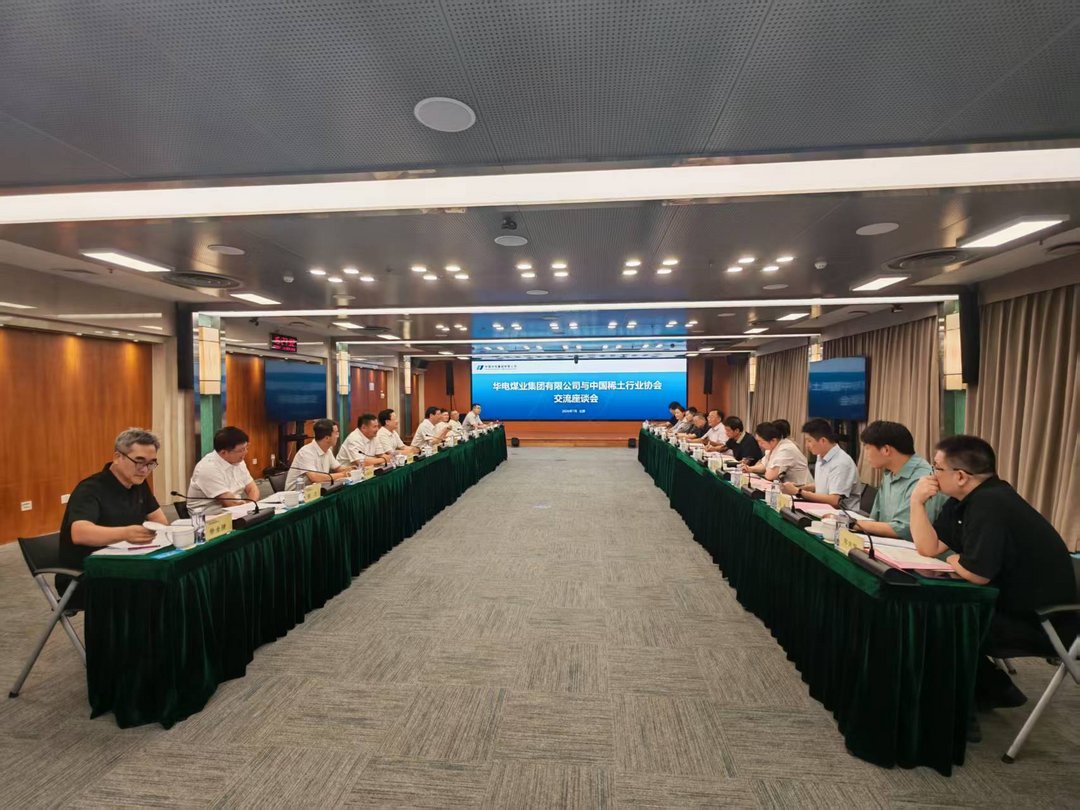
Coal Mines Become a New Market for Rare Earth Technology
According to CREIA, both organizations reached broad agreement on expanding the use of rare earth permanent magnet motors as part of China's "low-carbon mine" initiative. The discussions went beyond equipment deployment. The organizations also agreed to pursue customized magnet formulations designed specifically for mining applications. Rather than maximizing magnetic performance regardless of cost, engineers intend to optimize magnet chemistry for each application, reducing unnecessary use of expensive rare earth elements while lowering total lifecycle costs.
The two sides also agreed to deepen cooperation in technology development, standards setting, and broader industrial supply-chain coordination. Notably, CREIA described the initiative as moving China's rare earth industry "from the materials end to the application end"—a concise summary of Beijing's broader industrial strategy.
Why the Coal Connection Matters
For Western readers, the meeting is noteworthy for reasons extending beyond electric motors.
Coal remains fundamental to China's energy system, but it has also emerged globally as a potential unconventional source of rare earth elements and other critical minerals. Governments in the United States, Europe, Australia, and elsewhere are investing in technologies to recover rare earths from coal ash, coal refuse, and associated waste streams. While this announcement contains no discussion of extracting rare earths from coal, it brings together two industries whose relationship could become increasingly important as nations search for new critical mineral supplies.
Equally important, the meeting demonstrates that China continues creating new domestic demand for rare earth products through industrial deployment rather than relying solely on export markets.
Why It Matters
Rare Earth Exchanges® has consistently argued that Beijing's strategy is not simply to dominate rare earth mining or even processing. Its longer-term objective is to leverage its world-leading separation and refining capabilities to create higher-value downstream industries that monetize rare earths through advanced manufactured products. Permanent magnets became the first major success story. High-efficiency industrial motors represent another. Rare earth-modified steels, specialty alloys, catalysts, batteries, and other advanced materials follow the same strategic pattern.
Every successful downstream application expands domestic consumption, strengthens China's manufacturing ecosystem, and makes its processing advantage more economically valuable. For Western governments and industry, the strategic competition is increasingly about more than securing raw materials—it is about competing in the industries that transform those materials into commercially indispensable products.
Source Disclaimer: This report is based on information released by the China Rare Earth Industry Association, an organization operating within China's state-directed industrial system. The statements reflect official communications and have not been independently verified. Investors, manufacturers, and policymakers should seek independent confirmation before relying on the information for commercial, engineering, or policy decisions.


0 Comments
No replies yet
Loading new replies...
Moderator
Join the full discussion at the Rare Earth Exchanges Forum →