
Highlights
- Sweden unveiled a national mining strategy to streamline permitting, attract investment, and reduce dependence on China for critical minerals.
- The Per Geijer deposit near Kiruna is one of Europe's largest known rare earth resources and holds EU Strategic Project status.
- Faster permitting does not equal supply chain independence—China's leverage lies in its integrated midstream refining, alloying, and magnet manufacturing.
- LKAB has acknowledged that permitting alone can take close to a decade, widening the gap between political announcements and actual production.
- Europe must close the downstream gap in separation, metallurgy, and magnet capacity before China's strategic advantage is meaningfully challenged.
Sweden has elevated critical minerals and rare earth mining to a matter of national security, unveiling reforms to accelerate mine permitting, attract investment, and strengthen Europe's resource independence. The policy marks another escalation in the geopolitical competition over critical minerals. Rare Earth Exchanges®' assessment: the strategy addresses an important bottleneck, but investors should not mistake faster permitting for supply chain independence. The real contest remains downstream—in separation, metals, alloys, and permanent magnets, where China retains overwhelming dominance.
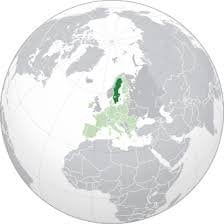
Europe has stopped speaking the language of industrial policy. It is now speaking the language of national security.
Sweden's government announced a new mining strategy that would streamline permitting, establish a dedicated environmental review authority, consider state-backed financing for strategic projects, and share more mining revenues with local communities. The objective is explicit: reduce Europe's dependence on China for critical minerals.
Ebba Busch, Energy Minister

Digging Faster Is Not the Same as Winning
The government's concerns are grounded in reality. Sweden hosts the Per Geijer deposit, one of Europe's largest known rare earth resources, while several Swedish projects have already been designated as EU Strategic Projects under the Critical Raw Materials Act. Europe is simultaneously attempting to expand domestic mining, processing, and recycling as part of its broader resource security strategy.
Yet the announcement leaves investors with an incomplete picture. A mining permit does not produce separated rare earth oxides. It does not create metal-making capacity, alloy production, or magnet manufacturing. Those capabilities remain China's principal strategic advantage.
The Missing Link Beneath the Headlines
The article frames China's dominance primarily as a mining story. It is not. China's enduring leverage comes from its integrated midstream supply chain, where it refines, separates, alloys, and manufactures the materials required for electric vehicles, robotics, wind turbines, semiconductors, and defense systems. Europe continues to trail in these value-added stages despite new mining initiatives.
LKAB itself has acknowledged that permitting alone can consume close to a decade, underscoring the gap between political announcements and commercial production.
The Rare Earth Exchanges View
Sweden's strategy is strategically important. It signals that Europe increasingly views critical minerals as infrastructure essential to sovereignty. But investors should watch construction schedules—not press conferences. The decisive question is no longer who discovers the ore. It is who controls the chemistry, metallurgy, and manufacturing between the mine and the finished magnet. Until Europe closes that gap, China's strategic leverage remains largely intact.
Key Contacts
Key Swedish contacts linked to the country’s critical minerals strategy include Energy Minister Ebba Busch (opens in a new tab), the leading political advocate for faster permitting and reduced dependence on China; LKAB President and CEO Jan Moström (opens in a new tab), whose state-owned mining company is advancing the Per Geijer rare earth deposit near Kiruna; and the Geological Survey of Sweden, which supports exploration, geological mapping, and regulatory oversight. Together, these actors form the core of Sweden’s effort to convert mineral potential into strategic supply. Investors should also watch the European Commission, whose Critical Raw Materials Act and Strategic Project designations may help accelerate financing and permitting. The unresolved issue is whether Sweden and Europe can build enough separation, metals, alloy, and magnet capacity to keep future production from flowing back into China-dominated processing chains.


0 Comments
No replies yet
Loading new replies...
Moderator
Join the full discussion at the Rare Earth Exchanges Forum →