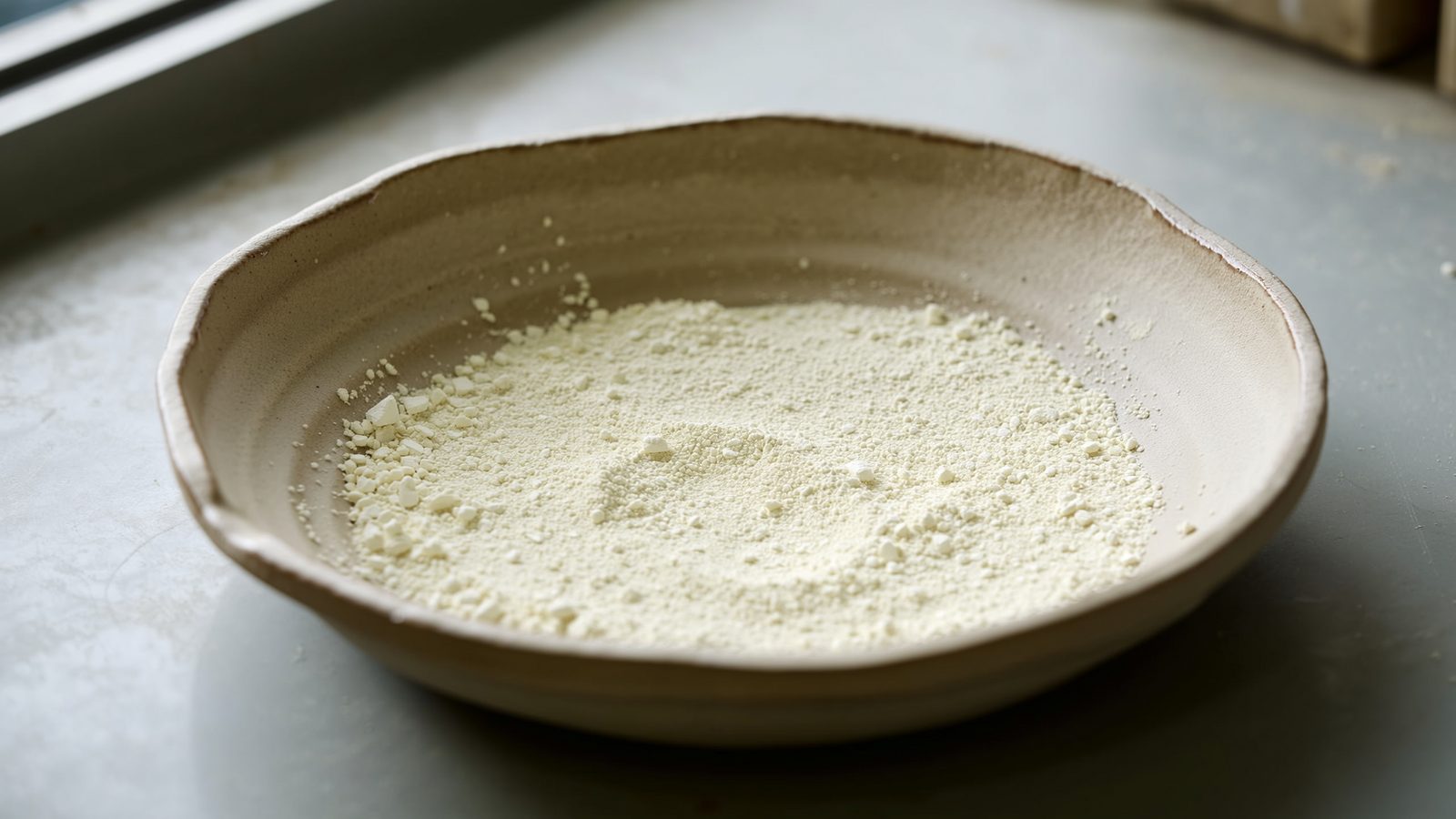
Rare earth processing is the chain of steps that turns mined ore into separated, usable oxides and metals. The United States produced an estimated 51,000 metric tons of rare-earth oxide in mineral concentrates (excluding monazite concentrates) in 2025, according to the USGS, yet net import reliance for compounds and metals was an estimated 67% that year. Companies that separate and refine outside China include MP Materials in California, Lynas in Malaysia, Energy Fuels, and Solvay and Neo in Europe. Several more plants are planned or under construction. REEx tracks individual sites in its directory of rare earth processing facilities.
Table of Contents
What is rare earth processing?
Rare earth processing turns mined ore into separated, usable products through concentration and separation, and in some cases reduction to metal. First, the rare-earth-rich minerals are concentrated. Then the individual elements are separated from each other, usually as oxide compounds such as lanthanum oxide, according to the USGS rare earth elements fact sheet (opens in a new tab). Rare earths are typically extracted and refined through dozens of chemical processes to separate the elements and remove impurities, per a USGS report on United States rare earth deposits. MP Materials describes this chain: at Mountain Pass, California, ore passes through multiple stages of flotation to make a high-purity concentrate, which is separated and refined into compounds; the company then reduces those compounds to metal at its Independence facility in Texas.
How much rare earth processing happens in China
In October 2025, CSIS (opens in a new tab) wrote that China accounted for roughly 70 percent of rare earth mining, 90 percent of separation and processing, and 93 percent of magnet manufacturing. Estimated world rare earth mine production was about 390,000 metric tons of rare-earth oxide equivalent in 2025, of which China produced an estimated 270,000 metric tons, according to the USGS rare earths commodity summary (opens in a new tab). China also tightened export controls across 2025. In April it added controls on alloys, compounds, metals, and oxides of samarium, gadolinium, terbium, dysprosium, lutetium, scandium, and yttrium. In October it added europium, holmium, erbium, thulium, and ytterbium. In November it suspended the October controls for one year while the April controls stayed in effect, though it began issuing general export licenses to selected exporters, per the USGS.
Operating rare earth processing companies outside China
The companies below already run rare earth processing operations outside China; they are examples, not a complete list. MP Materials integrates mining through finishing in the United States. Lynas separates heavy rare earths in Malaysia from Australian ore. Energy Fuels processes monazite. Solvay runs a separation plant in France, and Neo has one in Estonia.
United States
MP Materials says Mountain Pass, which it calls the only site of its kind in the Western Hemisphere, integrates mining, milling, flotation, separation, refining, and finishing. On its materials page, checked in November 2026, the company says Mountain Pass supplies more than 10% of the world's rare earth content.
MP Materials says its Independence facility in Fort Worth uses a molten salt electrolysis process to reduce rare earth oxides into metals, then makes alloys and NdFeB magnets. That facility commenced metal production in 2024.
Energy Fuels says its White Mesa Mill processes monazite, a byproduct of heavy mineral sands, to produce rare earth oxides. The company's mill page, checked in November 2026, says it has completed a first commercial run of on-spec neodymium-praseodymium (NdPr) oxide, lists dysprosium in the pilot phase and terbium in the lab phase, and plans a Phase 2 expansion to increase commercial processing capacity.
Australia and Malaysia
In May 2025, the Australian Mining Review (opens in a new tab) reported that Lynas Rare Earths had commercially produced separated heavy rare earths after making dysprosium oxide at its Malaysia plant, following the commissioning of a separation circuit in March 2025. Lynas's chief executive said Lynas was then the world's only commercial producer of separated heavy rare earth products outside China. The report said Lynas sources ore for its refineries from its Mt Weld mine near Kalgoorlie, Western Australia.
Europe
Solvay began commercial production of rare earths for permanent magnets at La Rochelle, France, in April 2025. Global Mining Review (opens in a new tab) reported that the La Rochelle site is the biggest plant outside China capable of separating all rare earth materials, and that this phase is the first step toward the objective of satisfying 30% of European demand by 2030.
Neo Performance Materials has a rare earth separation facility in Sillamae, Estonia. Neo commissioned a small-scale heavy rare earth separation line at Silmet in 2026, according to the company. Neo also said it will slow production and make intermittent stoppages in Silmet's existing light rare earth separation operations as it begins modernizing the plant.
Key figures (verified 2026-11-17)
| Item | Value | Source | As of |
|---|---|---|---|
| China share of separation and processing | Roughly 90% | CSIS | 2025-10-09 |
| China share of rare earth mining | Roughly 70% | CSIS | 2025-10-09 |
| China share of magnet manufacturing | Roughly 93% | CSIS | 2025-10-09 |
| World rare earth mine production, 2025 estimate | About 390,000 t REO equivalent | USGS Mineral Commodity Summaries 2026 | 2026-02-01 |
| China mine production, 2025 estimate | Estimated 270,000 t | USGS Mineral Commodity Summaries 2026 | 2026-02-01 |
| US concentrate output, 2025 estimate | 51,000 t (excludes monazite concentrates) | USGS Mineral Commodity Summaries 2026 | 2026-02-01 |
| US compounds and metals output, 2025 estimate | 8,900 t | USGS Mineral Commodity Summaries 2026 | 2026-02-01 |
| US net import reliance, compounds and metals, 2025 estimate | 67% | USGS Mineral Commodity Summaries 2026 | 2026-02-01 |
| Mountain Pass share of world rare earth content, 2026 company figure | More than 10% | MP Materials | 2026-11-17 |
| Solvay European demand objective | 30% by 2030 (company objective) | Global Mining Review | 2025-04-10 |
Planned and under-construction separation plants
More separation capacity is planned, under construction, or awaiting a final investment decision. In October 2025, Lynas said it would expand heavy rare earth processing capacity at its Malaysian refinery by building a new separation facility at an approximate cost of A$180 million, with first production expected from April, according to a Bloomberg report published by The Star (opens in a new tab).
Iluka Resources plans the Eneabba refinery in Western Australia. In April 2022, the Government of Western Australia said the planned refinery would produce separated rare earth oxides, namely neodymium, dysprosium, praseodymium, and terbium, with a production capacity of 17,500 metric tons per year of rare earth oxides. In January 2026, the Australian Mining Review reported that Eneabba was positioning Western Australia to host the country's first fully integrated producer of separated rare earth oxides from 2027, processing a monazite concentrate sourced initially from Iluka's stockpiles.
Arafura Rare Earths announced a final investment decision on its Nolans project in the Northern Territory in May 2026. The project will produce NdPr oxide and, once operational, is projected to supply approximately 4 to 5 percent of global rare-earth demand as of May 2026, according to Export Finance Australia (opens in a new tab).
Two more projects are in Europe. In October 2026, the European Commission designated Silmet 2.0, the modernization program for Neo's separation facility, a Strategic Project under the EU Critical Raw Materials Act. Subject to a final investment decision, Silmet 2.0 is expected to triple the facility's total separation capacity as of 2026, Neo said. Carester's website, checked in November 2026, says it is building Caremag, its own rare-earth oxide production facility in Lacq, France, which will combine supplies of recyclable materials and mineral concentrates.
What United States processing output looks like
In 2025, an estimated 51,000 metric tons of rare-earth oxide in mineral concentrates was produced in the United States, excluding monazite concentrates, according to the USGS. The country also produced an estimated 8,900 metric tons of rare-earth compounds and metals in 2025, a figure the USGS says includes compounds from California and Utah. The United States was a net exporter of rare earth mineral concentrates while having an estimated 67% net import reliance for compounds and metals in 2025. For a wider view, see the data on rare earth production by country.
Read the latest rare earth news on REEx
Frequently asked questions
What is the difference between rare earth mining and processing?
Mining extracts ore from the ground. Processing concentrates that ore, then separates the individual rare earth elements from each other, usually as oxides, and can reduce those oxides to metal. The USGS notes that rare earths are typically extracted and refined through dozens of chemical processes to separate the elements and remove impurities.
Which companies refine rare earths outside China?
Operating rare earth refining companies outside China include MP Materials at Mountain Pass, California; Lynas Rare Earths, which separates heavy rare earths in Malaysia from Australian ore; Energy Fuels, which processes monazite at its White Mesa Mill; and Solvay and Neo Performance Materials in Europe. Several further projects are planned or under construction.
How much rare earth separation does China control?
In October 2025, CSIS wrote that China accounted for roughly 90 percent of rare earth separation and processing. CSIS put China's share of rare earth mining at roughly 70 percent and magnet manufacturing at roughly 93 percent in the same analysis in October 2025. China also tightened export controls on several rare earth elements across 2025.
Does the United States import rare earths?
Yes, for compounds and metals. US net import reliance for rare-earth compounds and metals was an estimated 67% of apparent consumption in 2025, according to the USGS. The same year, the United States was a net exporter of rare earth mineral concentrates. In other words, it exported more concentrate than it imported.
What is a mineral processing company in the rare earth supply chain?
In rare earths, a mineral processing company may concentrate ore, separate the elements, usually as oxides, and in some cases reduce oxides to metal. Energy Fuels, for example, processes monazite to produce rare earth oxides, while MP Materials integrates milling, flotation, separation, refining, and finishing at one site.