
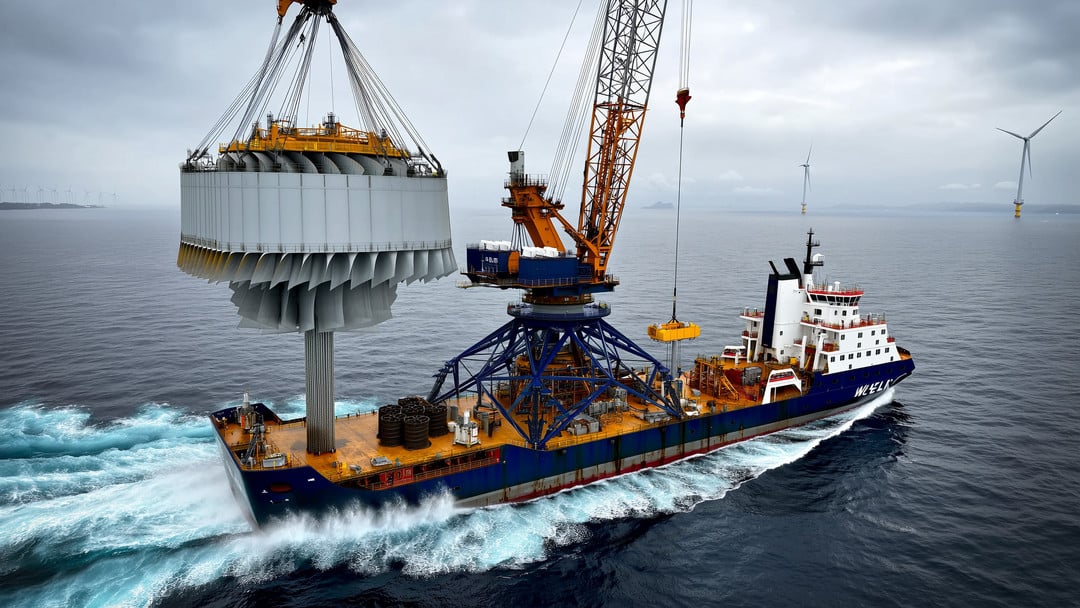
Early offshore wind construction relied on smaller jack-up barges with limited crane capacity and narrow weather windows, constraining turbine size and water depth. Modern wind turbine installation vessels now enable higher hook heights, heavier lifts, and precise station-keeping that directly supports 14 to 18 MW turbines and larger rotors in harsher metocean conditions. Rare earth elements matter because these vessels depend on high-torque electric drives, precision sensing, and reliable power conversion where REE-enabled magnets, optics, phosphors, catalysts, and specialty alloys improve efficiency, heat tolerance, and signal quality under marine vibration and corrosion. This article explains where REEs appear in propulsion and thruster motors, dynamic positioning reference systems, power electronics monitoring, and inspection tooling. It also covers how the REE supply chain affects delivery risk for vessel newbuilds and retrofits, provides quantitative context on fleet growth and constraints, highlights key innovators and standards, and offers a forward look at substitution, recycling, and policy-driven supply diversification relevant to offshore wind build-out in 2026.
Table of Contents
How Did Wind Turbine Installation Vessels Change Offshore Wind Construction—and Why Do Rare Earths Matter?
A decade ago, offshore wind developers relied heavily on smaller jack-up barges with limited crane capacity and lower hook heights. These vessels could handle turbines in the 3–6 MW range, but they were more sensitive to weather windows, restricted to shallower waters, and slower to cycle through installation campaigns. Projects often built in extra contingency days just to account for vessel downtime.
Modern wind turbine installation vessels changed that picture significantly. Purpose-built WTIVs now offer crane capacities exceeding 2,500 tonnes, hook heights above 150 meters, and robust dynamic positioning systems that allow them to operate in harsher metocean conditions. These capabilities directly support the 14–18 MW turbines entering serial production in 2025 and 2026, along with the XXL blades and tower sections that come with them.
What is less obvious is the material story underneath. These vessels depend on high-torque electric drives, precision sensing, and reliable power conversion—systems where rare earth elements play a quiet but important role. REE-enabled permanent magnets, phosphors, optics, and specialty alloys improve efficiency, heat tolerance, and signal quality in environments defined by marine vibration, corrosion, and sustained high loads.
Understanding where rare earths show up on a WTIV matters for anyone involved in vessel procurement, newbuild scheduling, retrofit planning, or supply-chain risk assessment. The connection between a mine in Inner Mongolia and a thruster motor holding station over a monopile foundation is more direct than most project teams realize.
Rare Earth Role in Wind Turbine Installation Vessels
Which Elements Are Used and Why
The rare earth elements most relevant to wind turbine installation vessels fall into a few functional categories. Each serves a distinct engineering purpose, and their presence spans propulsion, instrumentation, and supporting systems.
Neodymium and praseodymium form the backbone of NdFeB permanent magnets. These magnets are used in high power-density motors for thrusters, azimuthing propulsors, winches, and some auxiliary drives. According to U.S. Department of Energy critical materials reports published in 2025 and 2026, NdFeB magnets deliver significantly higher torque per unit volume than alternatives, which matters when machinery-room space is at a premium on a vessel already packed with jacking systems, crane infrastructure, and accommodation.
Dysprosium and terbium are added to NdFeB magnets—either blended into the alloy or applied through grain-boundary diffusion—to increase coercivity. In plain terms, this means the magnet resists losing its magnetism when it gets hot or operates under sustained heavy load. The International Energy Agency's critical minerals analyses from 2025 and 2026 highlight these heavy REEs as particularly supply-constrained, which is relevant because DP thrusters on a WTIV can run near their thermal limits during extended station-keeping operations.
Samarium, typically combined with cobalt, appears in SmCo magnets selected for applications where thermal stability is prioritized over cost. These show up in some sensors, couplings, and specialized actuators aboard marine vessels. Adamas Intelligence has covered this segment in its magnet market reporting through 2025 and 2026.
Europium, yttrium, and terbium are used in phosphors for display backlights and instrument panels. Bridge systems, control-room human-machine interfaces, and inspection devices all rely on stable color output and readability under varying lighting conditions. The U.S. Geological Survey's 2026 Rare Earths mineral commodity summary documents these applications.
Cerium and lanthanum have a less visible but real role in catalysts and polishing compounds used in manufacturing supply chains. Glass polishing for optical components is one example. The European Commission's critical raw materials monitoring from 2025 and 2026 captures this indirect procurement exposure.
How It Works
The functional chain is straightforward once you trace it through the vessel's systems.
In a thruster motor, a rotor built with NdFeB magnets containing neodymium and praseodymium—along with dysprosium or terbium for coercivity—generates a stronger magnetic field in a smaller package. That means a lighter, more compact motor delivering the same thrust, which improves fuel-to-positioning efficiency during DP operations and frees up topside space for other equipment. For a WTIV holding station during a nacelle lift, this efficiency translates directly into operational reliability.
For DP reference and navigation sensors, REE-containing optics and phosphors in displays and some optoelectronic components provide higher signal clarity and stable luminance. During tight installation tolerances—positioning a blade root onto a hub connector, for instance—operator situational awareness depends on instrumentation that does not degrade under vibration or ambient light changes.
In power conversion and monitoring systems, REE-influenced sensor packages using magnetic and optical indicators maintain measurement stability under vibration and electromagnetic interference. This supports better load management across cranes, jacking systems, and hotel loads, reducing the risk of unexpected trips during critical lift sequences.
Thermal constraints deserve special emphasis. Thrusters and high-power auxiliaries on a WTIV can run continuously at high output during installation windows. Heavy REEs like dysprosium and terbium—or SmCo magnets in extreme cases—are selected where sustained heat and demagnetization risk outweigh the added cost and supply complexity.
Journey from Mine to Product
Supply Chain Steps
The path from ore body to installed thruster motor involves multiple specialized stages, each with its own geography and lead time.
REE-bearing ores are mined, crushed, and concentrated into mixed rare earth products. These concentrates then go through chemical separation—a complex, solvent-extraction-intensive process—to yield individual oxides such as neodymium oxide, praseodymium oxide, dysprosium oxide, and terbium oxide. According to the International Energy Agency's critical minerals supply-chain mapping from 2025 and 2026, this separation step remains one of the most geographically concentrated (opens in a new tab) parts of the chain.
Magnet production takes those oxides through reduction to metals, alloying, strip-casting, jet milling, pressing, sintering, heat treatment, machining, and coating. The finished magnets are then magnetized, tested for quality, and shipped to motor manufacturers. The U.S. Department of Energy's manufacturing and critical materials briefs from 2025 and 2026 outline these steps and their capacity constraints.
At the component level, motors, thrusters, drives, and sensor suites are assembled and tested by OEMs and Tier-1 suppliers. These components are then installed during newbuild integration at the shipyard or during retrofit dockings, with class society and flag state compliance checks at each stage. DNV class guidance and vendor documentation practices govern much of this final integration.
Typical Chokepoints
Three areas consistently create schedule risk in this supply chain.
First, separation capacity and heavy-REE availability are frequent bottlenecks. Dysprosium and terbium are less abundant in ore bodies and their processing is more geographically concentrated than light REEs. The U.S. Geological Survey's 2026 data and European Commission reporting from 2025 and 2026 both flag this as a persistent constraint, translating into longer lead times for high-coercivity magnet grades.
Second, alloying and sintering capacity for high-performance magnets is specialized. Quality yield losses can be significant when tight coercivity and corrosion-resistance specifications are required for marine duty. Adamas Intelligence has reported on this capacity tightness through 2025 and 2026.
Third, certification and traceability requirements add schedule risk that procurement teams sometimes underestimate. When buyers require responsible sourcing documentation, country-of-origin declarations, or audited chain-of-custody for critical materials—as referenced in OECD responsible mineral supply-chain guidance updates—the administrative overhead can stretch delivery timelines even when physical material is available.
Statistics and Societal Impact
Quantitative Snapshot
The numbers help frame why this supply-chain connection matters at a project level.
According to International Energy Agency wind market updates from 2025 and 2026, global offshore wind annual additions continue to grow, with a multi-year pipeline that drives sustained demand for installation vessel capacity. Turbine upsizing means fewer units per gigawatt but heavier, taller lifts per cycle—raising the criticality of each individual installation event.
Clarksons Research offshore renewables fleet reporting from 2025 and 2026 tracks the active WTIV fleet, newbuild deliveries, and regional distribution. The fleet remains tight relative to projected demand, particularly for vessels capable of handling 14–18 MW turbines with the required crane capacity (typically above 2,000 tonnes) and hook heights (above 150 meters, as referenced in turbine OEM technical releases and DNV offshore wind installation guidance).
On the materials side, REE exposure is best understood at the subsystem level rather than as a single per-vessel figure. High-power permanent-magnet motors used in thrusters can contain magnets in the range of tens of kilograms per unit, depending on motor class and design. The U.S. Department of Energy and Adamas Intelligence provide magnet intensity benchmarks that help estimate this exposure without overprecision.
Downstream Effects
Higher-efficiency thrusters and better power-density electric drives can reduce fuel burn and improve station-keeping reliability. For an installation campaign, this translates into fewer weather-lost hours and lower risk of interrupted lifts during critical steps—benefits that compound across a multi-turbine campaign. DNV operational reliability discussions and operator performance statements from 2025 and 2026 speak to these gains.
Better sensing, displays, and monitoring improve procedural compliance and human factors in lift execution. IMCA DP incident learnings and class society health, safety, and environment guidance consistently point to instrumentation quality and operator awareness as factors in safe operations. For marine warranty surveyors and insurers, these improvements can support more favorable risk assumptions when backed by robust maintenance regimes and DP assurance programs.
Innovators and History
Key Breakthroughs
The story of rare earths in marine propulsion traces back to materials science advances that predated the offshore wind industry.
The commercialization of NdFeB magnets (opens in a new tab)in the 1980s created a class of permanent magnets with energy products far exceeding earlier ferrite and alnico types. As documented in Royal Society of Chemistry historical overviews and U.S. Department of Energy magnet history notes, this breakthrough enabled high power-density motors that later became foundational for electric thrusters and auxiliaries used in DP-capable offshore vessels.
Subsequent advances in coercivity improvement—including dysprosium and terbium additions and the development of grain-boundary diffusion processing—reduced demagnetization risk at elevated temperatures. Peer-reviewed magnet processing literature, summarized in U.S. Department of Energy critical materials updates from 2025 and 2026, shows how these refinements expanded the operating envelope for high-load marine propulsion.
On the vessel side, the maturation of DP standards and assurance practices—drawing on IMO DP guidance and IMCA standards updates used in 2025 and 2026 practice—improved how vessels integrate sensors, control systems, and redundancy. This created the equipment architecture where REE-enabled components now sit.
The offshore wind scale-up itself pushed crane and jacking requirements upward, driving WTIV newbuild specifications and power system upgrades that indirectly increase demand for high-performance motors and instrumentation. DNV offshore wind installation guidance and Clarksons Research from 2025 and 2026 document this progression.
From Lab to Product
Laboratory magnet chemistry translated into manufacturable components through standardized alloying, sintering, coating, and quality assurance methods adopted by magnet producers and motor OEMs. Marine class testing for vibration, thermal cycling, and corrosion exposure—drawing on IEC testing approaches referenced by class societies—validated these components for the offshore environment.
The commercialization pathway typically ran from magnet makers to motor and drive OEMs to thruster integrators, with adoption accelerating when lifecycle efficiency and footprint benefits outweighed price and supply volatility concerns. Operator technical papers and vendor technical notes used in offshore procurement through 2025 and 2026 reflect this trajectory.
Why It Matters Now
Current Drivers
The offshore wind industry is prioritizing larger turbines and fewer installation cycles per gigawatt. Each lift becomes more critical. A failed or aborted nacelle installation on a 15 MW turbine carries greater schedule and cost consequences than the same event on a 6 MW machine. This raises the value of dependable DP performance, reliable high-power drives, and accurate instrumentation—all areas where REE-enabled components contribute.
The International Energy Agency's offshore wind outlook from 2025 and 2026, along with turbine OEM announcements in the same period, confirms this trajectory. Hook heights, crane capacities, and DP performance requirements are all trending upward.
Regional constraints amplify the issue. North Sea metocean conditions demand robust station-keeping. U.S. East Coast projects face Jones Act compliance requirements, limited domestic WTIV availability, and port infrastructure constraints. The U.S. Bureau of Ocean Energy Management's market updates from 2025 and 2026, along with class society risk notes, highlight how these factors increase sensitivity to supply-chain delays in critical components including motors, drives, and instrumentation.
Security and Policy Context
Processing concentration risk remains a live procurement concern. Magnet-grade neodymium, praseodymium, and heavy REEs rely on geographically concentrated separation and metal-alloy capacity. The European Commission's critical raw materials updates from 2025 and 2026 and U.S. Department of Energy reporting document this concentration and its implications for price volatility and delivery risk.
Onshoring, friend-shoring, and recycling pilots are expanding in 2025 and 2026, but scale and qualification timelines for marine-grade components remain nontrivial. A new magnet source must pass class approval, factory acceptance testing, and warranty validation before it can be installed in a thruster motor on a WTIV. The International Energy Agency and national critical minerals strategy updates acknowledge the gap between policy ambition and operational qualification readiness.
Future Outlook
Materials and Design Trends
Dysprosium and terbium reduction in NdFeB magnets is expected to continue through grain-boundary diffusion and improved microstructure control. The goal is to preserve coercivity while lowering heavy-REE intensity per motor, which reduces both cost and supply risk for DP thrusters and auxiliaries. U.S. Department of Energy critical materials technology updates from 2025 and 2026 track this progress.
Recycling scale-up will likely focus first on magnet scrap from manufacturing and end-of-life industrial equipment. As procurement teams formalize responsible sourcing requirements—a trend the European Commission's circular economy and critical materials reporting documents—traceable recycled content will become a more meaningful part of the supply picture, though volumes remain modest relative to primary production in the near term.
Substitution with ferrite magnets or alternative motor topologies may occur in lower-criticality auxiliaries where power density and thermal margins are less demanding. However, for compact marine propulsion and station-keeping systems on WTIVs, NdFeB and SmCo magnets will remain the baseline technology. DNV marine electrification guidance and motor OEM technology roadmaps from 2025 and 2026 support this assessment.
Five-to-Ten-Year Scenario
Demand for high-performance magnets will track offshore wind installation growth and vessel electrification trends. Bottlenecks may shift over time between heavy-REE supply, magnet manufacturing capacity, and qualification lead times for marine-duty thrusters. The International Energy Agency and Adamas Intelligence outlooks from 2025 and 2026 project continued tightness in several of these segments.
Risk mitigation will likely combine several strategies:
- Multi-sourcing across geographies where qualified capacity exists
- Specification flexibility where class and safety requirements allow
- Inventory buffers for long-lead spares, particularly thruster motors and drive components
- Contracted recycled-content streams as volumes become certifiable
Policy incentives from the U.S. and EU, as documented in critical minerals policy releases from 2025 and 2026, will shape where new midstream capacity is built. For vessel owners, operators, and charterers, the practical implication is that REE-dependent components should be treated as strategic long-lead items in procurement planning—not just line items on a bill of materials.
Glossary
NdFeB (neodymium-iron-boron magnets): A class of permanent magnets that delivers high magnetic strength relative to size and weight. They are the standard choice for compact, high-torque motors used in marine thrusters and propulsion systems.
SmCo (samarium-cobalt magnets): A permanent magnet type selected for applications requiring higher temperature stability than NdFeB can provide. They cost more but maintain performance in sustained high-heat environments.
Coercivity: A magnet's resistance to losing its magnetism when exposed to heat, opposing magnetic fields, or sustained mechanical stress. Higher coercivity means more reliable performance during heavy-load DP operations.
Grain-boundary diffusion: A processing technique that introduces dysprosium or terbium at the grain boundaries of a NdFeB magnet rather than throughout the entire volume. This improves coercivity while using less heavy-REE material per magnet.
Phosphor: A material that absorbs energy and re-emits it as visible light. REE phosphors containing europium, yttrium, or terbium create stable, precise colors in displays and indicator panels used in bridge systems and control rooms.
Sintering: A high-temperature manufacturing step where compacted magnet powder is heated below its melting point to bond particles into a dense, mechanically strong part. This is a critical quality-determining stage in permanent magnet production.
FAQs
Are wind turbine installation vessels the same as WTIVs and jack-up vessels?
Wind turbine installation vessels commonly refers to WTIVs, including self-elevating jack-up WTIVs that raise a hull on legs to create a stable platform for heavy lifts, but the term can also include heavy-lift crane vessels and feeder-capable installation concepts depending on project setup. In plain terms, WTIVs are purpose-built ships for installing turbines offshore, while jack-up WTIVs are a major subtype optimized for stable lifting by standing on the seabed rather than floating during lifts.
Where do rare earth elements show up the most on these vessels?
The most direct REE exposure is typically in permanent-magnet motors used for thrusters and high-power auxiliaries, where neodymium and praseodymium provide strong magnetic fields and dysprosium and terbium improve high-temperature robustness. Additional REE use appears in displays, indicators, and some sensor-related components via REE phosphors and specialized materials, though these are usually smaller by mass than propulsion magnets.
Do rare earths determine whether a vessel can install 14 to 18 MW turbines?
Rare earths do not set the headline limits by themselves because crane capacity, hook height, jacking capability, deck layout, and port and interface constraints are the primary determinants of turbine compatibility. However, REE-enabled components can still influence execution reliability by improving dynamic positioning station-keeping efficiency, thermal margin in high-load motors, and instrumentation performance that supports safe and repeatable lifts.
Why is heavy-REE supply discussed more than light REEs?
Heavy REEs like dysprosium and terbium are important because they enable higher coercivity magnet grades that resist demagnetization at elevated temperatures, which matters in sustained high-power marine duty cycles. They are also less abundant and have more concentrated processing capacity, so procurement risk and price volatility can be more pronounced than for light REEs like lanthanum and cerium.
What is the practical procurement takeaway for developers and marine contractors?
The practical takeaway is to treat REE-dependent components, notably thruster motors and certain drives, as long-lead and potentially supply-constrained, and to validate OEM qualification status, spare strategy, and alternative component pathways early in vessel selection and project scheduling. This is especially relevant when newbuilds or major retrofits are involved because class approval, factory acceptance testing, and spares provisioning can be schedule-critical even when hull availability looks adequate.
Conclusion
Wind turbine installation vessels are central to the offshore wind build-out, and rare earth elements play a meaningful role in the high-performance motors, dynamic positioning systems, and instrumentation that make these vessels capable and reliable. While REEs do not set the headline limits on turbine size compatibility, they influence execution reliability through better station-keeping efficiency, thermal margin, and sensing quality. Supply chain concentration for heavy REEs like dysprosium and terbium remains a procurement concern, particularly for newbuilds and major retrofits where class approval and qualification timelines are schedule-critical. Looking ahead, grain-boundary diffusion techniques, recycling scale-up, and diversified sourcing strategies will help manage supply risk, but high-power-density marine applications will continue to depend on NdFeB and SmCo magnets for the foreseeable future. Developers and marine contractors should treat REE-dependent components as long-lead items and validate supply pathways early in vessel selection and project scheduling to avoid costly delays.
