
Highlights
- Vietnam's Nui Phao mine is emerging as the world's most strategically important non-China tungsten source as prices surge and China tightens export controls on this defense-critical metal.
- Masan High-Tech Materials is courting Western investors not just for capital, but to secure aligned buyers and position Vietnam as a credible alternative to China's 80%+ market dominance.
- The deal represents a critical test: Can the West secure tungsten mining outside China while also controlling the high-value processing and refining that China monopolizes?
A massive open-cut mine in northern Vietnam—Nui Phao—is emerging (opens in a new tab) as one of the most strategically important non-China sources of tungsten, just as prices surge and geopolitical competition intensifies. The owner, Masan High-Tech Materials (HNX: MSR), (opens in a new tab) is now actively courting global investors, signaling that this is not just a mining story—it’s a supply chain power play.
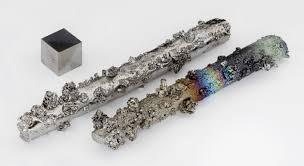
What Is Tungsten?
Tungsten is a super-dense, ultra-hard metal—nearly twice as dense as steel and with the highest melting point of any metal.
Translation: it doesn’t bend, melt, or wear out easily.
That makes it essential in:
- Defense: armor-piercing rounds, missile components
- Energy & industry: drilling tools, turbines
- Technology: semiconductors, electronics
It’s one of the few materials that is extremely difficult to substitute.
How It’s Formed and Mined
Tungsten forms in high-temperature hydrothermal systems, often alongside tin and other metals.
Geologically, it’s found in veins or skarn deposits, requiring:
- Open-pit mining (like Nui Phao) or underground extraction
- Crushing → concentration → chemical processing
Unlike rare earths, tungsten is more conventional to mine—but complex to refine.
Who Controls the Market?
Here’s the real issue:
- China dominates:
- ~80%+ of global production
- Near-total control of midstream processing (refining, powders, carbides)
- The U.S. has zero domestic mine production
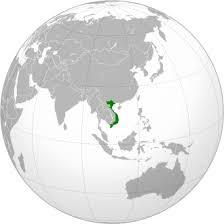
- Vietnam is now the #2 producer globally
Beijing has already tightened export controls, reinforcing leverage.
What’s Really Happening Here
Masan’s outreach to Western, Japanese, and Australian investors is not just about capital.
It’s about:
- Securing aligned buyers (offtake + geopolitics)
- Moving up the value chain (processing, not just mining)
- Positioning Vietnam as a credible ex-China alternative
REEx Bottom Line
Tungsten is the archetype of a critical mineral:
scarce, strategically essential, and geopolitically controlled.
This deal process is a test: Can the West secure supply without controlling processing?
Or will history repeat—where mining happens outside China, but value flows back in?
In tungsten, as in rare earths, the mine is just the beginning.
Profile
Masan High-Tech Materials (HNX: MSR), a subsidiary of Vietnam’s Masan Group (opens in a new tab), is a globally significant player in the tungsten value chain, positioning itself as the largest producer of advanced tungsten materials outside China. Headquartered in Vietnam, the company integrates upstream mining—anchored by the Nui Phao polymetallic mine—with a broad midstream and downstream footprint, including global processing assets acquired through H.C. Starck. Its product portfolio spans key tungsten intermediates, including APT and oxides, as well as fluorspar, bismuth, and copper, supplying critical inputs to the electronics, automotive, aerospace, and energy industries.
Strategically, Masan is differentiating itself through tungsten recycling and circular economy initiatives, aiming to reduce reliance on primary extraction while expanding into higher-value processing and advanced materials. With operations across Vietnam, Germany, Canada, and China, the company reflects a hybrid model—part miner, part global processor—seeking to capture more value downstream while aligning with sustainability standards and geopolitical demand for non-China supply chains.


0 Comments
No replies yet
Loading new replies...
Moderator
Join the full discussion at the Rare Earth Exchanges Forum →