
Highlights
- China controls over 80% of refined bismuth production and leads patent activity in advanced refining technologies, creating significant supply chain vulnerabilities for the U.S. and Europe.
- More than 90% of global bismuth is recovered as a by-product of lead, copper, tin, and tungsten refining, meaning supply security depends on integrated processing rather than dedicated mining.
- Emerging technologies like methanesulfonic acid refining and cyclone slurry electrolysis show promise but remain years from commercial-scale deployment.
- Electronic waste, copper anode slimes, and thermoelectric scrap are emerging as strategic secondary sources of bismuth, shifting the paradigm from waste to resource.
- The review underscores that critical mineral resilience requires mastering hydrometallurgy, solvent extraction, electrorefining, and recycling—not simply opening new mines.
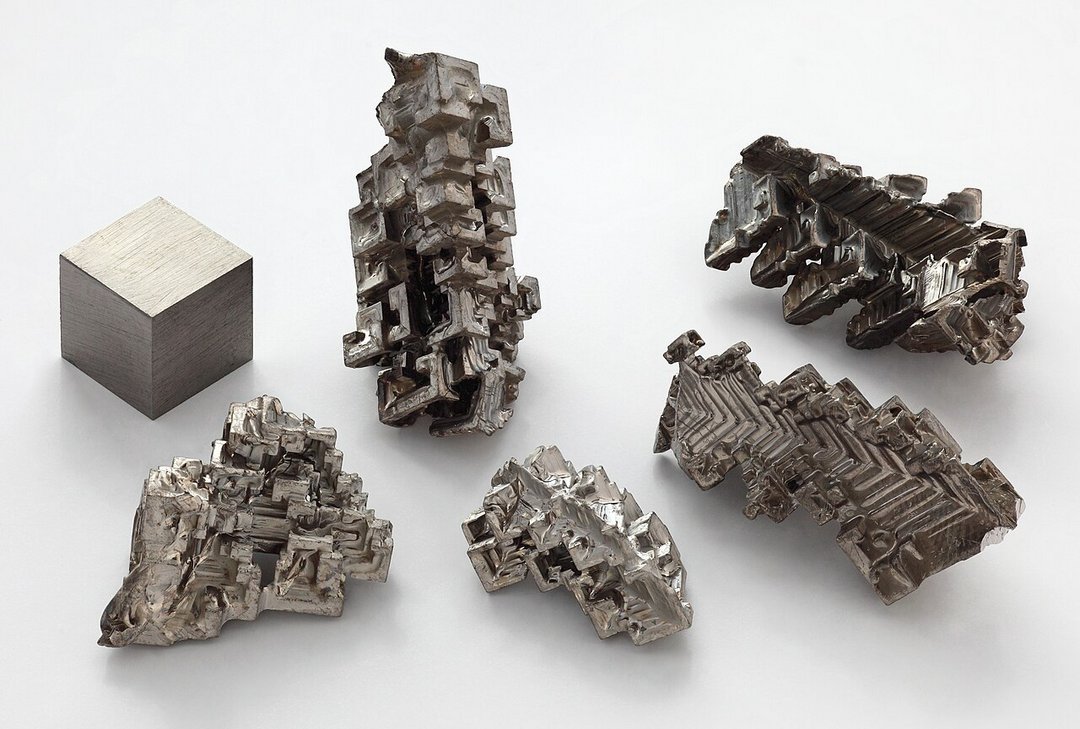
A new ChemRxiv preprint (opens in a new tab) led by Subash Chandra Bose Rapaka of India's Centre for Materials for Electronics Technology (C-MET), together with colleagues from C-MET and the National Centre for Compositional Characterization of Materials, argues that bismuth—a little-known but strategically important metal used in electronics, thermoelectrics, lead-free solders, pharmaceuticals, catalysts, and nuclear technologies—is entering a new geopolitical era. Rather than reporting a single breakthrough, the authors comprehensively review extraction, refining, recycling, and purification technologies developed between 2020 and 2026. Their conclusion is clear: cleaner hydrometallurgical processing, integrated recycling, and high-purity refining could gradually diversify supply beyond China, although many of the most promising technologies remain years away from large-scale commercial deployment.
REEx Insight
Rare Earth Exchanges® believes this review illustrates a broader reality unfolding across critical minerals during Great Powers Era 2.0™. Like rare earth elements, bismuth is no longer simply a metal—it is strategic infrastructure.
The paper demonstrates that global competition is shifting away from mining alone toward processing, refining, recycling, purification, and industrial know-how. While Bolivia, Mexico, Peru, Canada, and others possess bismuth resources, China dominates the value-added portion of the supply chain, accounting for more than 80% of refined production while also leading much of the recent patent activity surrounding advanced refining technologies.
For the United States and Europe, the lesson extends well beyond bismuth. Strategic resilience increasingly depends on mastering midstream capabilities—characterization, hydrometallurgy, solvent extraction, electrorefining, recycling, and qualification—not simply opening another mine.
A Minor Metal with Outsized Strategic Importance
Bismuth rarely captures headlines, yet it is becoming increasingly important for advanced manufacturing. Its low toxicity makes it an attractive substitute for lead in plumbing, solders, pharmaceuticals, catalysts, thermoelectric devices, and radiation shielding. The authors note that China's export restrictions, combined with its overwhelming share of refined production, have elevated bismuth to critical-mineral status across multiple jurisdictions.
Even more striking, the paper notes that more than 90% of global bismuth is produced as a by-product of lead, copper, tin, and tungsten refining—not from dedicated bismuth mines. That fundamentally changes how governments should think about supply security.
From Waste Streams to Strategic Resources
Rather than presenting new laboratory data, the review synthesizes hundreds of publications, patents, and industrial developments from 2020–2026.
Among the most promising developments:
- Sulfur-fixing smelting significantly reduces sulfur dioxide emissions while maintaining high recoveries.
- Methanesulfonic acid (MSA) refining offers cleaner, lower-energy processing if reagents can be efficiently regenerated.
- Cyclone slurry electrolysis combines leaching and electrorefining into one reactor, although it remains at TRL 3–4, making commercial deployment premature.
- Copper anode slimes, lead refinery residues, thermoelectric waste, and electronic waste increasingly represent strategic "urban mines" for future bismuth supply.
Perhaps the most important shift is conceptual: yesterday's waste stream is becoming tomorrow's strategic feedstock.
Study Limitations
The authors are appropriately cautious.
Many of the technologies reviewed remain at laboratory or pilot scale, several require specialized equipment or expensive reagents, and commercial economics often depend on nearly complete reagent recycling. Furthermore, the manuscript is a ChemRxiv preprint and has not yet undergone peer review, meaning its conclusions should be independently validated before being treated as established scientific consensus.
REEx Connect
Lead Author: Subash Chandra Bose Rapaka — Centre for Materials for Electronics Technology (C-MET), India
Collaborating Institutions: Centre for Materials for Electronics Technology (C-MET); National Centre for Compositional Characterization of Materials (NCCCM), Bhabha Atomic Research Centre.
Organizations Featured or Referenced:
- U.S. Geological Survey (USGS)
- Central South University (China)
- Sumitomo Metal Mining
- European Union Critical Raw Materials initiatives
Citation: Rapaka SCB, Nair RKS, Chavan AN, Devulapally S. Bismuth Extraction and Refining in the Critical-Minerals Era: A Critical Review from Primary Ores to Circular Secondary Resources. ChemRxiv preprint, July 29, 2026. DOI: 10.26434/chemrxiv.15006685/v1.


0 Comments
No replies yet
Loading new replies...
Moderator
Join the full discussion at the Rare Earth Exchanges Forum →